
English


Views: 158 Author: Site Editor Publish Time: 2026-07-22 Origin: Site


Toddlers naturally possess endless energy reserves. They climb furniture, scale bookcases, and jump off couches constantly. Keeping them safely active presents a massive daily hurdle for parents and facility managers. These little ones require high-output physical activity regardless of external weather conditions. Limited outdoor access during winter months often disrupts this critical developmental need. Buyers face a highly fragmented market filled with unverified safety claims. Rapid outgrowth risks and complex space requirements make the selection process frustrating. Fortunately, a structured evaluation clears this confusion immediately. You can systematically assess options based on safety certifications, developmental value, spatial footprint, and material durability. This guide provides a clear, evidence-based framework. You will learn to properly shortlist and select the right equipment for early childhood motor development. We help you navigate these choices confidently. You will never have to compromise on aesthetic integration or strict safety compliance.
Prioritize equipment with verifiable safety compliance (e.g., CPSC guidelines, ASTM F1918 for soft contained play) over generic manufacturer claims.
Material selection—ranging from Montessori-style solid woods to high-density commercial foam—directly dictates maintenance overhead and longevity.
Modular systems offer the highest ROI by adapting to growing developmental stages and fluctuating space constraints.
Incorporating scaled-down agility features safely prepares toddlers for more advanced environments like a Trampoline Park or Ninja Park.
Every successful play space starts by evaluating its core environment. You must define where the equipment will live. Space constraints dictate almost every purchasing decision. Home playrooms and basements present unique challenges. They demand vertical efficiency and aesthetic integration. Parents often prefer foldable Pikler triangles. These easily tuck away behind doors. Conversely, daycares and commercial facilities operate under different realities. They face high-traffic usage daily. Facility managers must prioritize maximum durability. They need robust wall anchors and multi-child load capacities. The equipment must withstand constant, heavy impacts.
Environment Focus | Residential Use (Homes/Basements) | Commercial Use (Daycares/Facilities) |
|---|---|---|
Footprint Needs | Compact, foldable, vertical orientation. | Expansive, anchored, horizontal zones. |
Load Capacity | 1-2 toddlers simultaneously. | 5+ toddlers; high dynamic load testing. |
Aesthetics | Blends into home decor (natural woods). | High visibility, bright colors, easy supervision. |
The "bad weather" factor dramatically influences utility. Rainy seasons force children indoors for extended periods. Winter months bring freezing temperatures and early darkness. You must frame the overall value around daily utilization hours. A well-designed climbing set saves the day when park visits become impossible. If a toddler uses it two hours daily, the value multiplies quickly. It transforms chaotic indoor energy into focused motor development.
Longevity remains a critical evaluation metric. Toddlers experience rapid physical milestones. A basic step-and-slide might serve a narrow 12 to 24-month window. Children outgrow simple structures almost overnight. You must assess whether the setup scales into the preschool years. Modular designs prevent quick obsolescence. You can add new ramps or higher arches later. This approach ensures the playset grows alongside their developing coordination. It protects you from buying entirely new systems every year.
The market offers several distinct material categories. Each type serves different developmental goals. Wooden climbing structures dominate the Montessori space. Pikler-inspired triangles and climbing arches provide exceptional balance training. They force toddlers to navigate rigid rungs. This builds crucial spatial awareness and proprioception. They also offer high aesthetic value. Sustainable woods blend beautifully into modern living spaces. However, wooden structures present distinct drawbacks. The hard surfaces demand strict adherence to safety matting. Wood is far less forgiving during uncoordinated falls. Toddlers will slip. You must install thick crash pads underneath.
Soft play and high-density foam sets serve a different purpose. They offer ultimate impact absorption. Foam blocks allow for unstructured, high-velocity play. Toddlers can crash, roll, and tumble safely. These sets encourage imaginative building. Children stack blocks to create forts. Unfortunately, foam sets come with material vulnerabilities. The covers will degrade quickly. You must insist on commercial-grade vinyl exteriors. Flimsy covers tear easily under small fingernails. Foam sets also consume significant horizontal space. They spread out across the floor, making them tough for small apartments.
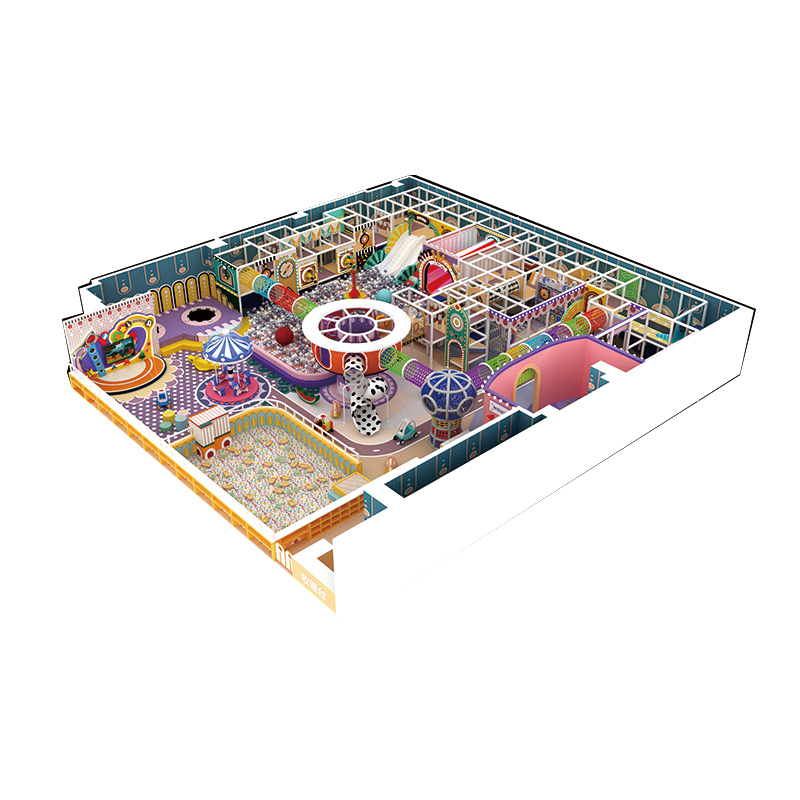
Many facilities implement Themed Playground Equipment to elevate the experience. You can utilize jungle, ocean, or space motifs. These visual cues drive imaginative play scenarios. A toddler pretends to navigate a pirate ship or explore a forest. Themed environments keep children engaged much longer. However, you must evaluate them critically. Elaborate thematic facades often create dangerous blind spots. Caregivers must maintain clear lines of sight. Intricate designs can also introduce pinch points. Ensure thematic cutouts never trap small fingers or obscure adult supervision.
Toddlers often mimic older siblings. They want high-energy thrills. You can provide these thrills by adapting larger park features safely. Toddler-adapted trampoline zones are highly requested. However, toddler joints are still developing. You must avoid the deep-bed dynamics of a full-scale facility. A standard trampoline creates extreme rebound forces. We mitigate this risk by integrating low-bounce, heavily padded mini-trampolines. These units restrict the bounce height significantly. Handlebar supports provide essential stability. They allow toddlers to control their own jumping rhythm safely. You must enforce strict single-user limits. Multiple toddlers bouncing together causes unpredictable collisions. Safe integration protects their fragile knees and ankles.
Agility modules introduce structural challenges. We incorporate soft-step blocks and foam balance beams. Low-hanging tactile rings encourage reaching and pulling. These elements serve a very specific developmental purpose. They build foundational gross motor skills gradually. A toddler learns to shift weight on a foam beam. They practice hand-eye coordination with tactile rings. You prepare them for complex obstacle courses later in life. They build confidence securely. By mastering these introductory agility modules, they transition smoothly. They will confidently tackle larger structures when they age up.
Choosing the right Indoor Playground Equipment requires a strict evaluation framework. Safety and compliance sit at the top. You must demand absolute transparency regarding finishes. Look for explicitly non-toxic materials. Water-based sealants are mandatory for wooden items. Plastics must be clearly labeled BPA-free and phthalate-free. Toddlers explore everything with their mouths. Toxicity is a non-negotiable risk factor. You must also verify fall-height ratios. Every piece of equipment carries a maximum fall height rating. This number dictates your matting requirements. A two-foot drop requires specific EVA foam density to prevent head injuries.
Evaluation Checklist Chart | ||
Dimension | Key Question to Ask | Ideal Standard |
|---|---|---|
Toxicity | Are all coatings child-safe and certified? | Water-based sealants; ASTM F963 compliance. |
Fall Height | What is the peak height a child can stand on? | Matched with 1.5-inch+ high-density EVA mats. |
Anchoring | Can it tip under dynamic load? | Wall-tethered or broad base design. |
Modularity directly impacts long-term satisfaction. You should ask if the setup can be easily reconfigured. Toddlers get bored with static environments. Swapping a slide for a rock wall refreshes the experience. Determine whether the equipment is freestanding. Does it require permanent wall or floor anchoring? Renters usually need freestanding units. Commercial spaces absolutely require permanent anchors. Stability ensures multiple children cannot tip the structure over during aggressive play.
Maintenance and sanitization often surprise new buyers. Toddlers create messes constantly. Soft play equipment requires daily attention. You need antimicrobial, easy-to-wipe vinyl surfaces. Proper vinyl withstands frequent sanitization without cracking. Wooden equipment demands different maintenance routines. You must perform periodic checks for splintering. Hardware loosens over time due to constant vibration. You need to inspect and tighten every bolt monthly. Diligent maintenance extends the lifespan of the equipment significantly.
Many buyers miscalculate their available space. We call this the spacing illusion. You might measure the exact footprint of the structure. However, you fail to calculate the required "clearance zone." Safety standards mandate a clear perimeter around the equipment. Typically, you need 3 to 6 feet of empty space on all sides. A toddler sliding down needs room to land and roll. Placing a climbing frame right next to a sharp coffee table invites disaster. Setting up an Indoor Playground demands precise floor measurements including this safety buffer.
Assembly complexity is another major hurdle. Home setups often require significant DIY time. The manuals can be confusing. You might need specific power tools to secure the joints properly. Commercial setups face even stricter requirements. You usually cannot assemble commercial structures yourself. Doing so often voids the liability coverage. Professional installation is a necessity. Certified installers ensure every anchor hits a stud. They verify that the structural integrity meets local safety codes.
Carpet: Creates a wobbly foundation. Equipment may shift during use.
Hardwood: Very slippery. Requires anti-slip grips on the equipment base.
Concrete: Extremely unforgiving. Demands maximum thickness polyurethane crash mats.
Subfloor materials completely change installation dynamics. The base flooring impacts structural stability. Setting a tall wooden climber on plush carpet creates dangerous wobble. You must use rigid leveling boards underneath. Hardwood floors offer stability but no impact absorption. You will need extensive matting. Concrete basement floors pose the highest risk. A fall on concrete is severe. You must calculate matting thickness based on the subfloor hardness, not just the equipment height. Planning for these implementation realities saves time and prevents injuries.
Summary: The right toddler equipment balances aggressive physical play with uncompromising safety and sensible space planning.
Shortlisting Logic: Start with available footprint, decide between wood (developmental/aesthetic) or foam (high-impact/commercial), and filter strictly by certified weight capacities and safety standards.
Next Action: Measure the intended space (including vertical clearance) and define a hard budget that includes the cost of required safety matting.
A: Safety depends on use context. Commercial-grade vinyl-covered foam offers the best impact protection, while smoothly sanded, domestically sourced wood with non-toxic sealants is best for structured climbing, provided adequate fall mats are used.
A: Yes. Look for modular, foldable climbing frames or stackable soft-play blocks that can be stored in closets or corners when not in use.
A: Soft play vinyl should be cleaned with mild, non-abrasive soap and water or child-safe sanitizing wipes. Avoid harsh bleach which degrades the material. Wooden equipment should be wiped with a damp cloth and dried immediately to prevent warping.
A: Mat thickness must correspond to the maximum fall height of the equipment. Generally, a minimum of 1-inch to 1.5-inch high-density EVA foam or polyurethane is recommended for standard toddler climbing heights (under 3 feet).


