
English


Views: 174 Author: Site Editor Publish Time: 2026-07-14 Origin: Site


Entering the family entertainment center industry offers high rewards. Operators must navigate significant initial capital requirements first. The appeal of a thriving play zone feels incredibly strong. Yet, a successful launch requires moving quickly past idealized visions. Many founders struggle because they ignore daily operations. Building a profitable indoor playground business demands rigorous focus. You must actively tackle complex zoning laws. Demanding lease negotiations and intense safety compliance require your full attention. A poorly planned launch quickly drains financial resources. It also risks early facility closure. This guide provides an objective, evidence-based framework. We help you navigate these common industry hurdles safely. You will learn how to model your budget accurately. We show you how to vet commercial vendors thoroughly. You will discover practical strategies for designing a profitable layout. This layout prioritizes parent comfort and drives recurring revenue.
Capital Requirements: Initial investments vary significantly based on footprint, but understanding the split between fixed assets (equipment, build-out) and hidden OPEX (insurance, maintenance) is critical to survival.
Vendor Due Diligence: Sourcing indoor playground equipment requires looking beyond aesthetics to verify safety compliance (ASTM/CE), warranty terms, and post-installation support.
Layout Equals Revenue: Profitable floor plans prioritize high-margin zones (party rooms, cafes) and parent sightlines over maximizing sheer play volume.
Operational Realities: Successful founders actively mitigate common industry pitfalls, including severe liability risks, high staff turnover, and rigorous sanitation demands.
Differentiate between capital expenditures and operating expenses early on. Your initial capital expenditures cover everything before opening day. Operating expenses cover the vital first twelve months. Many operators fail because they underfund their initial operating expenses. You must secure enough working capital. This capital acts as your safety net during slow months.
Capital expenditures include fixed assets and tangible improvements. You pay for these items once during the startup phase. Operating expenses represent your ongoing monthly burn rate. They drain your accounts even if nobody visits the facility. Successful operators project out twelve months of operating expenses. They keep this money in a dedicated reserve account.
Facility acquisition and build-out form a massive expense block. Lease deposits consume large amounts of upfront cash. Landlords often require several months of rent in advance. Zoning permits dictate strict land use requirements. Your local municipality might force expensive structural changes. HVAC upgrades ensure adequate ventilation for active children. Standard commercial AC units rarely handle the body heat of playing kids. You must also fund extensive ADA compliance adaptations. This includes wheelchair ramps and accessible restroom stalls.
Play structures and installation require careful financial planning. Custom modular systems carry varying upfront costs. You must account for international shipping fees. Import duties fluctuate based on global trade policies. Professional installation fees add another layer of expense. Do not attempt a DIY installation. Certified installers ensure your warranty remains valid.
Hidden operational costs often surprise new facility owners. Commercial liability insurance premiums remain consistently high. You must hire attorneys for robust liability waivers. Generic online waivers offer zero real legal protection. Marketing launches require dedicated promotional budgets. Specialized cleaning supplies represent an ongoing daily expense. Commercial sanitizers cost significantly more than residential products.
Budget Category | Expense Type | Financial Impact & Description |
|---|---|---|
Facility Build-Out | CapEx | High upfront impact. Includes HVAC, ADA compliance, and zoning permits. |
Play Structures | CapEx | Major fixed asset. Includes shipping, import duties, and certified installation. |
Liability Insurance | OpEx | Ongoing monthly cost. Essential for legal protection and facility survival. |
Sanitation Labor | OpEx | Daily recurring cost. Covers deep cleaning and electrostatic disinfection. |
You need realistic return on investment timelines. Avoid relying on exaggerated profitability claims. Seasonal lulls heavily impact your weekly foot traffic. Summer months often see a sharp drop in visitors. Families prefer outdoor parks during warm weather. Local demographic caps limit your total addressable market. A conservative timeline helps you endure slow months. Prepare sufficient runway to reach true break-even. Break-even occurs when monthly revenue finally exceeds monthly operating expenses.
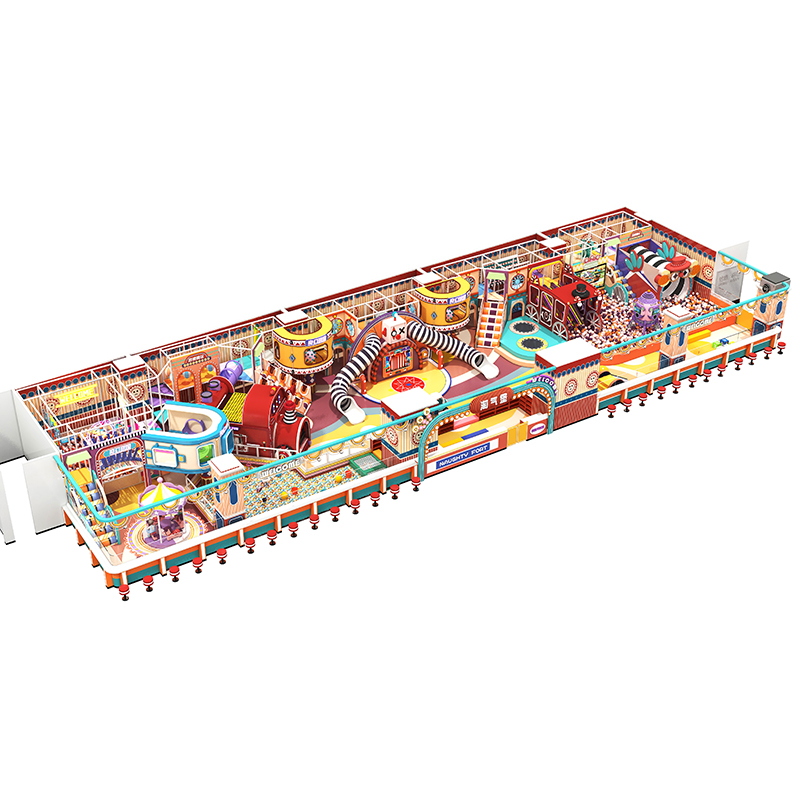
Compliance stands as your absolute baseline. Commercial-grade refers to stringent legal and safety standards. You must meet international safety regulations. Frameworks like ASTM F1918 and EN 1176 are mandatory. Securing comprehensive liability insurance requires strict adherence. Insurance providers will deny coverage otherwise. They demand documented proof of certified equipment.
Evaluate the physical components closely. High-density foam protects children from impact injuries. Cheap foam degrades quickly under constant compression. Galvanized steel frames provide necessary structural integrity. Galvanization prevents internal rust buildup over time. Tear-resistant PVC covers withstand heavy daily use. You need a high-gauge PVC material for longevity. Cheap upfront materials lead to frequent replacements. Facility downtime ruins your local reputation. Quality components minimize unexpected closures. Buying durable Indoor Playground Equipment protects your initial investment. Think about long-term cost efficiency instead of just initial price tags.
Direct manufacturers offer much better supply chain transparency. Resellers often obscure the actual origin of parts. Assess custom designs versus standard modular layouts. Bespoke branding creates a unique customer experience. It helps your facility stand out locally. However, modular setups offer scalable inventory. They provide readily available replacement parts. Service Level Agreements dictate your vendor relationship. Demand professional installation from certified technicians. Verify the exact length of structural warranties. Ensure they guarantee rapid emergency part replacement.
Request compliance certificates: Ask for updated ASTM or CE documents directly from the factory.
Verify installation insurance: Ensure the installation crew carries their own liability coverage.
Demand structural warranties: Look for at least a five-year guarantee on main steel frames.
Assess replacement speed: Clarify exactly how many days it takes to ship spare parts.
Layout directly influences your daily revenue. You must divide the floor plan strategically. Poor layouts create chaotic traffic jams. Smart layouts guide customers naturally through high-margin areas.
Zoning by age prevents serious physical injuries. Separate toddler areas from older child zones. High-energy children easily knock over younger toddlers. Enclose the toddler zone securely. Use low barriers so parents can step over easily. Install softer flooring in infant areas. Distinct zones dramatically improve overall customer satisfaction. Parents feel much safer bringing younger children.
Parents control the spending in your facility. The "Sightline Rule" dictates your seating arrangement. Parents must see their children clearly from cafe tables. Good visibility increases parent dwell time. Longer visits drive higher concession sales. Obstructed views force parents to stand and follow kids. Tired parents leave the facility much sooner. Provide comfortable seating and reliable Wi-Fi networks. Acoustical planning reduces overwhelming noise levels inside. Install sound-absorbing panels across the ceiling. Relaxed parents spend more money during each visit.
Every square foot must generate consistent income. Private party rooms act as high-margin drivers. They deliver the highest return in this industry. Design rooms for quick turnover. Use durable surfaces for rapid cleaning between parties. Position concessions at natural traffic chokepoints. Place arcade and redemption games near the exit routes. This placement captures extra spend as families leave. Children will beg for one last game.
Operating a facility involves significant hidden risks. Unprepared owners face rapid financial drain. You must anticipate these operational hazards actively. Prevention costs much less than damage control.
The insurance and liability trap catches many unprepared owners. Bodily injury claims remain an unavoidable reality. Children occasionally trip and fall during active play. Robust waivers provide an initial legal shield. Have a local attorney draft your specific waiver. Comprehensive camera coverage proves essential during dispute resolutions. Install high-definition cameras covering every play angle. Keep video backups for at least thirty days. Strict equipment maintenance logs show your dedication to safety. You must perform daily inspections diligently. Document every tightened bolt and replaced pad.
Parents worry deeply about the "germ factory" stigma. Addressing this fear requires substantial daily labor. Daily deep-cleaning protocols target ball pits and soft surfaces. Ball pits collect dirt incredibly fast. You need an automated ball washing machine. Hand-washing thousands of plastic balls wastes tremendous labor. Electrostatic disinfection provides thorough periodic cleaning. These sprayers coat entire play structures evenly. These sanitation demands require dedicated staff hours. Cleanliness directly impacts your customer retention rates. A visibly dirty facility guarantees negative online reviews.
Managing high turnover strains your operational focus. Most positions rely on minimum-wage compensation models. Finding reliable employees takes constant effort. You must train staff in conflict de-escalation. Upset parents require calm and professional handling. Emergency response training is equally critical. Confident employees handle accidents efficiently. They know exactly when to call medical services. Implement clear protocols for lost children scenarios. Staff preparedness prevents minor issues from escalating.
Translating your research into action requires decisive planning. You now understand the vital operational constraints. Successful execution depends on strict compliance and realistic budgeting. Do not rush the vendor selection process. Quality structures ensure long-term profitability and safety. Moving forward requires a systematic approach.
Focus on these immediate next steps:
Secure commercial real estate holding appropriate municipal zoning. Ensure the ceiling height accommodates multi-level play structures.
Request itemized quotes and compliance certificates from at least three manufacturers. Compare their warranty terms closely.
Finalize a conservative, buffer-heavy business plan to present to lenders. Include detailed operational expenses for the first twelve months.
A: A minimum viable space typically requires 3,000 to 5,000 square feet. This accommodates a basic play structure, a toddler zone, and a small cafe. Larger commercial complexes range from 10,000 to 20,000 square feet. These bigger spaces support high-margin additions like multiple party rooms, extensive arcades, and large seating areas.
A: Expect a timeline of 12 to 16 weeks from design approval. Manufacturing usually takes 4 to 6 weeks. International shipping adds another 4 to 6 weeks. The final professional installation requires 2 to 4 weeks. Always buffer extra time for customs clearance and mandatory municipal safety inspections.
A: We strongly advise against DIY installation. Attempting this voids your manufacturer warranty immediately. Furthermore, commercial liability insurance providers require certified installation records. A failed municipal safety inspection will delay your opening. Professional installers guarantee structural integrity and strict compliance.
A: Private birthday party packages drive the highest profit margins. You should also implement monthly membership tiers to ensure recurring revenue. Food and beverage sales keep parents comfortable and extend their visits. Finally, adding arcade machines or redemption games captures additional impulse spending.


