
English


Views: 123 Author: Site Editor Publish Time: 2026-10-12 Origin: Site


Investing in a commercial play space is a high-stakes capital expenditure. You are building a massive experience from the ground up. This requires careful planning and significant financial resources. Choosing the wrong vendor carries hidden and severe risks. You might face delayed facility openings. Failed safety inspections can halt your operations entirely. Rapid equipment degradation ruins your overall customer experience. Legal liabilities could easily bankrupt a new entertainment facility. You need an objective framework for evaluating vendors. You must look beyond slick marketing brochures. Initial price quotes rarely tell the whole story. We will explore how to properly vet potential suppliers. You will learn how to verify safety certifications accurately. We guide you through installation realities and complex warranties. This ensures your facility remains profitable and completely safe. Industry standards constantly evolve across different global regions. You must stay informed to protect your business investment. A systematic evaluation approach eliminates costly procurement mistakes.
Compliance is non-negotiable: Valid, independent certifications (ASTM, CE, TUV) protect your business from liability.
Total Cost of Ownership (TCO) matters: Upfront savings from low-tier vendors often result in high maintenance and replacement costs.
Installation is a critical failure point: A reliable manufacturer offers transparent installation support, not just equipment delivery.
Vet the factory, not just the website: Verifiable production capacity and transparent quality control processes separate true manufacturers from middlemen.
Evaluating a manufacturer based solely on the lowest quote is dangerous. Cheap upfront prices often mask inferior materials. They usually hide poor engineering practices. A low quote might ignore expensive freight fees. It usually excludes professional installation labor. This creates massive budget overruns later. You must build a comprehensive budget covering all phases. You should calculate initial purchase costs carefully. You must also budget for import duties and setup labor. Factor in future operational downtime for maintenance. Focus heavily on space optimization during planning. A capable manufacturer designs equipment to maximize player capacity. They boost revenue per square foot significantly. Smart designs eliminate traffic bottlenecks during peak hours. Kids move smoothly through the entire play structure. This greatly improves the overall customer experience. Furthermore, operators require an ongoing business partner. You will need replacement parts soon. Future upgrades keep your facility highly competitive. A one-off transactional supplier cannot support your long-term growth. You need a dedicated kids indoor playground partner. They should offer continuous maintenance guidance. They ensure your facility stays operational for years.
Global safety standards dictate every aspect of commercial play structures. A legitimate vendor must meet specific regulatory frameworks. North American buyers should demand ASTM F1918 compliance. European operators must enforce EN 1176 and EN 1177 standards. These rules prevent devastating injuries. You must demand verifiable certificates from third-party testing labs. Organizations like TUV Rheinland or SGS provide independent verification. Do not accept generic safety badges downloaded online. Self-certification carries immense legal risks for facility owners. Material toxicity is another crucial compliance factor. You must request actual chemical testing reports. Plastics and foams must remain free of lead and phthalates. They must also possess proven fire-retardant properties. Experienced vendors actively engineer out specific structural hazards. They eliminate dangerous entrapment zones completely. They calculate adequate fall zones for every single slide. They ensure proper netting tension to prevent dangerous falls. A trustworthy Playground Equipment Manufacturer prioritizes these details daily.
Demand independent lab certificates for all play structures.
Verify fire-retardant properties in all padding materials.
Ensure netting tension meets strict local regulatory codes.
Check for certified fall zone safety calculations.
Review chemical testing reports for toxic substances.
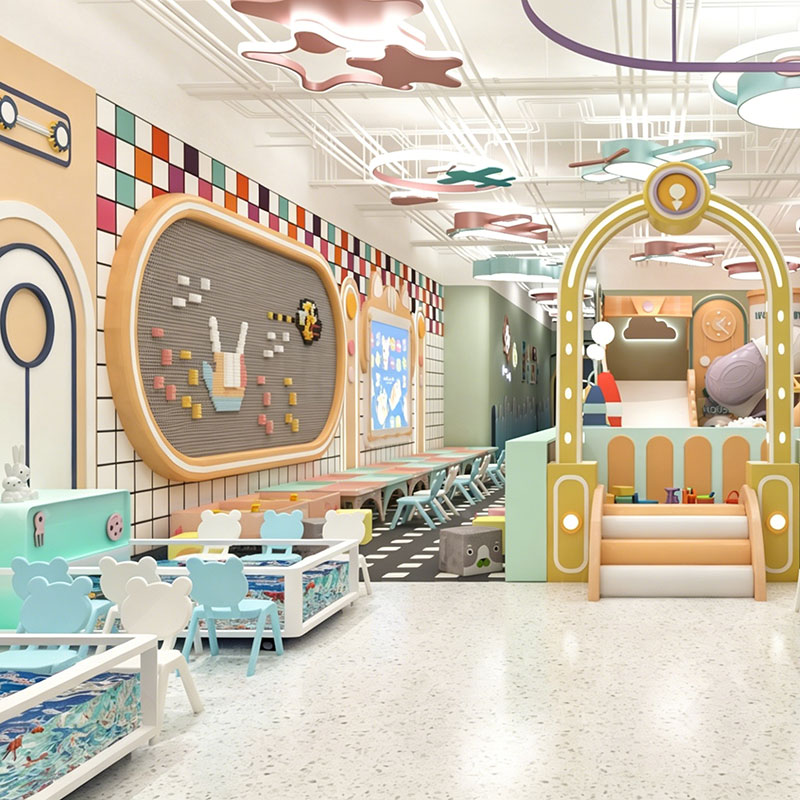
Structural stability relies entirely on steel framework integrity. You should look for high-grade galvanized steel pipes. Ask about minimum wall thickness requirements before ordering. Examine the quality of all welding joints closely. Poor welds lead to catastrophic structural failures. Uncoated steel rusts quickly in humid environments. Plastics and padding also demand strict buyer scrutiny. Commercial-grade LLDPE (Linear Low-Density Polyethylene) provides incredible durability. It resists fading and cracking under heavy usage. High-density EPE foam absorbs impacts safely over time. Cheaper alternatives crack easily. Inferior foams compress quickly under heavy daily use. High-contact areas require exceptional wear-and-tear components. PVC coverings should feature a heavy-duty denier rating. They must feature tight, reinforced stitching along every seam. Enclosure netting must use high-tenacity, knotless materials. Buyers often face a severe "showroom versus reality" risk. Vendors display perfect models but ship inferior products. You should request physical material samples before signing anything. Ask for macro-photos of hardware, joints, and fasteners.
A great design must translate seamlessly into engineering reality. You need to assess vendor adaptation skills accurately. They must accommodate unique floor plans effortlessly. Ceiling height restrictions require careful structural modifications. Local fire codes dictate specific emergency exit pathways. Beware of vendors outsourcing their internal design work. Their final products rarely match the initial 3D renders. This creates dangerous discrepancies during physical assembly. Age-appropriate zoning is another vital vendor capability. A top-tier manufacturer expertly designs distinct play areas. Toddler zones need softer edges and low-impact activities. They require sensory boards and gentle slopes. High-adrenaline junior zones require robust physical obstacles. They feature multi-level slides and ninja courses. Proper zoning ensures safe traffic flow across the facility. It also broadens your demographic appeal significantly. Parents appreciate separated areas for different age groups. This improves overall customer satisfaction. Customization proves a vendor controls their own manufacturing.
Logistics transparency defines a highly professional vendor. You must clarify their role in handling ocean freight. Customs documentation errors can cause massive port delays. Delivery timelines depend heavily on your exact shipping terms. Ensure you understand the difference between FOB and CIF terms. Installation is arguably the most critical project phase. Poor assembly ruins perfectly manufactured equipment. You generally have three standard installation methodologies:
The vendor sends a full installation team. This carries the highest cost but offers the lowest risk.
The vendor sends a supervising engineer. This expert guides your locally hired labor through complex assembly.
The vendor provides a detailed manual. This self-installation option carries the highest risk for owners. It requires deep commercial contractor experience.
Warranty loopholes trap many inexperienced business buyers. You must learn to read the fine print carefully. Warranties on steel frames often span five or more years. However, high-wear soft play items usually carry only a one-year warranty. Vandalism and normal wear are always excluded. Ensure you partner with a trusted kids indoor playground supplier to secure fair warranty terms. They will provide transparent replacement policies.
Spotting middlemen is your first vendor auditing task. Many companies claim to be actual factories. They are actually just trading companies marking up prices. You should request live video factory tours immediately. Ask them to show specific raw materials on camera. Always check their business licenses for specific manufacturing scopes. Reference checks provide invaluable operational insights. Speak directly to past clients in similar climates. Ask them about post-sale responsiveness. Find out if replacement parts arrive on time. You should utilize a pilot project strategy. Order a small freestanding component first. Request physical material samples before committing to a six-figure build. This proves their material claims are genuine. Finally, use a decision matrix to evaluate your shortlist objectively. Assign weights to different business priorities. Score each vendor strictly based on verifiable evidence.
Evaluation Criteria | Weight | Key Indicators |
|---|---|---|
Safety & Compliance | 35% | TUV/SGS certificates, ASTM/EN compliance, Non-toxic materials |
Material Quality | 25% | Galvanized steel thickness, LLDPE plastics, High-density foam |
Design Capability | 15% | Custom 3D rendering, Age-appropriate zoning, Space optimization |
Post-Sale Support | 15% | Installation teams, Maintenance guidance, Warranty transparency |
Price Allocation | 10% | Transparent freight quotes, No hidden labor fees |
Choosing a manufacturer fundamentally exercises your risk management skills. It requires careful long-term business planning. The right partner welcomes skeptical questions gracefully. They provide raw testing data over slick marketing fluff. They prioritize regulatory compliance above all else. You must evaluate structural integrity and material durability relentlessly. Never accept self-certified safety claims from any vendor. Demand third-party testing documentation for every major component. Take action today to protect your facility investment. Download a comprehensive vendor evaluation checklist. Request a physical material sample kit from your shortlisted vendors. Schedule a direct consultation with an in-house design engineer to discuss your floor plan.
A: Realistic timelines vary based on project scale. Production typically takes 3 to 6 weeks. Ocean shipping requires another 4 to 6 weeks depending on your location. Finally, professional installation takes 1 to 3 weeks. Plan for a total lead time of roughly three months.
A: Yes. Legitimate factories provide bespoke design services. They base their engineering on your exact CAD floor plans. A skilled design team easily integrates structural columns into the play area. They use these obstacles creatively within the layout.
A: You must purchase replacement components directly. This highlights the importance of choosing manufacturers who guarantee long-term parts availability. True manufacturers maintain standardized, modular systems. They can easily produce and ship a replacement slide or net years later.
A: Cost divergence stems directly from material thickness and quality. Premium vendors invest heavily in non-toxic certifications and R&D. They use thicker galvanized steel and commercial-grade plastics. They also maintain robust post-sale infrastructure. Generic vendors cut corners on safety and use cheaper materials.


