
English


Views: 167 Author: Site Editor Publish Time: 2026-07-18 Origin: Site


The retail landscape continues shifting rapidly today. Modern shopping centers must transition from purely transactional hubs to dynamic experiential destinations. They must evolve quickly to maintain steady foot traffic. Online shopping provides unmatched convenience, leaving physical retail spaces needing compelling reasons for families to visit. Commercial Soft Play Equipment acts as a strategic asset rather than a simple amenity. It directly influences customer dwell time. It also drives secondary engagement across adjacent retail tenants and food courts. By offering a safe, active space for children, operators create a highly attractive environment for parents. This guide provides property developers and mall managers with a rigorous evaluation framework. You will learn how to evaluate, source, and successfully install a high-quality setup. We cover everything from spatial planning to stringent safety compliance. Let us explore how you can maximize visitor engagement and create lasting property value.
ROI Driver: A well-placed shopping mall playground increases family dwell time, directly correlating to higher secondary spend at food courts and adjacent retail tenants.
Compliance is Mandatory: Commercial liability requires strict adherence to international safety standards (e.g., ASTM, CE, EN) and commercial-grade material specifications.
Vendor Due Diligence: The right manufacturing partner offers transparent warranties, custom spatial design, and post-installation support, rather than just off-the-shelf components.
Malls struggle frequently with "dead zones" and declining family visitation. Large retail spaces often feature empty atriums or underutilized corridors. A well-designed Shopping Mall Playground directly addresses this challenge. You must view child entertainment as a core driver for extended parental dwell time. When children play safely, parents stay longer. They dine at food courts, browse nearby stores, and engage more deeply with the property.
The economics of dwell time are straightforward. Parental fatigue often dictates the length of a shopping trip. When children become restless, families leave. Providing a dedicated play zone resets this clock. Parents can rest while keeping their children in clear sight. This extended stay directly benefits surrounding tenants. You will notice increased foot traffic flowing seamlessly into adjacent coffee shops and family-oriented retailers.
Operators generally adopt one of two primary monetization models for these installations. Each serves a distinct strategic purpose within the retail ecosystem.
Monetization Model | Strategic Purpose | Ideal Placement |
|---|---|---|
Free Amenity Model | Drives general foot traffic and increases lease value for nearby tenants. Acts as a core service. | Center atriums, wide corridors, and areas directly adjacent to food courts. |
Ticketed / FEC Model | Operates as a standalone family entertainment center. Acts as an anchor tenant generating direct revenue. | Large, enclosed anchor spaces or dedicated multi-level units. |
Defining success requires clear criteria. A successful installation handles high daily throughput without creating bottlenecks. It operates completely incident-free. The design must also align aesthetically with your overarching mall branding. You want the play area to feel like a natural extension of the retail environment, not an afterthought.
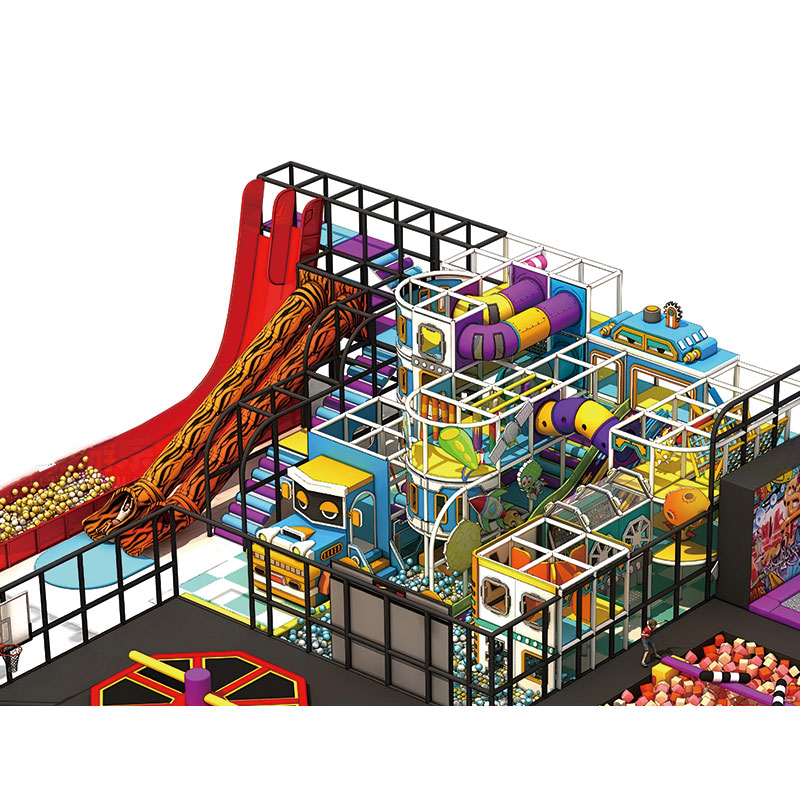
Multi-level structures work best for high-ceiling atriums or large anchor spaces. They offer massive capacity. You can maximize throughput for older children, typically ages 5 to 12. These setups often feature enclosed slides, climbing webs, and intricate tunnel systems. They draw immediate visual attention from across the concourse. We recommend these structures when you need a major focal point to anchor a specific wing of your property.
Toddler zones are ideal for center-aisle placements. You often face strict height restrictions in these areas to preserve store visibility. These low-profile setups feature soft foam shapes, low climbers, and interactive wall panels. They keep the vertical height minimal. This design maintains clear sightlines for parental supervision and mall security. Toddler areas provide a safe haven for children under five, ensuring they play away from the more intense activity of older kids.
Themed equipment aligns perfectly with your specific mall branding or local cultural elements. You might choose an ocean theme for a coastal retail center or a futuristic space theme for a modern tech hub. Customization makes the Indoor Playground highly memorable. Many modern installations now integrate interactive digital elements. Touch-sensitive light panels and interactive floor projections future-proof the space. They keep older children engaged much longer than traditional physical play alone.
Match the equipment scale to the surrounding architectural volume.
Always separate toddler zones from older children's areas using physical barriers.
Use thematic colors to blend the play zone naturally into the mall's interior design palette.
You cannot compromise on material quality in high-traffic retail environments. Commercial-grade manufacturing involves specific non-negotiables. High-density EVA foam provides essential impact absorption. Fire-retardant PVC vinyl resists tearing, cracking, and fading under constant use. Manufacturers must use galvanized steel piping for the main structural framework. This ensures the equipment withstands the dynamic loads of dozens of children playing simultaneously.
Component | Required Material | Primary Function |
|---|---|---|
Structural Frame | Galvanized Steel Pipe (min 2.0mm thickness) | Provides core stability and rust resistance. |
Padding & Surfaces | High-Density EVA Foam & Fire-Retardant PVC | Absorbs impact and ensures easy sanitization. |
Enclosures | Knotless Nylon Netting | Prevents falls while maintaining open visibility. |
Regulatory and safety standards dictate every aspect of commercial play design. You must verify that your equipment meets ASTM F1918 in the United States or EN 1176/1177 in Europe. These certifications guarantee that the equipment passes rigorous testing for entrapment hazards, flammability, and impact attenuation. A compliant facility protects children and shields your property management firm from severe legal liabilities.
Designing for security requires careful layout planning. Proper equipment layout prevents blind spots. Parents and security guards must see the entire play area from the perimeter. Wide internal walkways reduce bullying risks by preventing bottlenecks. When children can move freely, conflicts decrease significantly. Clear visibility ensures a relaxed environment for supervising parents.
You must apply a strict skeptical check when evaluating vendors. Warn your procurement team against low-quality overseas imports. These products often lack verifiable safety testing. Some use toxic plastics containing harmful phthalates. Installing uncertified equipment creates massive legal and reputational risks for commercial properties. Always demand certified lab testing reports before approving any materials.
Navigating the footprint demands precise spatial flow analysis. You must design around existing HVAC vents, structural pillars, and emergency exit routes. A play structure cannot block vital mall infrastructure. Designers often use 3D spatial mapping to integrate the play equipment seamlessly around support columns. You must ensure that queueing areas for parents do not obstruct main pedestrian thoroughfares.
Commercial installation presents unique logistical realities. You rarely install these structures during normal business hours. Most shopping centers mandate after-hours construction. This requires careful coordination to avoid disrupting nearby tenants. Union labor requirements often dictate who can offload materials and assemble the framework. Specialized flooring preparation also takes time. The sub-floor must be perfectly level and appropriately sealed before laying down safety surfacing.
Realistic expectations for maintenance and hygiene keep the facility operating smoothly. High-traffic environments demand rigorous daily sanitization protocols. You must account for wear-and-tear timelines on high-touch components. Netting, foam padding, and vinyl wraps require periodic replacement. Plan your operational logistics to handle these routine updates without causing prolonged closures.
Site Survey: Conduct a precise laser measurement of the target area, noting all ceiling heights and pillars.
Code Review: Verify local fire marshall requirements and emergency egress paths.
Floor Prep: Level the concrete slab and apply necessary moisture barriers.
After-Hours Assembly: Coordinate installation crews to work overnight, ensuring no daytime disruption.
Third-Party Inspection: Hire an independent safety inspector to certify the build before public opening.
Evaluating vendors requires looking deeply into their specific track record. You should look for manufacturers with proven deployments in high-traffic retail centers. Success in small-scale daycares or residential setups does not translate to the demands of a major shopping mall. Request case studies showing installations that handle hundreds of children daily. Ask for references from other property management firms.
Assess the vendor's in-house engineering capabilities. Customization always wins over off-the-shelf components in retail environments. A strong partner utilizes advanced CAD design to ensure the equipment fits your mall's specific architectural constraints perfectly. They will design around your challenging floor plans rather than forcing a pre-packaged square unit into a complex space.
Compare their warranty structures carefully. Look for clear distinctions between the warranty lengths on structural steel versus soft parts. Steel frames should carry extended guarantees, while soft parts naturally have shorter coverage due to daily friction. Ensure the vendor provides a transparent SLA (Service Level Agreement). You need guaranteed turnaround times for replacement parts to minimize any downtime.
Your next-step action should be highly practical. We recommend initiating a formal site evaluation immediately. Request a comprehensive 3D rendering as the first formal step in vendor engagement. This visual proof allows your stakeholders to see exactly how the equipment will elevate the retail space.
Investing in commercial play areas remains a highly strategic real estate decision. It requires rigorous compliance, detailed spatial planning, and a deep understanding of customer behavior. Shopping centers that successfully integrate these structures transform their empty spaces into vibrant, traffic-driving hubs. They create compelling reasons for modern families to visit physically rather than shop online.
The lowest bidder rarely offers the most effective solution when factoring in long-term durability and legal liability. High-quality materials and stringent safety certifications protect your property and ensure continuous, safe operation. You must view this integration as a long-term upgrade to your mall's overall appeal.
Take proactive steps to modernize your retail space today. Contact an experienced engineering and sales team for a custom site consultation. Request a detailed layout proposal or download a comprehensive commercial buyer's checklist to guide your procurement process. Your journey toward a more engaging, highly visited retail destination starts with precise planning and the right manufacturing partner.
A: Footprint requirements vary by equipment type. Low-profile toddler zones can fit into spaces as small as 200 square feet. Full-scale, multi-level structures typically require 1,000 to over 2,000 square feet. You must also allocate additional surrounding space for parental seating and secure entry gates.
A: High-quality commercial structures offer excellent longevity. Galvanized steel frameworks typically last 5 to 10 years or more. High-touch soft surfaces, like PVC vinyl and netting, generally require replacement every 2 to 3 years. Consistent daily maintenance and immediate repairs significantly extend the overall lifespan of the installation.
A: It depends on the vendor's service model. Turnkey manufacturers provide dedicated, certified installation teams who travel to your site and handle the entire build. Other suppliers only manufacture and ship the materials, leaving you to hire local contractors. We highly recommend using turnkey vendors for safety and warranty assurance.
A: You must partner with manufacturers who provide certified fire-retardant materials and detailed CAD layouts. Submit these plans to your local fire marshall before installation. After assembly, always hire a certified third-party safety inspector to verify code compliance before opening to the public.


