
English


Views: 132 Author: Site Editor Publish Time: 2026-10-08 Origin: Site


Standard play structures are no longer sufficient to serve as primary drawcards for Family Entertainment Centers or commercial spaces. Families today crave exciting, highly immersive environments. They expect destination-level experiences whenever they step outside their homes for recreation. Integrating cohesive themes into play spaces actively solves this growing demand. It shifts your facility from a basic physical activity zone into a branded, imaginative play destination. This transformation helps operators stand out significantly in fiercely competitive regional markets. It also drives higher guest satisfaction and naturally encourages repeat visits. This comprehensive guide breaks down high-ROI theme concepts, spatial planning strategies, and essential operational criteria. We will show you how to select and implement themed structures effectively. You will learn how to drive repeat customer visits without escalating daily maintenance costs.
Dwell Time & ROI: Themed environments directly correlate with extended dwell times, higher secondary spend (F&B), and stronger word-of-mouth marketing among families.
Spatial Flexibility: Effective theming does not require massive square footage; strategic facade design and custom palettes can transform even compact footprints.
Holistic Integration: Modern facilities blend high-energy zones (like a Trampoline Park) with narrative-driven soft play areas to capture a wider age demographic.
Evaluation Mandate: Procurement decisions must weigh aesthetic appeal equally against material durability, compliance standards (ASTM/CE), and ease of maintenance.
Your facility faces stiff competition in regions dense with entertainment centers. Standard play frames quickly commoditize your business. Families see little difference between one basic slide and another. Bespoke aesthetics provide the perfect solution. Custom designs elevate your space above generic alternatives. They give families a compelling reason to drive past competitors to reach your doors. Unique visual identities also create highly shareable social media moments. Parents love posting photos of visually striking environments.
Imaginative play moves children beyond mere physical exertion. Themes provide a rich narrative backdrop. This encourages collaborative, open-ended play among children. A generic climbing wall becomes an alien mountain. A standard bridge transforms into a pirate ship gangplank. This psychological engagement significantly boosts a child's desire to return. They want to continue their imaginative stories during future visits.
Parental perception directly impacts your bottom line. Highly visual, well-maintained themed spaces signal premium quality to parents. They associate beautiful environments with safety and cleanliness. This premium perception easily justifies higher admission tiers. It also makes membership models much easier to sell. When parents feel they get immense value, they willingly spend more on secondary offerings like food and beverages.
Selecting the right visual concept for a modern kids indoor playground requires understanding current market demands. The best themes balance aesthetic appeal against daily operational realities.
Space themes captivate children across multiple age groups. They offer endless possibilities for creative design.
Design Elements: Operators often incorporate rocket-ship towers and glowing LED crawl tubes. You can also build alien landscape obstacle courses using textured soft mats.
Operational Benefit: This theme appeals broadly to both toddlers and older children. Furthermore, darker color palettes like deep blues and purples hide wear and tear effectively. Scuff marks blend into the starry background designs.
Nature themes bring the outdoors inside. They create calming yet adventurous atmospheres.
Design Elements: You might install treehouse multi-level structures and canopy bridges. Leaf-motif slides and textured ground elements resembling grass or soil complete the look.
Operational Benefit: This concept fits seamlessly into eco-conscious brand identities. It heavily appeals to parents seeking natural play alternatives indoors. Green and brown tones create a visually soothing environment for supervising adults.
City themes resonate strongly because they mimic the adult world. Children love pretending to drive or work in towns.
Design Elements: These spaces feature mini-cities and fire station climbers. Integrated traffic tracks for ride-on toys allow for dynamic movement.
Operational Benefit: This theme excels in toddler and preschool zones. It encourages high degrees of role-play and social interaction. Children learn basic rules like stopping at red lights while burning energy safely.
Pirate themes remain a timeless favorite. They naturally encourage exploration and physical challenges.
Design Elements: Common features include ship galleons and wave-themed soft mats. Treasure cave hideaways offer exciting spaces for children to discover.
Operational Benefit: Pirate themes naturally support verticality. Ship masts and multi-level decks maximize throughput in spaces featuring high ceilings. This proves incredibly useful if you have limited floor space.
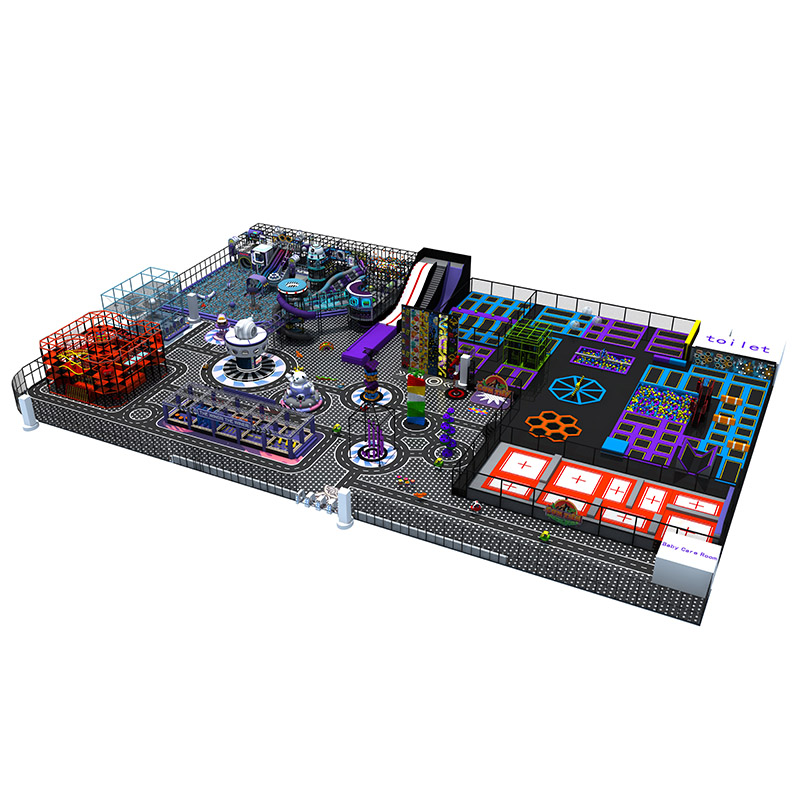
Standalone structures are rapidly giving way to hybrid environments. Modern families expect variety during their visits. Blending different play types keeps children engaged much longer. It also prevents older siblings from getting bored while toddlers play. You must think beyond traditional soft play boundaries. Hybrid models integrate physical challenges, digital games, and climbing activities into one cohesive narrative.
Adjoining themed soft play areas alongside a Trampoline Park requires careful planning. You want to safely separate toddlers from teenagers. However, you must still maintain a unified facility aesthetic. Use themed transition zones to divide these areas naturally. For example, a space theme could use a "lunar bounce" trampoline zone connected to a "space station" soft play frame. Half-height themed walls block accidental crossovers. They simultaneously preserve clear sightlines across your entire facility.
Adding interactive digital elements bridges the digital-physical divide. Physical play remains essential, but screens attract modern children. Integrate sensory panels and Augmented Reality (AR) targets directly into the physical structures. You can add gamified scoring systems to obstacle courses. Children swipe RFID bands against targets to collect points. This creates a highly repeatable experience. They will return specifically to beat their previous high scores.
Effective theming does not demand massive square footage. You can maximize small spaces through clever design choices. Customized fiberglass facades attach directly to standard frames. They create a massive visual impact without consuming valuable floor area. Targeted color schemes unify the space instantly. Printed safety netting replaces generic black mesh. It can display forest canopies or underwater scenes. These small touches transform compact footprints into immersive worlds.
Vertical expansion increases your capacity dramatically. Utilizing ceiling height allows you to build multi-level themed towers. Castle turrets and tall treehouses draw the eye upward. This strategy significantly increases your return on investment per square foot. More children can play simultaneously in a smaller footprint. Ensure your ceiling infrastructure can support the necessary safety netting and lighting modifications.
Elaborate theming must never compromise safety. Solid ship hulls or dense cave walls look amazing. However, they can create dangerous blind spots. Parents must monitor their children easily from seating areas. Staff need clear views to enforce rules. Use perforated panels or strategic portholes instead of solid walls. Maintain wide walkways around themed centerpieces. Balancing visual immersion and practical visibility prevents operational nightmares down the road.
Sourcing reliable Themed Playground Equipment involves strict evaluation. You must avoid visually impressive but fragile materials. Flimsy decorative pieces break quickly under commercial use. Emphasize high-density plastics and commercial-grade vinyl. Demand robust steel framing underneath any decorative fiberglass. Your equipment must withstand thousands of daily interactions without degrading.
Table: Equipment Material Evaluation Standards
Material Category | Primary Application | Durability Factors |
|---|---|---|
High-Density Polyethylene (HDPE) | Slide panels, decorative facades, interactive boards. | Resists scratching, UV stable, will not splinter or crack easily. |
Commercial-Grade Vinyl | Soft play wrapping, crash mats, post padding. | Tear-resistant, non-porous, easily sanitized daily. |
Galvanized Steel | Core structural framing, multi-level supports. | High load-bearing capacity, resists rust in humid indoor environments. |
Custom Fiberglass | Large 3D elements (mascots, ship bows, custom caves). | Requires thick gel coating to prevent chipping from heavy impacts. |
You must mandate strict adherence to local and international safety standards. Never compromise on compliance baselines. Look for certifications like ASTM F1918 for indoor soft play environments. European operators should seek CE marks and EN1176 compliance. Insist on seeing documented safety testing from your manufacturer before signing any contracts. Non-compliant equipment exposes your business to massive legal liabilities.
Assess the maintenance realities before finalizing complex designs. Complex themed elements often feature deep crevices or intricate shapes. Ask yourself how easily staff can clean these surfaces daily. Consider parts replacement strategies. Can replacement parts be easily sourced? If every panel requires a one-off custom mold, repairs will be agonizingly slow. Opt for systems offering modular replacement options.
Modularity determines your long-term success. Themed attractions eventually feel stale to local customers. Can you expand the system easily? Can you update the core theme using new facade panels in three to five years? Modular designs allow you to refresh the attraction affordably. You avoid tearing down the entire steel structure just to change the visual concept.
Custom themes require significant lead time transparency. Off-the-shelf equipment ships quickly, but bespoke designs take time. Custom themes often require 12 to 16 weeks for design, manufacturing, and shipping. International freight adds further complexities to your schedule. You must plan your grand opening launch around realistic timelines. Delays in customs or manufacturing bottlenecks can derail your entire marketing campaign. Always add a four-week buffer to any manufacturer's estimate.
Installation complexities define custom thematic builds. General contractors excel at plumbing and electrical work. However, complex themes require certified installation teams. Improperly installed safety netting or loosely secured fiberglass panels cause severe accidents. Specialized installers understand the precise tension required for nets. They know how to secure heavy decorative elements to steel frames safely. Always factor professional installation into your initial budget.
Evaluating a manufacturer’s track record mitigates your financial risk. You must vet vendors rigorously before committing capital.
In-house Design Capabilities: Ensure they employ dedicated 3D designers. They should provide detailed renderings before manufacturing begins.
Transparent Material Specs: Demand exact specifications for vinyl thickness, foam density, and steel gauges. Avoid vendors offering vague material descriptions.
Comprehensive Warranty Terms: Look for multi-year warranties covering both structural integrity and seam stitching. Read the fine print regarding regular wear and tear.
Verifiable Case Studies: Ask for references from similar-scale facilities. Call past clients directly. Ask them about post-installation support and parts availability.
Themed play spaces represent a highly strategic business investment. They elevate your brand positioning and drive family retention effectively. Operators can no longer rely on standard metal frames to impress modern consumers. By integrating captivating narratives into physical structures, you create destinations worth visiting repeatedly.
Your next steps require careful local analysis. Begin with a clear footprint analysis and demographic target. Do not fall in love with a specific visual concept until you verify it fits your space and audience. We encourage operators to request a custom 3D design rendering or a professional site evaluation. Visualizing how a specific theme aligns with your operational goals ensures a profitable launch.
A: Yes, custom theming carries a premium, typically ranging from 15% to 30% more than standard setups. However, increased facility capacity offsets this initial cost. Themed environments support higher ticket pricing and generate much stronger visual marketing power, leading to faster overall returns.
A: Sometimes. Post-pad wraps, new themed panels, and updated flooring can successfully refresh an existing structure. However, full structural themes work best when implemented during the initial build. Retrofitting highly complex 3D elements onto standard frames often proves difficult due to weight constraints.
A: From initial concept to grand opening, a custom project typically takes 3 to 5 months. This timeframe factors in multiple 3D rendering iterations, custom manufacturing, international freight delays, and final certified installation on site.


