
English


Views: 145 Author: Site Editor Publish Time: 2026-07-27 Origin: Site


Launching a commercial trampoline park demands significant initial capital expenditure. This high initial CapEx requires a rigorous, defensively modeled business plan from day one. Entering this competitive industry means moving beyond basic concepts into serious financial and spatial planning. We offer a definitive evaluation framework designed specifically for entrepreneurs and investors. You will learn how to transition smoothly from an initial concept to concrete site selection and vendor procurement. Generic market overviews simply fail to address the heavy operational risks and layout challenges you will face. Success ultimately hinges on balancing high-capacity attractions with strict compliance and operational efficiency. In the sections below, we will explore crucial facility requirements, advanced safety protocols, and proven revenue models. You will discover exactly how strategic layout decisions and distinct attractions dictate your long-term viability.
Facility viability relies heavily on non-negotiable architectural metrics (e.g., 18–24 foot clear ceiling heights and column-free spans).
Differentiating through custom themed playground equipment drives higher baseline retention and premium party bookings.
Liability management and adherence to global safety standards (ASTM/EN) are primary drivers of ongoing operational expenditure (OpEx).
Profitability scales by diversifying revenue streams beyond standard jump time into F&B, merchandise, and tiered memberships.
Finding the right commercial real estate dictates your ultimate operational capacity. Minimum square footage thresholds typically range from 20,000 to 40,000 square feet. This footprint supports diverse attractions while ensuring adequate return on investment. You must evaluate critical structural elements before signing any lease.
Minimum clear height remains a non-negotiable metric. Facilities require at least 18 feet of vertical clearance. Jumpers need safe overhead space above the elevated trampoline beds. You must also assess existing HVAC capacity. High-exertion environments generate massive heat loads. Upgrading rooftop cooling units requires heavy capital if the existing system falls short. Furthermore, wide column spacing ensures unobstructed sightlines for safety monitors and allows for optimal trampoline grid layouts.
Navigating municipal regulations often presents hidden hurdles. Amusement facilities usually require specific commercial or industrial zoning. Many industrial warehouses offer the perfect ceiling heights. However, they frequently lack sufficient parking. Local municipalities calculate parking ratios based on maximum building occupancy. Warehouse conversions often stall when city planners demand retail-level parking counts. You must verify these local parking requirements early in your feasibility study.
Strategic floorplan design directly impacts your revenue per square foot. We rely on the "Golden Triangle" layout principle. This concept positions check-in desks, active play zones, and rest/F&B areas in a highly efficient loop. It controls crowd flow and minimizes bottlenecks during peak weekend hours.
You must balance active capacity against passive capacity. Active zones include trampoline courts and ninja courses. Passive zones feature arcades, viewing decks, and cafes. Passive areas keep guests inside the building longer. Extended dwell times naturally increase secondary spending. A well-modeled floorplan maximizes both engagement and ancillary revenue.
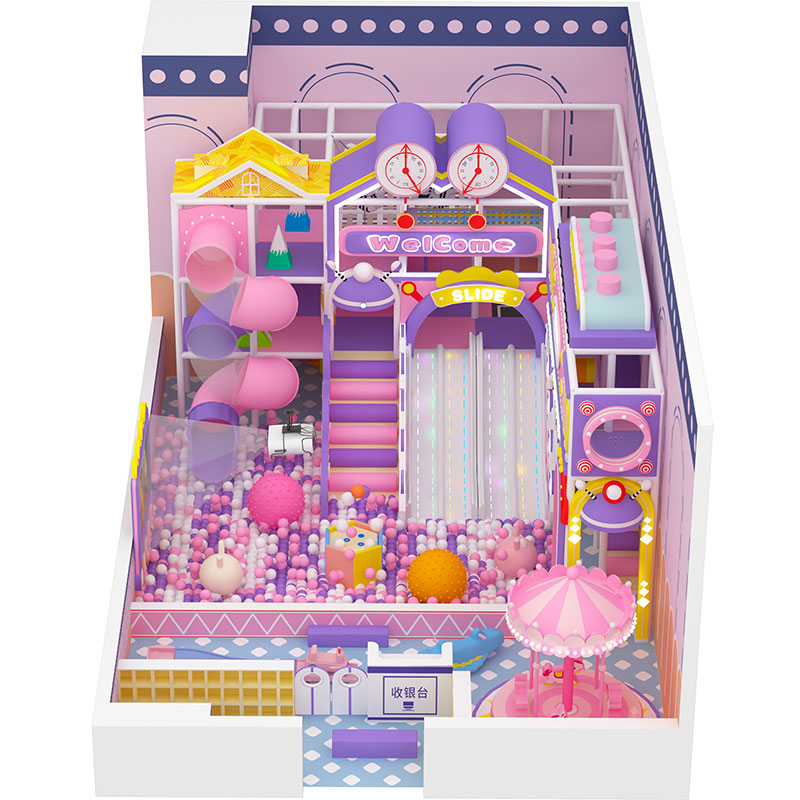
Theming offers immense strategic value for modern family entertainment centers. It moves your facility beyond generic modular setups. Custom designs create distinct intellectual property for your brand. This unique branding easily justifies higher entry pricing. Installing themed playground equipment transforms a basic jump park into an immersive destination. High visual appeal drives social media sharing and increases baseline customer retention.
Selecting the right manufacturing partner mitigates long-term operational headaches. You should evaluate vendors across three primary categories:
Materials and Durability: Assess the gauge of the galvanized steel frames. Heavier steel prevents structural flexing. Review the foam density used in safety padding. High-density foam resists compression over time. Verify the vinyl thickness covering the pads. Commercial use requires at least 0.55mm PVC to prevent tearing.
Customization vs. Lead Time: Balance off-the-shelf components against bespoke structures. Custom theming elevates your brand but extends production schedules. You should anticipate 12 to 16 week timelines for manufacturing and international shipping.
Installation Capabilities: Differentiate between suppliers. Some simply drop-ship crates to your loading dock. Others provide end-to-end, certified installation teams. Professional installation ensures strict adherence to structural safety standards.
A diverse attraction mix captures a wider demographic. Combine core trampoline beds with high-retention add-ons. Ninja courses challenge teenagers. Climbing walls engage older children. Dedicated toddler zones provide safe spaces for the youngest guests. You must also factor in replacement cycles for all wear-and-tear parts. Springs stretch out. Pads compress. Nets tear. A realistic business plan models these component replacements into annual operational budgets.
Aggressive risk management keeps your doors open. Regulatory frameworks govern every aspect of trampoline park operations. You must mandate adherence to localized safety standards. In the United States, facilities follow ASTM F2970. In Europe, operators adhere to EN 1176 and EN 1177. Vendor certification remains a non-negotiable prerequisite. Insurance providers will flatly deny coverage if your equipment lacks documented compliance with these major standards.
Safety begins during the engineering phase. Redundancy in design prevents catastrophic failures. Quality parks utilize double-layer jumping mats. If the primary top mat fails, the secondary sub-mat catches the jumper safely. Proper padding overlaps prevent feet from slipping between springs. Reinforced netting contains guests within designated zones.
Staffing models also dictate safety success. You must enforce strict court monitor-to-jumper ratios. Overcrowded zones lead to collisions. Specialized emergency response training empowers your staff to handle injuries effectively. Court monitors need continuous education on identifying risky jumper behaviors before accidents happen.
You must prepare for high liability premiums. Amusement insurance consistently ranks among the highest expenses. Fortunately, you can implement operational strategies to mitigate premium hikes and legal exposure.
Digital Waivers: Require legally binding waivers for every participant before entry.
Continuous Video Surveillance: Install high-definition cameras covering all active zones. Video evidence quickly refutes false injury claims.
Documented Maintenance: Maintain strict digital logs. Document all daily and weekly equipment inspections.
Standard Safety Inspection Frequency | ||
Component | Inspection Frequency | Key Focus Area |
|---|---|---|
Jumping Mats | Daily | Tears, fraying stitching, tension loss |
Frame Pads | Daily | Velcro integrity, foam compression, overlaps |
Springs | Weekly | Over-extension, rust, missing hooks |
Netting | Weekly | Holes, tension cables, zipper function |
Main Steel Frame | Monthly | Bolt tightness, weld integrity, floor anchors |
Traditional parks once relied solely on flat hourly jump rates. Today, operators use dynamic pricing models. Transitioning to tiered ticketing maximizes weekend profitability. You can implement peak versus off-peak pricing. Off-peak discounts drive traffic during slow weekday hours. VIP access passes offer dedicated jump lanes or premium lounge access. Integrating a full indoor playground into your facility expands your demographic reach, allowing you to charge comprehensive family admission rates.
Standard admission barely covers your fixed costs. Real profitability stems from high-margin ancillary streams. You must design your facility to capture secondary spending at every opportunity.
Birthday parties and corporate events serve as the highest margin drivers. Structure your floorplan to include multiple private rental rooms. Assign dedicated party hosts. Offer tiered packages featuring custom decorations and premium catering. These structured events guarantee upfront revenue.
Food and beverage operations also capture massive secondary spend. Design a cafe or snack bar layout strategically. Position it near the passive viewing areas. Parents will buy coffee and snacks while watching their children. Stick to pre-packaged items or simple prep foods initially. This approach avoids excessive health department red tape.
Grip socks and branded merchandise provide mandatory, recurring revenue. Safety rules dictate every jumper must wear approved grip socks. This inexpensive inventory item yields incredible markups.
Revenue Category | Margin Potential | Operational Effort | Primary Business Benefit |
|---|---|---|---|
Core Ticketing | Medium | Low | Drives baseline volume and initial foot traffic |
Birthday Parties | Very High | High | Guarantees large upfront cash flow and group attendance |
Food & Beverage | High | Medium | Increases customer dwell time and secondary spend |
Grip Socks & Merch | Very High | Low | Mandatory safety purchase acting as a reliable profit center |
Seasonal fluctuations challenge every amusement operator. Structuring recurring monthly revenue models stabilizes your cash flow. Monthly memberships encourage repeat visits during off-peak seasons. Offer exclusive member-only hours or discounts on party bookings. A strong membership base provides financial predictability during slow school hours.
Securing capital requires a transparent breakdown of all anticipated costs. Investors need to see distinct lines drawn between one-time capital expenditures and ongoing operational expenditures.
CapEx covers your initial launch. This includes massive leasehold improvements. You will need to build multiple public bathrooms, upgrade HVAC systems, and install custom lighting. CapEx also covers initial equipment manufacturing, overseas shipping, import duties, professional installation, and franchise fees if applicable.
OpEx covers your daily survival. You must budget for heavy payroll costs. Triple-net lease agreements mean you pay base rent plus property taxes, building insurance, and common area maintenance. OpEx also includes your high liability insurance premiums, digital marketing campaigns, and a dedicated maintenance sinking fund for future repairs.
Never rely on top-line estimates. Request comprehensive, itemized quotes from three or four specialized manufacturers. Itemized quotes prevent vendors from hiding subpar materials inside bundled packages. You must vet vendor track records aggressively. Request detailed case studies. Visit operational parks built by the vendor. Inspect the equipment after two years of heavy commercial use. Always verify their post-sale warranty support.
Take your finalized business plan to lenders. Secure funding through Small Business Administration loans or private equity partners. Once funded, initiate the site-specific 3D design phase. Work closely with your chosen equipment partner to perfectly map their attractions into your specific building footprint.
A profitable park is built on the intersection of strategic site selection, durable equipment, and aggressive risk management.
Diversifying revenue streams through birthday parties, memberships, and F&B operations protects against seasonal downtime.
Implementing strict safety protocols and utilizing certified equipment directly controls your liability insurance premiums.
Stakeholders should finalize local demographic research immediately.
Initiate preliminary design consultations with certified equipment manufacturers today to lock in real-world space and cost projections.
A: Realistic timelines dictate planning for at least four to five months total. Manufacturing custom components typically requires three to four months. Once production finishes, you must allow four to six weeks for overseas transit, customs clearance, and final professional installation at your facility.
A: Insurance consistently represents the highest operational expense. Costs vary drastically based on regional litigation history, facility capacity, and selected attractions. Securing coverage mandates the use of ASTM-certified equipment. Implementing digital waivers and continuous surveillance helps negotiate slightly more favorable premium rates.
A: Standard lifecycle estimates depend heavily on daily foot traffic. High-density frame pads generally require replacement every one to two years due to foam compression. Polypropylene jumping mats typically last two to three years. Operators must establish a dedicated ongoing maintenance budget to handle these inevitable replacements.
A: Hybrid models prove highly lucrative. Combining both attractions increases your target demographic age range. Standalone trampolines attract older kids and teens. Adding soft play structures captures toddlers and younger siblings. This comprehensive approach maximizes overall family spend and extends average customer dwell times.


