
English


Views: 162 Author: Site Editor Publish Time: 2026-09-25 Origin: Site


Building an entertainment center is an exciting venture. Entrepreneurs and investors see huge potential in the family amusement market. However, launching this business requires more than just a great concept. It demands careful financial planning and precise execution.
Setting up a commercial play area requires significant upfront capital. Unclear budget forecasting often leads to severe undercapitalization. This lack of funding can cause delayed openings. It may also compromise facility safety or trigger immediate cash flow crises during your first year. You must understand exactly where your money goes before signing a lease.
We offer a realistic, skeptical-friendly financial breakdown below. You will move past basic estimates to examine actual capital expenditures. We reveal hidden operational traps many new owners miss. You will also learn how vendor selection directly impacts your long-term profitability and success.
Total Investment Range: Expect total startup costs to range from $100,000 for a boutique space to $500,000+ for a large-scale commercial center.
Equipment is Only One Piece: Physical play structures typically account for only 30-40% of the initial budget.
Hidden Operational Traps: First-year cash flow is heavily impacted by specialized liability insurance, HVAC upgrades, and commercial lease terms.
You must establish realistic financial parameters early. Smart investors separate one-time capital expenditures from recurring overhead. This prevents budget overruns and secures enough runway for the first year of operation. The financial allocation spans four primary categories. Each demands rigorous vetting.
Budget Category | Estimated Percentage | Primary Expense Drivers |
|---|---|---|
Facility & Leasehold | 25% - 35% | Deposits, zoning permits, HVAC upgrades, flooring |
Play Equipment | 30% - 40% | Physical structures, safety surfacing, freight, installation |
Licensing & Insurance | 10% - 15% | Liability policies, municipal inspections, legal fees |
Working Capital | 15% - 20% | POS software, marketing, staff training, cash reserves |
Securing a building is just the beginning. Commercial landlords require substantial deposits. You generally pay the first and last month of rent upfront. These initial lease costs drain cash quickly.
You also face strict regulatory hurdles. Municipalities require zoning permits before you open. You must hire professionals for architectural blueprints and engineering approvals. These documents prove your facility meets local safety codes.
Facility build-outs consume a massive portion of this budget segment. Standard commercial spaces rarely meet amusement center requirements. You must fund several vital upgrades:
HVAC Systems: High-activity zones generate immense heat. Upgraded climate control is mandatory.
Specialized Flooring: You need durable, slip-resistant surfaces in walking areas.
Restrooms: ADA-compliant bathrooms require specific plumbing and space layouts.
Cafe Integrations: Seating areas and snack bars need appropriate electrical and plumbing setups.
Your core attraction represents a major capital expense. However, the sticker price of an Indoor Playground rarely reflects the final landed cost. Manufacturers often quote raw production prices. They exclude crucial logistical fees.
You must account for freight, customs, and final delivery fees. International shipping rates fluctuate wildly. Port delays can also add unexpected storage charges. You should always request a comprehensive quote including these fees.
Installation presents another significant cost. Professional installation labor ensures structural integrity. Self-assembly might seem tempting to save money. We highly advise against it. DIY builds carry massive risks. They often void warranties and fail municipal safety inspections.
Safety surfacing is a mandatory compliance expense. You cannot place play structures directly on concrete. You must install EVA mats or poured rubber flooring. These materials absorb impact and meet critical fall height regulations.
Protecting your business requires specialized coverage. Standard commercial general liability policies exclude amusement activities. You must purchase high-limit insurance tailored specifically for recreational spaces. These specialized policies cost significantly more than typical retail coverage.
State and municipal governments strictly regulate amusement spaces. You will pay for multiple safety inspections. Fire marshals and building inspectors must approve the premises. Operating licenses also carry annual renewal fees.
If you join a franchise, allocate funds for franchise fees. Established brands provide proven business models. However, they demand substantial upfront payments and ongoing royalties. Independent builds avoid these fees but require more legal groundwork.
Many new owners run out of money right before opening. You need working capital to cross the finish line. Technology infrastructure is a major pre-launch expense. Point of Sale (POS) systems must handle tickets, cafe sales, and party bookings. Waiver management software is essential for liability protection. High-definition security cameras protect both customers and staff.
You must also fund pre-launch marketing campaigns. Staff hiring and training take place weeks before revenue begins. You are paying wages while the doors remain closed to the public.
Never open without a financial safety net. We recommend holding a six-month cash reserve. This covers your operational runway while you build a steady customer base.
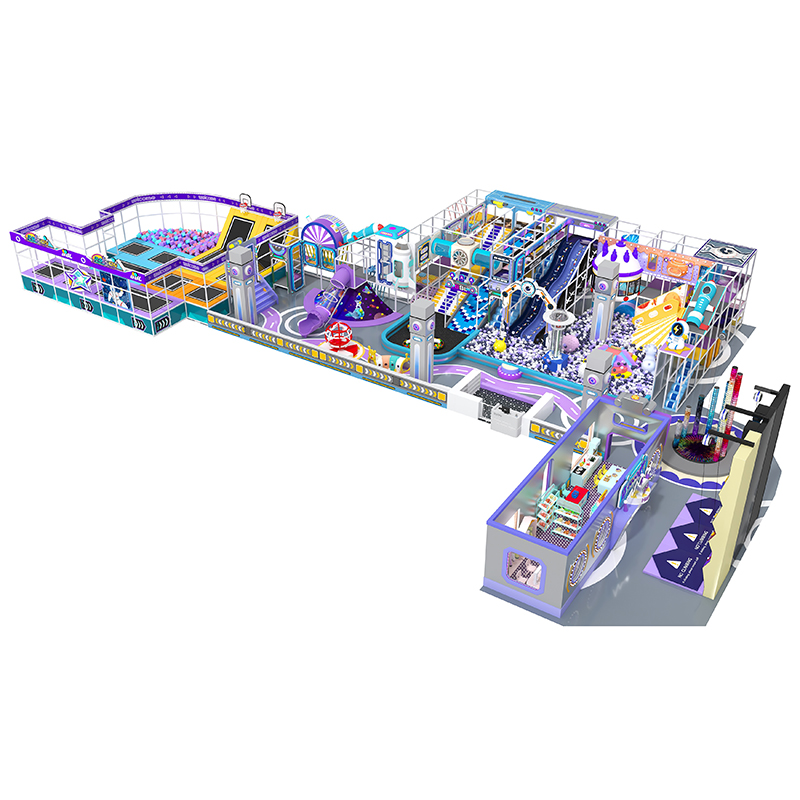
Your chosen business model dictates your ultimate indoor playground cost. Different play structures impact both initial capital expenditures and target demographics. You must align your facility size with your revenue goals.
Boutique spaces offer a lower barrier to entry. These facilities focus highly on soft play elements. You will install sensory boards, small ball pits, and low-impact structures. The aesthetic is often modern and minimalist.
This model produces specific financial outcomes. You benefit from lower insurance premiums. The equipment poses fewer risks, reducing liability multipliers. However, smaller maximum capacity limits your revenue ceilings. You cannot host large crowds or multiple birthday parties simultaneously. Success relies on high turnover and premium cafe sales.
Mid-sized centers represent the industry standard. These layouts require significant structural engineering. You need higher ceilings to accommodate multi-level climbing frames. Features include tube slides, complex netting, and obstacle courses.
The financial outcome balances higher capital expenditures with better returns. You attract a wider age range. Toddlers and pre-teens can play in designated zones. This broad appeal increases customer dwell time. Longer visits directly boost your average ticket value through food and beverage sales.
Large-scale centers transform into regional destinations. The cost profile involves massive investments. You will fund trampoline zones, interactive digital projections, and ninja courses. Some facilities even include mechanized rides or bumper cars.
This tier supports a premium pricing model. You can charge higher admission rates and host corporate events. However, the operational demands are intense. You require rigorous maintenance budgets. Strict supplier warranties are absolutely critical to minimize equipment downtime.
Actual small business owners frequently share their "what I wish I knew" moments. Experience reveals several painful financial traps. Anticipating these hurdles protects your first-year cash flow.
New operators often experience severe sticker shock regarding insurance. Standard commercial liability absolutely will not cover an active amusement center. You need an excess lines or specialized recreation policy.
Your specific equipment choices dictate premium multipliers. Including trampolines in a kids indoor playground drastically increases insurance rates. Ball pits also raise premiums due to sanitation and hidden-hazard risks. You should consult an insurance broker before finalizing your equipment design.
Commercial play gear takes a daily beating. You must budget for continuous maintenance. High-traffic soft play vinyl tears over time. Netting stretches and breaks. These items require prompt replacement to prevent injuries.
Sanitization chemicals also represent a heavy recurring expense. You must clean the facility thoroughly every night. If you buy cheap equipment initially, you will likely double your maintenance costs in year one. Low-quality vinyl cracks easily, forcing premature replacements.
Utility bills consistently surprise new owners. The hidden cost of cooling a high-ceiling warehouse is staggering. You are managing a space filled with physically active children and adults. Standard warehouse insulation is rarely sufficient.
Your HVAC units will run constantly during peak hours. If your initial build-out skipped proper ductwork zoning, expect massive energy bills. We strongly suggest investing in energy-efficient climate control systems upfront.
Cutting corners during planning leads to severe financial penalties. Failing local fire codes halts your opening immediately. Every day you delay opening, you still pay rent and staff wages.
ADA accessibility issues also trigger lawsuits and fines. Furthermore, your equipment must meet ASTM International safety standards (specifically ASTM F1918 in the US). If inspectors find non-compliant gear, they will shut down the affected zones. Retrofitting equipment to meet code is incredibly expensive.
Geographic location heavily skews the budgeting model. You cannot use a rural Ohio budget for a downtown Chicago build. Understanding local market realities ensures accurate forecasting.
Real estate choices force a critical trade-off. Urban centers offer high natural foot traffic. You spend less on digital marketing because customers walk past your door daily. However, the lease rates are astronomical, and square footage is severely limited.
Suburban destination spaces flip this dynamic. You secure massive warehouse spaces for much lower rent. Yet, you become a destination venue. Customers must drive out of their way to visit. This requires a much higher customer acquisition cost through aggressive advertising and social media marketing.
Regulatory strictness varies wildly across state lines. California enforces strict consumer safety laws and seismic engineering requirements. Getting architectural approvals there takes longer and costs more. Conversely, some midwestern states feature more relaxed zoning rules.
These variances impact equipment sourcing. Structures bound for strict states require extra engineering stamps. You must factor these localized legal fees into your baseline budget.
Installation costs fluctuate based on prevailing regional wages. Hiring certified installers in metropolitan hubs costs significantly more than in rural counties. Some municipalities also mandate union labor for commercial build-outs.
Do not rely on national average labor rates. Always request local quotes from certified general contractors. Miscalculating installation labor easily causes a $20,000 budget deficit.
Transitioning from budget evaluation to supplier vetting is a critical phase. The cheapest upfront quote is rarely the best business decision. You must scrutinize manufacturers to protect your initial capital.
Never compromise on safety standards. You must verify that equipment meets rigorous safety codes. Look for ASTM standards in the USA or EN standards in Europe. Do not accept self-certified documentation from obscure factories.
You must demand third-party testing reports. Independent laboratories should verify the structural integrity and fire resistance of the materials. Reputable manufacturers gladly provide these certificates. If a vendor hesitates, walk away immediately.
Warranties often contain hidden loopholes. You must read the fine print meticulously. Many warranties cover replacement parts but entirely exclude installation labor. Shipping a replacement slide from overseas might be "free," but paying a crew to install it costs thousands.
Consider the vendor's support infrastructure. Does the manufacturer have local support technicians? If they only employ overseas agents, resolving warranty claims takes months. Local representation ensures minimal downtime for broken equipment.
Take decisive action before signing any commercial lease. Request a detailed 3D rendering from your shortlisted manufacturers. Demand an itemized freight and installation quote.
Lock in a hard equipment budget first. Once you know exact material and shipping expenses, you can confidently negotiate lease terms. This sequence prevents you from leasing a space you cannot afford to fill.
Building a successful indoor amusement center requires strategic foresight. You must shift your focus from simply finding the cheapest equipment. Instead, prioritize constructing a resilient, compliant, and low-maintenance business model. High-quality initial investments drastically reduce first-year operational chaos.
Risk mitigation dictates your survival. Always overestimate your working capital by at least 20%. Ensure you secure a commercial lease only after confirming zoning viability and insurance availability. Premature lease signing is the most common downfall for new operators.
Your next move is gathering accurate data. Request a customized quote from certified manufacturers today. Access a detailed ROI calculator, or schedule a facility planning consultation to solidify your launch strategy.
A: It typically takes 1.5 to 3 years to break even. This timeline depends heavily on your lease terms and facility size. Secondary revenue streams accelerate this process. Maximizing birthday party packages, cafe sales, and seasonal memberships significantly shortens your break-even period.
A: Yes, standard commercial liability is insufficient. Specialized amusement and recreation policies are mandatory. These policies account for the unique physical risks of trampolines, slides, and climbing frames. Operating without proper recreation coverage exposes you to catastrophic financial liability.
A: Yes, many produce global-standard equipment used worldwide. However, buyers must remain diligent. You must verify their ASTM or CE certifications through third-party reports. Always calculate actual landed costs, including international freight, customs, and tariffs, rather than just the factory price.
A: We strongly advise against this. DIY installation often voids manufacturer warranties. It also routinely leads to failed municipal safety inspections. Paying professional, certified installers ensures structural integrity, compliance with safety codes, and long-term peace of mind.


