
English


The modern family entertainment landscape is shifting rapidly. Millennial and Generation Z parents increasingly demand "third spaces." These environments exist outside of work and home, catering equally to adult relaxation and child engagement. Picture a caregiver sipping an artisanal latte and catching up on emails. Just a few feet away, their toddler safely navigates a padded climbing ramp. This dual-purpose environment forms the core of a highly lucrative hybrid business model.
Combining food and beverage service with a children's entertainment center sounds incredibly appealing. It is, however, a complex operational undertaking. Entrepreneurs face unique logistical, regulatory, and financial hurdles. Launching a sustainable venue requires navigating strict health codes, rigorous safety standards, and specialized liability requirements. This comprehensive guide provides a clear, actionable roadmap to build a compliant and community-loved facility from the ground up.
Market Demand: The industry caters to a highly motivated demographic seeking safe environments for early childhood development alongside premium adult amenities.
Strategic Planning: Long-term viability requires a dual-focus business plan meticulously accounting for both food service margins and play area admission revenue.
Equipment Quality: Sourcing commercial-grade, durable structures is non-negotiable for ensuring child safety, reducing maintenance costs, and maintaining insurance compliance.
Space Optimization: Massive retail warehouses are unnecessary. Strategic architectural layouts maximize entertainment value in smaller, more affordable commercial footprints.
Hidden Costs: Accurate financial forecasting must include operational realities like specialized liability insurance, rigorous daily cleaning supplies, and commercial zoning permits.
Recent market analysis reveals a distinct pivot in consumer behavior regarding family entertainment. Modern families are actively moving away from chaotic, mega-sized amusement centers. There is a surging preference for localized, aesthetically pleasing spaces prioritizing hygiene, safety, and adult comfort. The post-pandemic landscape accelerated this shift. Caregivers now willingly pay a premium for controlled, meticulously sanitized environments.
Industry data indicates that micro-amusement venues often outperform massive trampoline parks in suburban demographics. This success stems from lower fixed overhead costs and significantly higher repeat visit rates. Parents view these spaces not as a rare weekend treat, but as a weekly staple for socialization and early motor skill development. Consequently, facilities that successfully blend high-end hospitality with engaging physical activities are capturing maximum market share.
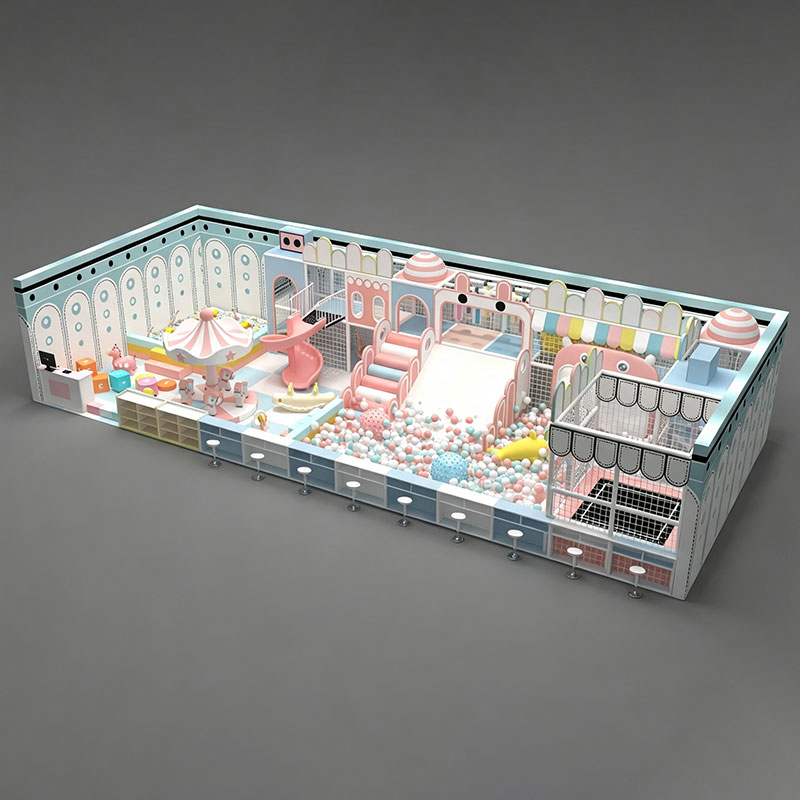
Before committing significant capital, operators must deeply understand the fundamental mechanics of this hybrid operation. These specialized facilities typically target early childhood, specifically children between the ages of zero and six. Unlike loud arcade centers designed for older youths, this model focuses on sensory exploration and creating a low-stress environment for caregivers. A thoughtfully designed toddler indoor playground perfectly answers this growing market gap. It offers an intimate setting where communities can connect safely.
Operating effectively requires managing two distinct businesses under one roof. Relying on a single income stream is rarely sufficient to cover commercial real estate overhead. Sustainable venues rely on diversified revenue. This includes pay-to-play daily admissions, high-margin premium coffee sales, lucrative weekend private birthday packages, and ancillary retail merchandise like grip socks.
Entering the family entertainment sector requires substantial initial capital. Securing funding demands a data-backed, comprehensive business plan. Initial capital requirements fall into four main categories. These include commercial lease deposits, architectural build-outs, equipment procurement, and an initial operating runway.
Many first-time operators miscalculate the ongoing operational expenses unique to this industry. Accurate financial forecasting must uncover hidden costs. Commercial liability insurance for a facility hosting young children is significantly higher than a standard neighborhood coffee shop. Furthermore, wear-and-tear replacement funds are an absolute necessity. Even the highest-quality vinyl requires periodic maintenance. The budget for daily deep-cleaning supplies, specifically non-toxic hospital-grade sanitizers, remains surprisingly high but critical for maintaining customer trust.
When projecting your Return on Investment, a conservative three-year financial projection is highly recommended. Year one involves recovering initial build-out costs and dialing in operational workflows. Profitability usually stabilizes in years two and three as membership renewals compound and the venue becomes a sought-after destination for exclusive weekend events.
The physical real estate dictates both fixed overhead costs and organic foot traffic. When scouting potential locations, prioritize properties with ample, easy-to-navigate parking. Parents traveling with bulky strollers and multiple young children will quickly abandon a visit if parking is stressful. Proximity to family-friendly residential neighborhoods or pediatric clinics drastically boosts organic visibility.
Rigorously verify local zoning laws and building codes before signing a multi-year commercial lease. The property must be legally zoned for both assembly and food service operations. Retrofitting a space lacking proper plumbing infrastructure or grease traps can quickly obliterate a startup budget.
Designing the layout requires balancing adult relaxation with uncompromised child safety. The most critical architectural principle is the line of sight rule. A caregiver sitting at a cafe table must maintain a clear, unobstructed view of their child at all times. Operators must avoid creating blind spots, towering opaque walls, or deep hidden corners within the structure.
Acoustics and aesthetics play a massive role in customer retention. Children's spaces are inherently loud. Investing in acoustic ceiling panels and sound-absorbing wall materials prevents the seating area from becoming an overwhelming echo chamber. Visually, modern establishments are abandoning chaotic primary colors. They opt instead for muted, calming palettes like earth tones or Scandinavian-inspired wood finishes. This appeals to the paying adult while remaining visually stimulating for the child.
The physical structure is the primary product you are selling. Cutting corners on equipment procurement poses severe safety risks and long-term financial liabilities. From an engineering perspective, sourcing commercial-grade play cafe soft play equipment is non-negotiable. All materials must be non-toxic, fire-retardant, and certified by international safety organizations like ASTM or EN.
Attempting to save capital by purchasing cheap, residential-grade toys from standard retail stores results in rapid degradation. Consumer-grade items cannot withstand the daily wear and tear of hundreds of energetic toddlers. Utilizing them will likely void your commercial liability insurance policy. Professional installations rely on specific structural parameters to ensure longevity and safety.
Specification | Commercial-Grade Equipment | Residential / Cheap Grade |
|---|---|---|
Frame Material | 48mm Galvanized steel pipes, rust-resistant | Plastic tubing or thin, ungalvanized aluminum |
Padding & Foam | High-density EPE impact foam, 15mm-20mm thickness | Low-density sponge foam, easily compressed |
Surface Covering | 0.55mm thickness PVC tarpaulin, tear-resistant | 0.3mm PVC or thin fabric, highly prone to ripping |
Lifespan | 5 to 10 years with standard maintenance | 6 to 12 months under heavy commercial traffic |
Operating a highly profitable business does not require a massive 10,000-square-foot warehouse. Many thriving venues operate beautifully in spaces as small as 1,500 to 3,000 square feet. The secret lies in intelligent spatial engineering. By designing vertically, operators can incorporate multiple levels of engagement without consuming valuable floor space needed for revenue-generating cafe seating.
Integrating padded climbing ramps, spiral slides, and under-stair tunnel crawls adds immense play value. Custom-fitted modular designs and compact soft play structures allow owners to maximize entertainment per square foot. This approach keeps commercial lease costs manageable while delivering a premium, multi-tiered experience.
The hospitality component keeps adults on-site longer, directly driving recurring daily revenue. Operating a food service establishment introduces strict regulatory requirements and operational complexities. The menu should be streamlined, high-quality, and incredibly easy to execute.
Avoid complex, cooked-to-order meals requiring a full commercial kitchen, expensive exhaust hoods, and extensive prep time. Focus heavily on a premium coffee program instead. Investing in a top-tier commercial espresso machine and training staff to be excellent baristas wins the fierce loyalty of sleep-deprived parents. Pair this beverage program with fresh, artisanal pastries sourced daily from local wholesale bakeries.
Simultaneously, the children's menu must prioritize safety, health, and convenience. Stock healthy, pre-packaged snacks like fruit pouches and organic cheese sticks. Offering clear allergen-free options is vital, as food allergies are a major concern for modern families. Operational details, such as utilizing spill-proof cups and providing sturdy highchairs, significantly elevate the customer experience.
The regulatory landscape for a hybrid business is inherently complex. You are essentially opening a restaurant and an amusement center simultaneously. Never purchase equipment or sign a lease without a crystal-clear understanding of local municipal requirements.
Standard local and state business registrations, sales tax permits, and a Certificate of Occupancy are required. Because food and beverages are served, the local health department must review and approve architectural plans before construction begins. They dictate specific requirements for handwashing sinks, refrigeration temperatures, and sanitization protocols.
Standard restaurant or property insurance is entirely inadequate. Operators must secure a specialized general liability policy explicitly covering indoor play facilities. This protects the business against claims related to slips, falls, and injuries. To obtain this coverage, be prepared to submit engineering documents proving the equipment meets commercial safety standards.
A robust digital waiver system is a strict legal necessity. Every guardian must sign a liability waiver acknowledging the inherent risks of physical play before entry. Integrating this software directly into the Point of Sale system or setting up dedicated tablet stations ensures strict compliance and protects the business from frivolous litigation.
Staff ultimately dictate the vibe and quality of the customer experience. Depending on the budget and layout, operators must decide whether to hire dual-role staff or maintain distinct teams for the cafe and the play area. Having dedicated attendants ensures a higher level of safety, cleanliness, and customer interaction.
Cleanliness is the single most important factor in parental retention. If a caregiver perceives the facility as dirty, they will not return. Establishing strict Standard Operating Procedures for sanitation is mandatory. Every hour, staff should conduct quick spot-checks, wiping down high-touch surfaces and organizing scattered toys.
At closing time, the team must systematically vacuum all flooring and sanitize cafe tables. Spraying down every inch of exposed vinyl with a hospital-grade, non-toxic disinfectant ensures the space smells fresh for the morning crowd. Weekly deep cleans should involve specialized ball-pit washing machines and meticulous structural inspections to ensure bolts are tight and netting remains intact.
Marketing should begin months before physical doors actually open. Building community anticipation is the key to ensuring a highly profitable grand opening weekend. Document the entire build-out process on visual social media platforms. Sharing behind-the-scenes content builds a strong sense of community ownership among local parents.
Prioritize local Search Engine Optimization immediately. Claim and thoroughly optimize the Google Business Profile. When exhausted parents search for kid-friendly coffee shops nearby, your business needs to dominate those local search results. Ensure the profile features high-resolution photos, accurate operating hours, and a direct link to the digital waiver.
Leverage grassroots community networks. Collaborate with local mommy bloggers, pediatricians, and administrators of neighborhood parenting groups. Offering these influential figures a private pre-opening tour or discounted birthday packages generates invaluable word-of-mouth marketing.
Startup costs vary wildly based on location, square footage, and the extent of the architectural build-out. Generally, operators should expect to invest anywhere from $150,000 to $350,000. This capital covers commercial lease deposits, premium coffee equipment, commercial-grade play structures, specialized liability insurance, and the initial operating runway needed before reaching profitability.
Not necessarily. Many successful venues operate without a full commercial kitchen by utilizing a "cafe and pre-packaged" model. By avoiding cooked-to-order meals that emit grease and smoke, you can bypass the need for expensive commercial exhaust hoods and grease traps. Serving high-end espresso, locally sourced wholesale pastries, and pre-packaged healthy toddler snacks keeps health department requirements manageable while maintaining high profit margins.
While 2,000 to 4,000 square feet is generally considered the sweet spot for accommodating both a comfortable seating area and a spacious active zone, successful operations exist in smaller spaces. Footprints as small as 1,200 to 1,500 square feet work beautifully if you utilize vertical, multi-level designs that maximize floor space without sacrificing entertainment value.
Yes, it can be highly profitable when managed correctly. The secret to strong margins is diversifying revenue. Relying solely on daily admission fees is risky due to seasonal fluctuations. Highly successful operators drive their largest profit margins through booking out weekend birthday party packages and maintaining a high volume of premium beverage sales.
The vast majority of these specialized venues strictly focus on children aged zero to six years old. This specific early-childhood demographic requires a safer, gentler, and more contained environment. Older children require much larger, more robust physical challenges, which drastically changes insurance requirements and disrupts the calm atmosphere desired by parents of toddlers.
When investing in premium, commercial-grade manufacturing, the equipment is incredibly durable and easily lasts between five to ten years. This extended lifespan depends entirely on a commitment to strict daily maintenance, immediate attention to minor vinyl repairs, and consistently enforcing structural capacity limits to prevent undue stress on the galvanized steel frames.
Transforming an empty commercial space into a thriving, profitable community hub requires the right manufacturing partner. Equipment durability, safety compliance, and intelligent spatial design are the pillars of long-term success. If you are ready to explore layout options, review structural specifications, or receive a custom equipment quote, visit Cheers Playground to discover commercial-grade solutions tailored perfectly to your business model.


