
English


Views: 154 Author: Site Editor Publish Time: 2026-09-30 Origin: Site


Opening a family entertainment center requires significant capital. You face a high-stakes decision between launching a soft play area or an extreme bounce facility. Both concepts successfully target the massive active recreation market. However, they differ drastically in space requirements, target demographics, ongoing liabilities, and revenue generation strategies. Choosing the wrong framework for your budget or location often leads to early business failure. You must understand how spatial limits and safety rules impact long-term profitability.
This guide breaks down the operational realities, cost structures, and risk profiles of both models. We will help investors choose the right framework for their local market needs. You will discover exactly which path aligns with your risk tolerance. Let us explore the core differences and find your ideal business strategy.
Target Audience: Indoor playgrounds dominate the 2–10 age demographic; trampoline parks appeal to older children, teens, and adults.
Startup Costs (CapEx): Trampoline parks require specialized commercial real estate (high ceilings) and heavier engineering, leading to higher initial equipment and build-out costs.
Operating Costs (OpEx): Trampoline parks face significantly higher liability insurance premiums and strict waiver management protocols.
Profitability: Trampoline parks often command higher ticket prices per hour, but indoor playgrounds can achieve steady, recurring revenue through memberships and weekday toddler traffic.
The Hybrid Trend: Many successful modern facilities blend both concepts to hedge risks and capture a wider age demographic.
Understanding who visits your facility dictates everything from marketing strategies to daily operations. The two business models cater to very different primary users. They also experience distinct weekly traffic cycles.
Primary Users: Indoor Playground facilities primarily attract toddlers and younger children. This demographic generally spans ages two to ten. Trampoline parks cast a slightly older net. They target older children, teenagers, and young adults. Their core audience ranges from ages eight up to twenty-five and beyond.
Traffic Patterns: A soft play center enjoys highly consistent daytime traffic. Preschoolers and stay-at-home parents visit frequently during weekday mornings. Weekend birthday parties drive massive Saturday and Sunday spikes. Conversely, bounce facilities see traffic heavily skewed toward evenings, weekends, and school holidays. Weekday daytime traffic remains typically low while teenagers sit in school classrooms.
Customer Retention: Soft play centers boast a high frequency of repeat visits. Parents treat them as a routine weekly activity to burn off toddler energy safely. Bounce centers rely heavily on events to drive retention. Teen socialization, specialized fitness classes, and dodgeball leagues keep older guests coming back.
You must align your expectations with these distinct traffic flows. If your location sits near dense suburban neighborhoods, capturing the weekday preschool crowd makes excellent business sense. If you border high schools or college campuses, targeting older teens yields better evening returns.
Finding the right real estate poses the first major hurdle for any family entertainment center. You must secure a building perfectly suited to your equipment dimensions. You also need sufficient capital to cover specialized installation procedures.
A soft play facility offers a highly flexible footprint. You can easily fit these structures into standard retail spaces. They work well inside shopping malls or smaller commercial units. Ceiling height requirements remain generally lower. A ceiling of 10 to 15 feet provides ample room for impressive multi-level climbing structures.
A Trampoline Park demands massive square footage. You need industrial warehouse-level clear heights. Minimum ceiling clearances must reach 17 to 20 feet to meet strict safety regulations. Finding compliant real estate proves fundamentally harder. This restriction often pushes locations out of prime retail strips and into industrial zones. You sacrifice pedestrian foot traffic for vertical clearance.
Equipment procurement highlights another stark contrast. Soft play centers utilize custom modular structures like slides, ball pits, and foam obstacles. Installation is generally straightforward and fast. Bounce facilities require heavy steel framing. They need specialized spring and mat systems. Furthermore, they demand strict structural engineering sign-offs before opening. The capital investment in bounce equipment runs significantly higher.
Metric | Soft Play Center | Bounce Facility |
|---|---|---|
Typical Square Footage | 3,000 - 8,000 sq ft | 15,000 - 35,000+ sq ft |
Ceiling Height Required | 10 - 15 feet | 17 - 20+ feet |
Real Estate Type | Retail strips, malls | Industrial warehouses |
Installation Complexity | Moderate (Modular) | High (Steel engineering) |
Once you open your doors, daily operational costs dictate your survival. You will face distinct challenges regarding liability, payroll, and facility upkeep. Liability insurance often becomes the deciding factor for many investors.
Bounce facility insurance premiums are historically steep. This stems from inherently higher injury risks. You must implement rigorous waiver management software. You also need dedicated legal counsel to handle potential claims. Soft play environments are generally viewed by underwriters as a lower-risk category. This classification results in far more manageable annual premiums.
Staffing ratios differ wildly between the two models. Bounce centers require highly trained court monitors. You must station them at multiple jump zones to actively enforce safety rules. This necessity drives up payroll costs significantly. In soft play areas, parents typically supervise their own children. You focus your staffing primarily on front desk admissions, cafe operations, and facility cleaning.
Equipment requires continuous attention to ensure safety. You must budget appropriately for ongoing wear-and-tear. Here is a typical maintenance breakdown for both facilities:
Inspect springs and mats: Bounce centers experience high mechanical wear. You must check trampoline beds daily for tears.
Replace padding elements: High-impact areas break down quickly. Expect frequent replacement cycles for safety pads covering steel frames.
Conduct deep sanitization: Soft play centers face lower mechanical wear but demand rigorous hygiene. You must sanitize ball pits and climbing vinyl constantly.
Repair netting systems: Both models use safety nets. You must fix snags or loose anchor points immediately to prevent falls.
You must balance the higher payroll of a bounce center against the labor-intensive cleaning routines of a soft play environment. Each demands a distinct management approach.
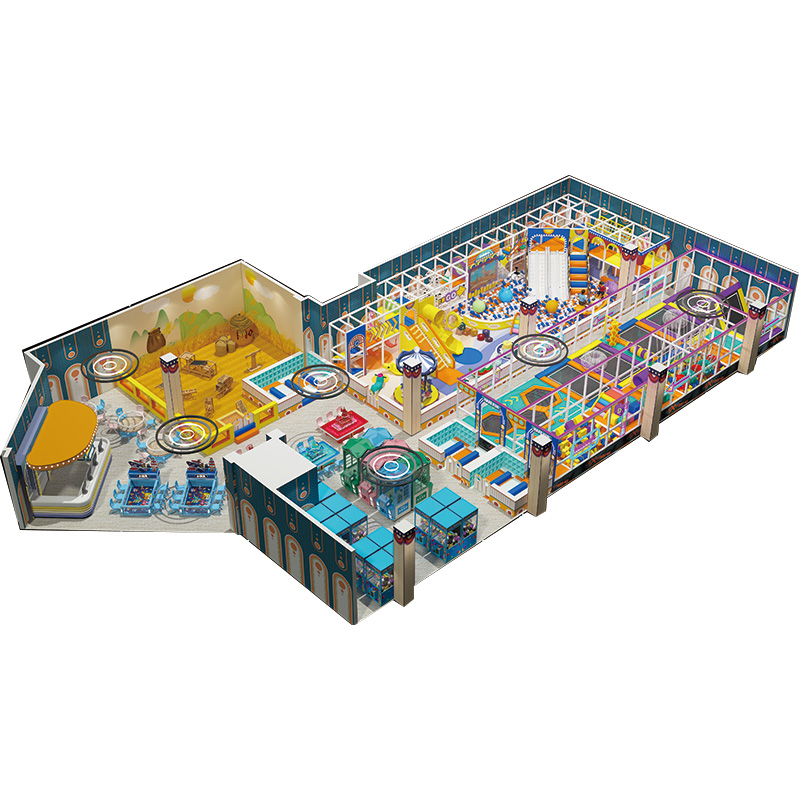
Generating a strong return on your initial capital requires a sound pricing strategy. You must maximize every square foot of your building. Each business model leverages different psychological triggers to encourage spending.
A bounce center projects a higher perceived entertainment value. This perception allows owners to charge premium hourly rates. You also unlock strong secondary revenue streams. Grip sock sales provide massive profit margins. Teen glow-in-the-dark nights draw huge crowds. High-margin concession sales, like pizza and energy drinks, add significant bottom-line revenue.
A soft play facility typically operates on a different pricing model. They often offer "play all day" passes or lower-cost hourly rates. Revenue relies heavily on volume rather than high ticket prices. Monthly family memberships create predictable, recurring income. Booked weekend birthday party packages often account for a massive percentage of overall profits.
Your payback period hinges directly on your initial capital outlay. Soft play centers boast a lower barrier to entry. This translates to a potentially faster return on investment if you carefully control initial rent and build-out costs. However, their overall revenue ceilings may remain lower due to building size limits.
Bounce centers offer a much higher revenue ceiling. You can pack hundreds of teenagers into a large warehouse simultaneously. Yet, the steep initial investment extends your break-even timeline. Ongoing insurance spikes and aggressive maintenance schedules also eat into net profits during early operational years.
Operating a family entertainment center carries profound responsibility. You must protect your guests while shielding your corporate entity from devastating lawsuits. Both business types demand rigorous safety protocols.
Both facilities require strict adherence to local regulatory frameworks. In the United States, you must follow ASTM standards. In Europe, you adhere to EN directives. However, bounce facilities face much tighter regulatory oversight. Local municipalities often scrutinize warehouse jump centers far more closely than retail play cafes.
You must acknowledge the stark reality of injury frequency versus severity. Soft play areas see highly frequent but minor incidents. Toddlers get scrapes, minor bumps, or friction burns on slides. Parents accept these as normal childhood occurrences. Bounce facilities face lower frequency but much higher severity injuries. Fractures, sprains, and joint dislocations drive expensive liability claims. These severe incidents attract media attention and trigger immediate legal action.
Effective mitigation tactics separate successful owners from bankrupt ones. You must hire independent, third-party safety inspectors annually. You must enforce robust operational manuals and train staff relentlessly. Above all, choose reliable equipment manufacturers over cheap alternatives. Cutting corners on steel thickness or mat stitching guarantees catastrophic failure.
Deciding between these two paths often paralyses investors. You must look objectively at your available resources. Your choice depends entirely on your capital backing and your local real estate market.
Why choose an Indoor Playground exclusively? If your capital is limited, this represents the realistic choice. It works perfectly if your available commercial space falls under 5,000 square feet. You can open faster, hire fewer staff, and manage insurance costs easily.
Why choose a dedicated bounce facility? If you have strong capital backing, this model scales better. It suits investors who have access to a large industrial warehouse. If you want to dominate the lucrative teen and young adult event market, a massive jump zone delivers unparalleled thrills.
However, the modern family entertainment industry favors the hybrid model. Many savvy investors are opting to combine both concepts under one massive roof. They typically dedicate 70% of the floor space to high-energy trampolines. They enclose the remaining 30% as a dedicated soft-play toddler zone. This strategy captures the entire family demographic. You keep older siblings and toddlers entertained simultaneously. Parents stay longer, spend more on concessions, and leave highly satisfied.
Neither business model is objectively better than the other. Your ultimate success dictates aligning your capital capabilities, risk tolerance, and available real estate with local demographic needs. An extreme jump center drives massive weekend revenue but carries heavy liability baggage. A soft play center offers steady, predictable toddler traffic with fewer operational headaches.
Before signing any commercial lease, execute a comprehensive demographic study of a ten-mile radius. Secure preliminary commercial insurance quotes for both business types to avoid nasty surprises. Finally, consult directly with certified equipment manufacturers to draft site-specific space planning layouts. Proper due diligence today ensures a profitable, thriving entertainment center tomorrow.
A: Trampoline parks generally yield higher gross revenues due to premium pricing. They attract large groups and sell high-margin merchandise like grip socks. However, indoor playgrounds often boast higher net profit margins. They benefit from significantly lower liability insurance, cheaper mechanical maintenance, and lower staffing costs.
A: Playgrounds can operate efficiently in spaces as small as 2,000 to 5,000 square feet. They fit well in traditional retail strips. Viable commercial trampoline parks typically require 15,000 to 30,000+ square feet. They also demand high industrial ceiling clearances to ensure safe jumping heights.
A: Franchises offer proven standard operating procedures and easier access to insurance. However, they require high initial franchise fees and ongoing royalty splits. Independent brands allow for total layout customization and higher long-term profit retention. You must possess strong operational acumen to succeed independently.
A: Due to the inherent physics of the equipment, underwriters classify them as high-risk amusements. Historical data shows a clear link to severe injuries like fractures and joint sprains. Strict waiver systems, designated jump zones, and active court monitors are mandatory to maintain your coverage.


