
English


Views: 143 Author: Site Editor Publish Time: 2026-10-04 Origin: Site


Planning a family outing often feels like navigating a complex maze of conflicting interests. Toddlers want colorful, soft spaces to bounce freely. Teenagers crave adrenaline-pumping challenges and intense competition. Finding a single venue to safely engage a five-year-old while holding a fifteen-year-old’s attention presents a massive challenge. Parents and event organizers face this struggle constantly. You cannot simply evaluate a facility based on its total square footage. True value ultimately lies in age-appropriate attraction design, strict safety compliance, and proactive facility management. This guide provides a concrete framework for evaluating specific venue features. We break down safety standards and explore various pricing models in detail. You will learn how to identify high-retention activities for older kids. We also show you how to spot hidden red flags in daily maintenance routines. Finally, we help you accurately assess real costs before booking your next visit or group event.
Assessing attraction variety is critical; successful venues separate zones to prevent collisions between older and younger guests.
Not all facilities meet the same safety standards; looking for specific industry compliance (like ASTM certification) reduces risk.
High-retention features for teens rely on competitive or goal-oriented attractions (e.g., ninja courses), while younger kids require sensory-rich, soft-landing zones.
Evaluating a kids indoor playground requires looking beyond ticket price to hidden costs like mandatory grip socks, locker rentals, and waiver processing efficiency.
Standardizing entertainment for a 5-year-old and a 15-year-old in the same physical space creates significant issues. It often results in severe safety hazards or total boredom. Young children move unpredictably. Older teenagers jump higher and land with much more force. Mixing these two demographics on an open jump court invites collisions. A poorly designed Trampoline Park tries to serve everyone in a single area. This approach fails both groups. Teenagers feel restricted by rules designed to protect toddlers. Meanwhile, parents of toddlers feel anxious watching large teenagers sprint past their small children.
Top-tier family entertainment centers solve this problem through smart spatial design. They implement strict operational rules to protect all guests. You should evaluate venues based on three non-negotiable success criteria:
Strict age-segregated jumping zones: Facilities must physically separate toddler areas from main jump courts. Physical barriers work better than painted lines on the floor.
Clear line-of-sight for parents: You need unobstructed views of the play areas. Active floor monitoring by trained staff adds a crucial layer of security.
A mix of free-play and structured activities: Venues must offer open bounce areas alongside competitive games. This variety prevents fatigue and keeps all age groups engaged.
You must shift your perspective when evaluating local venues. Move away from searching for a basic kids indoor playground. Instead, look for a comprehensive multi-attraction family entertainment center. A premium facility offers diverse physical challenges. It provides dedicated zones for different developmental stages. This holistic approach ensures your entire family gets their money’s worth. It also drastically reduces the likelihood of tears, injuries, or premature departures.
Purpose: These restricted areas prevent dangerous interactions between small children and heavier, faster jumpers. Young kids need space to explore balance and gravity safely. Segregated courts give them this freedom.
Evaluation Metric: Are these zones strictly enforced by staff or just marked by signage? Signage alone rarely stops a wandering teenager. You want to see employees actively redirecting older kids away from junior zones. The best facilities use waist-high walls or netting to physically isolate these areas.
Purpose: Foam pits provide a highly forgiving environment for entry-level jumping. They encourage sensory play and build early athletic confidence. Kids can practice leaps without fearing hard impacts.
Risk Factor: Hygiene and maintenance frequency demand your attention here. Foam blocks break down rapidly over time. They collect dust, debris, and germs. Trustworthy venues post public cleaning schedules for their foam pits. They regularly rotate the blocks and vacuum the pit floors. Airbags offer a cleaner alternative. They require less maintenance and eliminate the choking hazard of crumbled foam.
Purpose: Low-height bouldering walls build crucial motor skills and grip strength. Kids can climb horizontally without requiring complex harnesses or belay systems. It adds variety to a jump-heavy visit.
Evaluation Metric: Always inspect the depth and quality of the crash mats below the walls. The padding must cover the entire potential fall zone. Gaps between mats present serious ankle hazards. The surface should feel firm yet yielding to absorb sudden drops effectively.
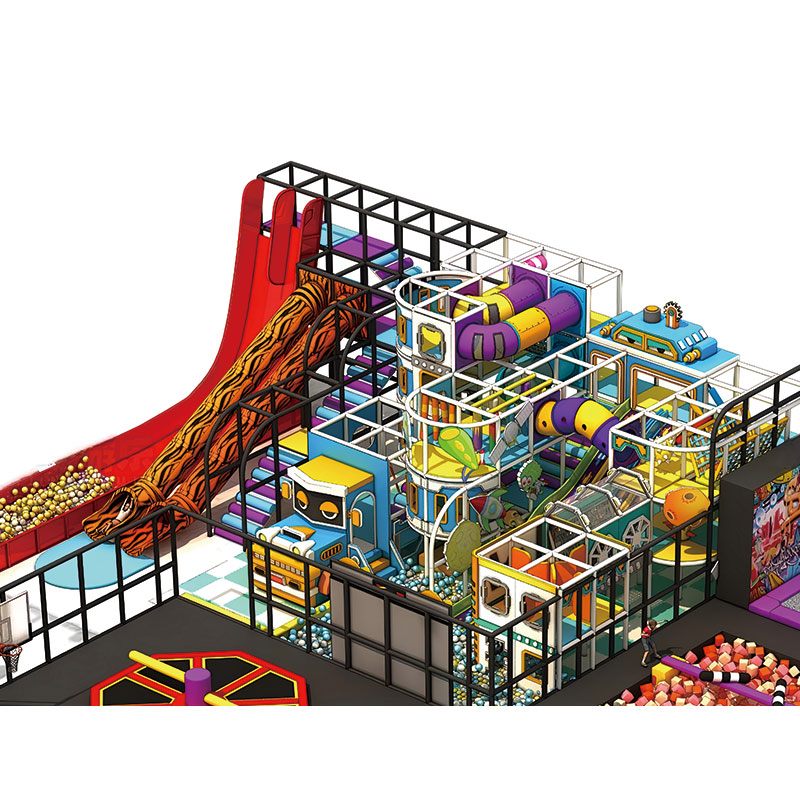
Purpose: Teens outgrow basic bouncing very quickly. Ninja courses provide a goal-oriented, high-physical-demand activity. This shifts their focus from simple jumping to complex agility, balance, and upper body strength. They want to beat the course and race their friends.
Evaluation Metric: Look for courses featuring multiple difficulty lanes. A single, highly difficult lane creates bottlenecks. It frustrates beginners. Multiple lanes accommodate varying fitness levels and keep the traffic flowing smoothly.
Purpose: Dodgeball introduces a gamified, team-based element. This competitive structure proves crucial for keeping teenagers engaged. It transforms a solitary bouncing session into a highly social sporting event.
Risk Factor: This attraction requires strict refereeing by park staff. Without active moderation, dodgeball quickly turns into aggressive play. Referees must enforce rules against headshots. They must also quickly remove eliminated players to maintain order on the court.
Purpose: Athletic teenagers seek out high-rebound areas to test their limits. Slam dunk basketball lanes allow them to experience maximum airtime. Performance trampolines offer superior bounce for experienced gymnasts and parkour enthusiasts.
Safety Note: You must look for facilities that strictly limit these areas. They should enforce a strict "one jumper per trampoline bed" rule. Double-bouncing creates unpredictable energy transfers. This often leads to severe ankle or knee injuries. Strict monitoring here mitigates collision risks entirely.
Purpose: Physical exhaustion sets in quickly during intense jumping. Cross-category attractions manage this fatigue perfectly. Laser tag arenas and virtual reality booths offer thrilling non-jumping activities. They extend the total duration of your visit. Teens can catch their breath while still enjoying high-stakes entertainment.
Attraction Category | Target Age Group | Primary Benefit | Key Safety Metric |
|---|---|---|---|
Junior Jump Courts | 4–10 Years | Safe spatial exploration | Strict staff enforcement |
Foam Pits / Airbags | All Ages | Soft landings for stunts | Routine cleaning schedules |
Ninja Courses | 11+ Years | Goal-oriented agility | Adequate crash padding |
Dodgeball Courts | 11+ Years | Team-based competition | Active referee presence |
Safety claims mean very little without standardized backing. ASTM International establishes rigorous manufacturing and layout regulations for trampoline facilities. These standards form the absolute baseline for any credible venue. They dictate everything from spring tension to the thickness of impact padding. Facilities maintaining ASTM certification prove their commitment to structural safety. Ask management if they strictly follow ASTM F2970 guidelines before booking your event.
You must recognize the critical difference between passive observation and active rule enforcement. Passive monitors simply stand in the corner looking at their phones. Active monitors constantly scan the room. They blow whistles to stop dangerous double-bouncing. They verbally correct reckless behavior immediately. A premium facility maintains a low staff-to-jumper ratio. They position trained monitors at every distinct attraction zone.
You can easily spot visual indicators of a well-maintained facility. Walk the floor and inspect the equipment. Look for taut trampoline beds without sags or rips. Check for intact spring pads covering the edges. You should never see exposed metal framing or bare springs. Secure netting must surround all high-impact zones. Loose or torn netting represents a massive maintenance failure. Transparent operators gladly discuss their daily inspection routines with concerned parents.
Indoor recreation requires robust hygiene protocols. Grip sock mandates serve two vital functions. First, the rubber grips provide essential traction, preventing dangerous slips. Second, they act as a sanitation barrier against footborne illnesses. Furthermore, quality venues invest heavily in industrial air filtration systems. Proper ventilation removes sweat odors and airborne pathogens. This keeps the environment fresh even during peak weekend hours.
Booking a party requires a systematic evaluation framework. Do not just look at the baseline price. Compare the availability of dedicated party hosts. A good host manages the chaos, serves food, and keeps kids on schedule. Next, evaluate the ratio of private room time versus active jump time. Some venues rush you out of the party room after thirty minutes. Finally, check their outside food policies. Venues forcing you to buy their expensive in-house pizza often inflate the final bill significantly.
Frequent visitors should carefully analyze ticket structures. Break down the break-even point for monthly memberships versus standard walk-in rates. A monthly pass often pays for itself after just two visits. Memberships usually include valuable perks. These may feature fast-track entry, discounted cafe items, or free grip socks. If your kids regularly request visits to a kids indoor playground, transitioning to a membership model usually makes financial sense.
A venue's operational maturity reveals itself at the front door. Assess the friction of their digital waiver process. Facilities offering streamlined, pre-arrival waiver systems save you massive headaches. Check-in kiosks should operate smoothly upon arrival. If you see massive lines of frustrated parents filling out paper forms, beware. This bottleneck indicates poor management. It cuts directly into your paid jumping time.
Choosing the best entertainment venue requires careful observation and strategic planning. A high-value center relies on a delicate balance. It must offer age-appropriate attraction diversity while maintaining uncompromising safety enforcement. You want a facility where toddlers can safely explore and teens can aggressively compete without crossing paths.
Take actionable steps before your next visit. Review their digital waivers online to gauge their operational efficiency. Visit during a peak weekend hour specifically to check their staff-to-jumper ratios and active monitoring habits. Compare the hidden costs of party packages, including sock mandates and food restrictions. Armed with these insights, you can confidently make a financial commitment that guarantees a safe, thrilling experience for your entire family.
A: Reputable parks use colored wristbands to visually identify age or height categories. Active floor monitors check these wristbands before allowing entry into restricted zones. Some facilities also use physical height charts at attraction entrances. Strict venues will immediately blow a whistle and remove older teens who wander into junior jumper areas.
A: Minors must have a waiver signed by their legal parent or guardian. Most facilities provide an online digital waiver system. Parents can easily sign this document via smartphone before the child arrives at the venue. Non-parent chaperones cannot legally sign these waivers for other people's children.
A: It depends entirely on the specific venue's policy. Some parks accept any brand of grip socks as long as the rubber traction remains intact. However, many franchise locations mandate the purchase of their specific branded socks for liability and revenue reasons. Always check their sock policy online before arriving.
A: Parents must inspect the transition areas between trampoline beds. Thick, tightly secured foam pads should completely cover all springs and steel frames. You should never see exposed metal, gaps between pads, or torn netting. If padding slides easily when stepped on, it poses a severe tripping and pinching hazard.


