
English


Views: 0 Author: Site Editor Publish Time: 2026-10-21 Origin: Site


Every successful play area needs a striking centerpiece. A high-quality slide usually fills that crucial role. For property developers, school administrators, and municipal park directors, selecting this equipment represents a major capital investment. You are directly investing in physical child development and long-term community value. Flimsy residential alternatives simply fail under pressure. In contrast, commercial playground slides are engineered for relentless, continuous use. They must survive heavy foot traffic, resist intentional vandalism, and withstand brutal weather conditions while maintaining strict safety compliance.
This technical guide breaks down the essential aspects of commercial slides from an engineering and facility management perspective. We will analyze various structural configurations and evaluate their ideal applications across different sectors. Furthermore, we will dissect the critical safety standards you must implement. By understanding these mechanical nuances, you can make data-driven procurement decisions. This approach minimizes organizational liability and maximizes your return on investment.
Industrial-grade durability: Heavy-use environments demand commercial-grade materials. Rotationally molded LLDPE plastics and galvanized steel guarantee structural longevity and user safety.
Spatial optimization: Facility footprint dictates design. Understanding different configurations helps maximize play value per square foot.
Environment-driven selection: Outdoor installations require intense UV stabilizers. Indoor centers focus heavily on vertical space utilization and fire-retardant materials.
Strict regulatory compliance: Adherence to ASTM and CPSC safety standards is absolutely non-negotiable. It protects users and shields operators from lawsuits.
Systematic procurement: A successful project requires assessing target demographics, mapping safety fall zones, and planning for realistic long-term maintenance.
Why spend the extra capital on commercial-grade materials? It comes down to operational lifespan and community impact. Premium equipment serves a multifaceted role for the managing organization.
Physical Development and Biomechanics
A slide descent demands dynamic balance and spatial awareness. Picture a toddler navigating the access stairs, standing at the transition platform, and calculating the drop. This sequence provides intense vestibular stimulation. Positioning the body for the ride improves core strength and physical confidence. Beyond biomechanics, waiting in line naturally enforces essential social sequencing skills.
Driving Foot Traffic and Business Revenue
Premium play structures act as powerful community magnets. For municipal parks, a towering, aviation-themed slide structure attracts families from neighboring districts. For commercial entities like private daycares or family entertainment centers, high-quality play zones directly boost enrollment rates. A robust, meticulously designed play area visually communicates your brand's commitment to excellence.
Minimizing Lifecycle Costs
The initial capital outlay for commercial equipment is higher than residential gear. However, the long-term ROI is undeniable. Commercial plastics resist UV fading and stress cracking. Galvanized steel frameworks deter vandalism. This industrial durability ensures the equipment remains functional for decades. You drastically reduce the labor and material costs associated with premature replacements.
Selecting the right geometry is critical. Different slide designs cater to specific developmental stages and spatial constraints.
The straight slide is the foundational element of any recreational space. It offers a direct, high-velocity descent. When engineered at lower deck heights of three to four feet, straight slides are perfect for early childhood centers. They provide a predictable trajectory. This minimizes user anxiety while granting caregivers a completely unobstructed line of sight.
Wave slides introduce calculated dips along the descent path. This geometry creates a thrilling sensation of slight weightlessness. The varying velocity keeps older children engaged over repeated uses. You will frequently find wave profiles integrated into massive, interconnected play structures due to their high user retention rate.
When horizontal real estate is expensive, engineers build vertically.
Spiral Configurations: By winding downward around a central steel axis, spiral slides deliver an extended ride length. They require a remarkably small horizontal footprint. The continuous curve forces riders to engage core muscles to maintain equilibrium.
Enclosed Tubes: Tube slides provide maximum lateral fall protection at high elevations. They completely enclose the rider. Available in straight, curved, or spiral formats, these tubes add strong visual appeal and architectural volume to multi-level systems.
High-capacity environments require specialized traffic management solutions.
Double Chutes: Featuring two parallel sliding surfaces, double slides naturally encourage cooperative play. Children can safely race side-by-side, doubling the throughput of the structure.
Sectional Assemblies: Constructed from heavy-duty interlocking flanged pieces, sectional slides offer infinite customization. Engineers can tailor the length and curvature to match specific landscape topographies.
Slide Architecture | Optimal Application | Spatial Footprint | Primary Engineering Benefit |
|---|---|---|---|
Straight | Toddler zones, preschools | Moderate | Predictable trajectory, high visibility |
Wave | Public parks, community centers | Moderate | Enhanced sensory engagement |
Spiral | High-density urban environments | Low Vertical Focus | Maximum space optimization |
Tube | Multi-level indoor/outdoor structures | Variable | Absolute lateral fall protection |
Double | High-traffic public playgrounds | High Width Requirement | Doubled user throughput |
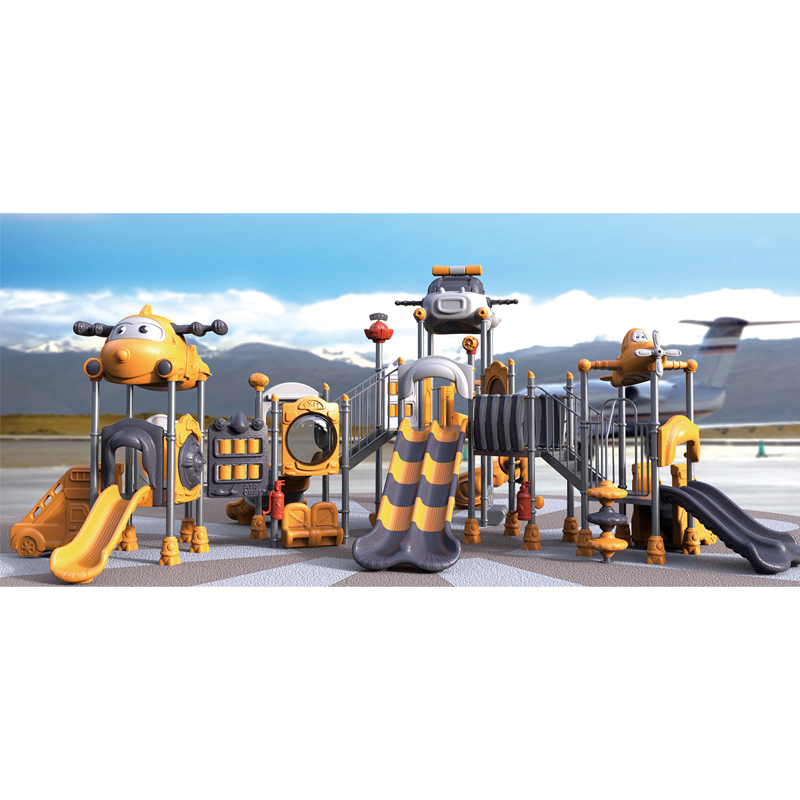
The material composition dictates the maintenance schedule and structural integrity of your investment. The industry relies on two primary materials.
Linear Low-Density Polyethylene, commonly known as LLDPE, is the gold standard for modern slide manufacturing. The rotational molding process creates a seamless, stress-free, and incredibly resilient hollow structure.
From a practical engineering standpoint, LLDPE boasts exceptional thermal resistance. Even under blistering summer sun, it resists absorbing heat, drastically reducing the risk of contact burns. Premium commercial models feature a plastic wall thickness of six to eight millimeters. Furthermore, these plastics are infused with anti-static and UV-stabilizing compounds. This prevents color degradation and ensures compatibility for children using sensitive medical devices like cochlear implants.
Metal components provide unparalleled tensile strength and an industrial aesthetic.
Heavy-duty outdoor slide playsets often utilize 114-millimeter galvanized steel support posts with a 2.0-millimeter wall thickness. This robust framework easily handles intense dynamic loads and extreme weather events. Stainless steel slide beds are highly resistant to vandalism, making them ideal for unsupervised urban parks. However, metal has high thermal conductivity. Unshaded steel slides reach dangerous temperatures rapidly. You must strategically orient metal slides facing north or install architectural shade canopies.
Playground architecture is evolving rapidly. As urban land values skyrocket, sprawling single-use equipment is becoming obsolete. Recent market data indicates a massive surge in demand for high-density, multi-functional play environments.
Landscape architects now prioritize inclusive spaces that blend physical challenges with sensory integration. Modern designs accommodate neurodivergent children alongside their neurotypical peers within a single footprint. This involves integrating tactile learning panels, wheelchair-accessible transition ramps, and varying slide velocities to cater to different sensory thresholds.
This paradigm shift perfectly highlights the value of combination slide structures. These comprehensive systems merge climbing walls, transition bridges, and multiple slide types into one cohesive unit. By clustering activities vertically, a single structure can feature a low straight slide for toddlers and a towering eight-foot spiral tube for older children. This layered approach maximizes play value and accommodates massive user capacities simultaneously.
Your specific operating environment should serve as the primary compass for equipment selection.
Public spaces experience the highest volume of daily abuse. Extreme durability and inclusive design are top priorities. Municipalities require expansive combination systems capable of supporting dozens of children at once. Heavy-gauge steel frameworks and thick LLDPE plastics are mandatory to survive this legacy-level exposure.
Indoor facilities operate within strict spatial and ceiling height constraints. Enclosed tube slides and steep spirals dominate this sector. They seamlessly integrate into multi-level soft-play grids. The enclosed nature of tube slides completely eliminates the risk of falls from high indoor platforms, reducing the need for visually obtrusive safety netting.
Facilities catering to children aged two to five require strict ergonomic adaptations. Slides here feature lower inclines and wider chutes to accommodate developing motor skills. Maximum visibility is critical. Caregivers must maintain an unbroken line of sight. Therefore, open straight or double slides are vastly preferred over enclosed tubes.
Safety compliance is not merely a suggestion. It is an absolute legal necessity to shield facility operators from devastating liability claims.
Regulatory Compliance
All commercial equipment installed in the United States must align with ASTM F1487 guidelines and CPSC Publication 325. These rigorous standards dictate maximum slide slopes, minimum platform barrier heights, and precise entrapment hazard mitigations. Never purchase equipment lacking proper certification.
Impact Attenuation and Fall Zones
A playground is only as safe as its surfacing. The area extending beyond the slide exit is a high-impact zone. Implementing certified impact-absorbing surfacing is mandatory. Whether you use poured-in-place rubber or engineered wood fiber, the material depth must strictly correspond to the critical fall height of the slide's top platform.
Transition Platform Mechanics
The physical movement from standing on a deck to sitting on a slide is a documented high-risk moment. Commercial slides must feature secure transition platforms equipped with integrated handholds. Sit-down hoods or canopies are frequently bolted to the top of tube slides. These physical barriers force children into a seated position, completely preventing dangerous attempts to walk or surf down the chute.
Navigating the complex procurement process requires an objective, engineered approach. Use this framework to select the optimal system for your site.
Step 1: Define the User Demographic
Equipment is engineered for distinct biomechanical stages, generally split into ages two to five and ages five to twelve. This demographic data dictates the maximum allowable platform height, the aggressiveness of the slide slope, and the difficulty of the access routes.
Step 2: Map the Spatial Footprint
Accurate site measurement goes far beyond the physical hardware. You must map the mandatory safety use zones. The exit zone of a slide requires a minimum clearance distance directly proportional to the platform height. Ignoring these invisible buffer zones guarantees a failed safety inspection.
Step 3: Calculate Total Cost of Ownership
Establish a budget that encompasses the entire project lifecycle. Factor in the raw equipment cost, freight logistics, professional installation, and certified safety surfacing. Investing in thicker plastics and heavier steel upfront yields thousands of dollars in maintenance savings over a fifteen-year lifecycle.
Step 4: Vet the Manufacturer
Partner with a supplier boasting a proven commercial track record. Scrutinize their warranty documents. Ensure they provide substantial coverage for structural steel and rotational plastics. Verify that they offer customized 3D spatial planning to ensure the equipment fits your specific site topography.
A rigorous maintenance schedule extends the lifespan of your investment and ensures continuous regulatory compliance.
Structural Inspections
Implement a documented weekly inspection routine. Maintenance personnel must physically torque test anchoring hardware and structural bolts. Run hands along plastic seams to detect micro-abrasions or hairline stress cracks. Closely monitor steel weld points for early oxidation or rust.
Sanitation and Cleaning
Regular cleaning removes abrasive sand and biological growth like algae, which makes surfaces dangerously slick. Utilize mild detergents and soft-bristle brushes. Strictly avoid harsh industrial solvents. Corrosive chemicals rapidly degrade UV-protective coatings on plastics and strip the finish off galvanized steel.
Surfacing Management
Loose-fill surfacing materials are violently displaced at the base of the slide due to repetitive landing impacts. This specific kick-out zone requires daily raking. You must periodically top up the material to maintain the legally required depth for impact attenuation.
Procuring commercial playground equipment requires meticulous spatial planning and a deep understanding of material engineering. You must weigh structural configurations against your specific climate, user capacity, and target demographic. Matching the heavy-duty equipment to the exact application environment guarantees project success.
A well-engineered combination structure provides decades of secure, dynamic play for your community. Simultaneously, premium installations significantly boost the intrinsic value of commercial properties. If you are ready to upgrade your recreational space, explore the extensive catalog of safety-certified solutions at Cheers Playground. Make a data-driven investment that delivers lasting joy and absolute peace of mind.
Industry-leading commercial slides utilize Linear Low-Density Polyethylene with a wall thickness ranging from six to eight millimeters. This substantial thickness ensures the chute can withstand extreme dynamic loads, resist stress cracking, and endure harsh environmental exposure without warping.
High-traffic commercial playgrounds require a visual inspection at least once a week to check for vandalism, displaced surfacing, and obvious wear. A comprehensive structural audit, checking torque on bolts and inspecting weld integrities, should be conducted monthly by trained maintenance personnel.
Capital costs vary widely based on material volume and structural complexity. Standalone commercial slides range from $1,500 to $5,000. Conversely, massive multi-level combination structures easily exceed $15,000 to $30,000 due to advanced engineering, heavy-gauge steel requirements, and professional installation logistics.
Both rotationally molded LLDPE plastic and galvanized steel are exceptionally safe when engineered to ASTM standards. Plastic is the preferred choice for high-temperature climates because it resists heat absorption. Steel is typically deployed in unsupervised urban environments that require maximum defense against severe vandalism.
Yes, replacement chutes can be retrofitted to existing platforms. However, the existing deck height must perfectly match the new slide's engineered specifications. Furthermore, the mounting flanges and hardware must be structurally compatible to maintain the system's overall safety certification.
The safety use zone at the slide exit must extend a specific distance to allow for safe rider deceleration. Generally, this clearance distance equals the height of the slide platform. You must always consult the manufacturer's engineering manual and local CPSC guidelines to ensure legally compliant measurements.


