
English


Views: 0 Author: Site Editor Publish Time: 2026-10-20 Origin: Site


How do you expand a thriving family entertainment center without shutting down daily operations? This dilemma plagues facility owners everywhere. Picture a bustling Saturday afternoon. Your dining area is packed. The toddler zone, however, is overflowing. This creates a frustrating bottleneck for parents. Massive, disruptive renovations will halt your cash flow. Smart operators choose a different path. They turn to adaptable infrastructure.
Modular playground equipment offers a scalable solution for commercial spaces. We will explore the technical nuances of planning, budgeting, and scaling play areas. By understanding structural frameworks and material specifications, you can design an environment that captivates young visitors. More importantly, this approach strategically maximizes your long-term return on investment.
Scalability: Modular frameworks allow businesses to start with a foundational setup. You can expand play areas seamlessly as foot traffic and revenue grow.
Cost-Efficiency: Upgrading existing structures with compatible modules requires significantly less capital expenditure than replacing an entire static system.
Versatility: Multi-zone layouts ensure venues cater to various age demographics simultaneously. This maintains strict safety boundaries.
Customization: Partnering with a qualified manufacturer empowers operators to design a tailored environment. This aligns perfectly with specific brand aesthetics and spatial dimensions.
In commercial family entertainment centers, the term modular refers to play structures engineered with interlocking components. These systems utilize standardized connection points and highly expandable frameworks. Rather than functioning as a single unalterable monolith, this equipment acts like industrial building blocks. Facility operators can configure or remove specific sections. You can swap spiral slides, crawl tubes, or sensory panels without compromising the structural integrity of the main playground skeleton.
Historically, commercial playgrounds were built as fixed static systems. Once the final bolt was tightened, altering the layout required extensive dismantling. For business environments like daycares and shopping malls, operational downtime directly translates to lost revenue. Modular designs completely mitigate this risk. Manufacturers standardize the connection joints and structural pipes. This makes expanding a system a highly streamlined process.
Operational Feature | Traditional Fixed Systems | Modular Play Systems |
|---|---|---|
Installation Speed | Slow, requires extensive custom fabrication on-site. | Fast, utilizes standardized interlocking cast-iron joints. |
Expansion Capability | Requires partial demolition and facility closure. | Seamless addition of new components during off-hours. |
Maintenance and Repair | High cost, often requires specialized welding or framing. | Low cost, allows for localized module replacement. |
Understanding the core components helps operators plan spaces effectively. A standard commercial setup includes a robust framework made of hot-dip galvanized steel pipes. These are securely connected by heavy-duty fasteners. This skeleton is then wrapped in high-density fire-retardant foam padding. Core play modules like ball pits and trampoline zones serve as the main attractions. Navigation modules manage the flow of foot traffic. Meanwhile, wall-mounted interactive panels engage children without consuming valuable floor space.
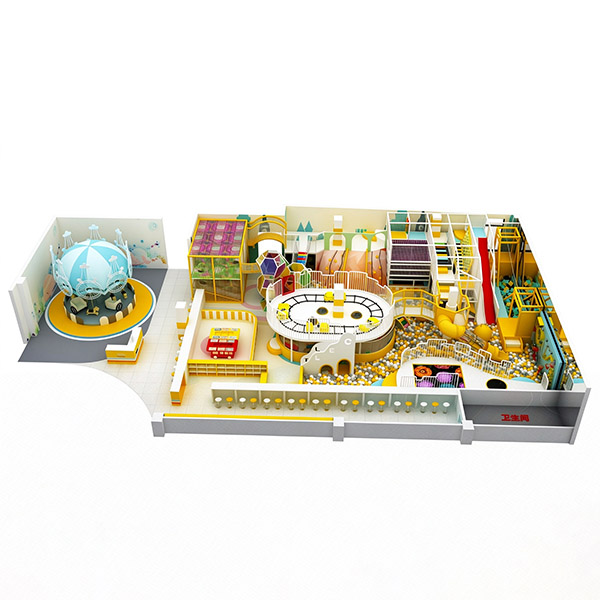
Capital allocation is a primary concern for any expanding enterprise. Modular systems allow operators to phase their investments strategically. You avoid depleting your budget all at once. A newly opened family restaurant might lack the initial capital for a massive three-story play structure. Using a phased approach, the business can implement a foundational installation featuring a core climbing unit. As popularity surges, management can seamlessly add vertical extensions. You never have to discard a single piece of the original investment.
Customer retention relies heavily on the perception of novelty. If a play area remains static year after year, repeat visitation rates decline. Local children experience play fatigue. Modular equipment empowers operators to keep the environment fresh. You can periodically swap out individual modules. Replacing a standard wave slide with a digital interactive slide creates an immediate marketing opportunity. This strategy drives repeat foot traffic while utilizing only a fraction of a full renovation budget.
Commercial play spaces endure relentless wear and tear. In an older fixed system, a damaged structural element might necessitate closing the entire playground. Modular systems offer a distinct operational advantage. If a specific PVC foam barrier is torn, on-site maintenance staff can isolate and replace that exact module overnight. Targeted maintenance minimizes facility downtime and ensures continuous compliance with stringent safety standards.
Catering to early childhood demographics requires highly specialized equipment. Safety parameters must be uncompromising. Toddler zones utilize low-height modules that exclude high platforms in favor of ground-level engagement. Key components include soft foam rockers, sensory tactile panels, and shallow ball pits. For businesses aiming to attract young families, investing in premium modular indoor soft play equipment is a highly strategic move. Parents prioritize visible safety and hygiene above all else when selecting a venue.
Safely accommodating erratic toddlers alongside highly active older children is a complex logistical challenge. Modular designs elegantly resolve this issue through strategic spatial division. By implementing expertly engineered multi-zone playground systems, operators can establish distinct play areas. These zones are separated by physical netting or staggered platform heights. Architectural foresight prevents accidental collisions between different age groups. This significantly reduces liability risks while broadening demographic appeal.
Modern consumers expect visually stimulating experiences. Agile modular frameworks allow businesses to integrate elaborately themed panels. You can swap out deep-sea diving or space exploration themes to rebrand the space for seasonal promotions. Furthermore, integrating interactive electronic play boards modernizes the traditional soft play experience. Light-up targets and sound effects successfully bridge the gap between physical exertion and digital engagement.
Recent market analyses highlight a significant paradigm shift within the commercial playground sector. There is a surging demand from business buyers for infrastructure that is hyper-modular and environmentally responsible. Millennial parents prioritize venues that align with their values. Consequently, static single-use plastic structures are rapidly becoming obsolete.
The market is pivoting toward agile systems that integrate sustainable manufacturing processes. Manufacturers are shifting toward environmentally responsible production methods. This includes utilizing non-toxic fully recyclable Linear Low-Density Polyethylene plastics. Eco-friendly powder coatings for steel frames are also becoming standard. Investing in sustainable materials reduces long-term environmental impact and serves as a potent marketing tool to attract eco-conscious families.
Additionally, inclusive design has evolved far beyond basic compliance. Today's modular systems feature extra-wide transfer stations and ground-level inclusive play panels. Sensory-friendly design is also an industry standard. Low-stimulation quiet pods are integrated within larger structures. These utilize muted color palettes designed specifically for children who become easily overstimulated in high-energy environments.
Before procuring any equipment, a rigorous spatial assessment is mandatory. Commercial play structures must adhere to specific spatial tolerances to ensure operational functionality. Begin by measuring the exact footprint available. Carefully account for mandatory clearance zones around the perimeter of the structure. Vertical space is equally valuable. Ensure accurate measurements from the floor to the lowest hanging ceiling obstacle like HVAC ducts. A well-designed custom commercial playground can be engineered to wrap around existing load-bearing pillars. This turns awkward structural obstacles into integrated padded play features.
Financial planning should meticulously account for both immediate capital expenditure and future expansion budgets. During the first phase, allocate your budget toward the core structural framework and essential safety flooring. Establish a safe functional area that tests market demand. As you move into subsequent years, shift your budget toward high-engagement additions like themed panels and vertical expansions. This phased financial model justifies entry price increases over time. It continuously re-engages your customer base without the shock of total replacement costs.
Commercial playgrounds operate under strictly monitored regulatory frameworks. Depending on your geographic region, equipment must comply with standards such as ASTM International in the United States or EN 1176 in Europe. When utilizing modular components, connection points must fit together flawlessly. Improperly fitted modules create dangerous entrapment hazards. They can also compromise the stability of the entire frame. Businesses must verify that all modular additions carry appropriate commercial safety certifications.
The long-term success of a commercial play area depends heavily on the reliability of your manufacturing partner. Business buyers must conduct rigorous due diligence. The supplier dictates the safety, durability, and scalability of the investment. Decision-makers should prioritize suppliers who provide documented third-party proof of compliance with international safety standards. Evaluate their warranty terms carefully. Commercial-grade equipment should carry substantial warranties on structural steel and soft play materials.
Do not settle for generic descriptions. Demand specific engineering parameters. High-quality indoor playground equipment should utilize 48-millimeter hot-dip galvanized steel pipes with a minimum wall thickness of 1.5 millimeters. The outer padding should consist of high-density EPE pearl cotton covered by fire-retardant PVC vinyl. Plastics should be food-grade LLDPE molded through rotational casting to ensure uniform thickness and UV resistance. These exact specifications ensure your infrastructure withstands high-frequency daily use while maintaining a pristine hygienic appearance.
Strategic facility management involves monitoring specific operational data. Relying solely on visual wear and tear is a lagging indicator. Instead, watch for capacity bottlenecks. If your facility frequently reaches maximum safe capacity during peak weekend hours, it is time to expand. Frustrating lines at the slides indicate a need for more throughput. A measurable drop in recurring memberships signals that the local market has experienced play fatigue. This indicates the need for a targeted modular refresh.
Integrating new modules into an older system requires meticulous planning. First, conduct a thorough structural audit of the existing framework. Ensure new components align flawlessly with original connection points. Next, analyze the traffic flow. Adding a massive high-speed slide is exciting. However, you must ensure its exit point does not direct fast-moving children into toddler zones. Work closely with your manufacturer to match PVC and foam colors. This avoids a haphazard patchwork appearance and maintains aesthetic cohesion.
Modular playground equipment represents a smart future-proof investment for any growing enterprise. It empowers businesses to scale physical spaces effortlessly. You can expand operations and increase capacity without ever halting your daily cash flow. A meticulously planned playground is not merely a standard operational expense. It is a dynamic revenue-generating asset that drives customer loyalty and repeat visits. Evaluate your current spatial constraints and demographic needs carefully. To explore specific structural configurations and premium materials tailored to your venue, visit Cheers Playground today and start designing a facility built for long-term growth.
Costs for commercial playground equipment vary significantly based on total square footage, vertical height, and module complexity. A foundational toddler zone requires a highly accessible initial investment. Conversely, a multi-level interactive structure for a large entertainment center commands a larger budget. The modular nature of these systems is inherently cost-saving. Businesses can execute a phased build, allocating a smaller budget for a core structure today and forecasting capital for expansion modules later.
Absolutely. Reputable manufacturers provide extensive customization options tailored specifically for commercial clients. You can specify exact Pantone colors for the PVC vinyl, plastic tubes, and steel padding. This ensures the playground perfectly matches your corporate identity and interior design. Customization extends to thematic elements, allowing businesses to integrate proprietary logos and specific visual themes directly into the structural panels.
One of the most significant operational benefits of modular systems is installation efficiency. Because components utilize standardized interlocking connection points, adding new modules is a highly streamlined process. Depending on the scale of the expansion, professional teams can often install new components during off-hours or over a single weekend. This ensures your venue experiences zero disruptive downtime.
Yes. When engineered correctly, multi-zone layouts are specifically designed to facilitate simultaneous use by different age demographics safely. These systems achieve this by utilizing strategic physical barriers, distinct entry points, and varied platform heights. Toddler zones feature high-density padding and low-level obstacles. Areas for older children feature more complex elevated challenges. This intentional segregation prevents accidental collisions.
When manufactured with commercial-grade materials like galvanized steel and high-density LLDPE plastics, the core structural framework can last 10 to 15 years or more. Soft play elements like PVC covers and foam padding typically require replacement every 3 to 5 years depending on foot traffic. The modular design allows you to replace only the worn soft parts without dismantling the durable steel skeleton.
Yes. Commercial safety standards require specific impact-absorbing flooring beneath and around all play structures. High-density EVA foam mats or specialized rubber safety tiles are standard requirements. The thickness of the flooring must correspond directly to the maximum fall height of your playground equipment to ensure compliance with international safety regulations.


