
English


Views: 0 Author: Site Editor Publish Time: 2026-10-14 Origin: Site


Watching children climb and swing brings immense joy. Yet, that lingering fear of inevitable falls remains a harsh reality. Nearly 80 percent of all playground-related injuries result from children hitting the hard ground. Finding the safest protective foundation is a critical engineering step for any backyard equipment.
In this technical guide, we evaluate impact standards and analyze the real-world performance of various surfacing materials. This breakdown will help you engineer the perfect safety zone for your outdoor playsets.
Grass fails under impact: Natural turf loses its shock-absorbing qualities rapidly due to moisture fluctuations and soil compaction.
Unitary rubber leads the industry: High-density vulcanized mats and seamless poured systems deliver the highest impact attenuation for elevated structures.
Platform height dictates thickness: The peak elevation of your swing beam or slide deck determines the exact millimeter thickness of your required cushioning layer.
Capital expense versus operating expense: Loose-fill materials cost less initially but demand constant physical maintenance. Unitary surfaces require a higher initial capital investment but offer virtually zero maintenance over a ten-year lifecycle.
Many property owners assume their existing lawn provides a sufficient safety cushion. Leaping off a swing onto a lush green lawn seems harmless. Relying on natural grass, however, is a severe safety oversight.
The Illusion of Softness
Grass feels soft under bare feet on a summer afternoon. High-velocity impacts tell a completely different story. When a child tumbles from an elevated platform, the grass and underlying topsoil compress in milliseconds. Scientific drop testing demonstrates that unyielding dirt acts much like concrete during a high-velocity fall. It offers negligible shock absorption.
Soil Compaction Mechanics
The primary culprit behind this danger is soil compaction. Continuous active play, varying weather patterns, and concentrated foot traffic squeeze the air and moisture out of the earth. Over just a few weeks of active use, the ground beneath your equipment transforms into a dense, hardened crust. This compaction completely strips away any natural impact attenuation the yard might have originally possessed.
Concealed Topographical Hazards
Natural lawns expertly conceal numerous environmental hazards. Exposed tree roots, buried rocks, and uneven ground gradients create severe tripping risks. Navigating around dynamic play equipment requires a stable and predictable surface. Grass hides these irregularities. This makes the play environment inherently unpredictable and drastically increases the likelihood of accidental sprains.
Before sourcing specific materials, safety inspectors and buyers must understand the precise metrics used to measure impact attenuation. The defining metric in the industry is Critical Fall Height.
Understanding the Safety Threshold
Critical Fall Height is a standardized measurement. It defines the maximum height from which a child can fall onto a specific surface without sustaining a life-threatening head injury. Laboratories determine this through rigorous drop testing that measures the Head Injury Criterion and peak deceleration forces. If a material is rated for a 6-foot fall height, it provides adequate shock absorption for falls up to 6 feet. It provides absolutely no guaranteed protection above that exact limit.
Measuring Your Equipment Structure
To determine your required safety threshold, you must measure the highest designated play surface on your equipment. For swings, inspectors measure from the ground to the swing beam pivot point. For elevated structures like customized playground slides, you must measure from the ground directly to the top transition platform.
Objective Safety Verification
The safest foundation will always feature independent laboratory testing against rigorous industry standards. Materials must comply with ASTM F1292 specifications for impact attenuation. Always request the manufacturer's compliance data to ensure objective safety verification before installation.
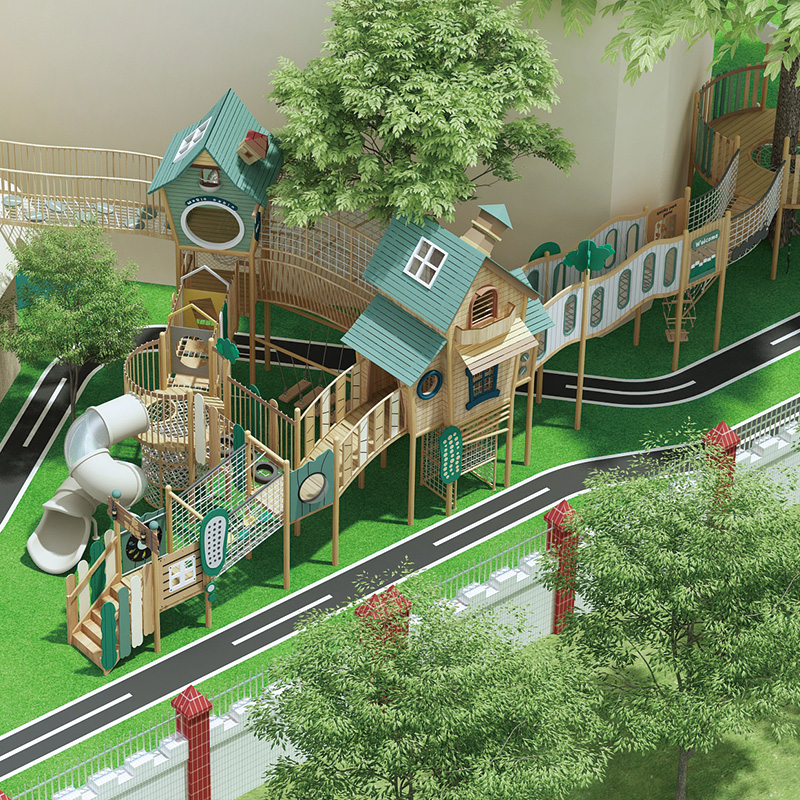
Recent market data reveals a massive shift in playground safety infrastructure. Municipalities and residential buyers are rapidly moving away from traditional loose-fill materials. The current industry trend heavily favors engineered unitary surfaces. This shift is driven by a rising demand for zero-maintenance solutions and strict ADA accessibility requirements. Property owners now realize that the long-term labor costs of replenishing mulch far outweigh the initial investment of synthetic systems.
Choosing the correct material requires balancing these safety ratings, upfront costs, and long-term maintenance requirements. Below is an objective engineering evaluation of the most common materials used in modern installations.
Widely considered the premier choice for unitary safety surfacing, these tiles are engineered specifically for impact absorption. Manufactured from high-density vulcanized rubber, they provide a reliable safety net. Standard commercial tiles typically feature a density of 800 kilograms per cubic meter, ensuring they do not warp under extreme temperature shifts.
Advantages: They offer exceptional and consistent shock absorption regardless of weather conditions. They are fully ADA-accessible. Wheelchairs and strollers can navigate them effortlessly. Unlike loose materials, playground rubber mats do not conceal sharp objects. Interlocking pin designs make installation straightforward.
Drawbacks: The primary drawback is the higher upfront material cost compared to basic landscaping options.
Optimal Application: Families and facility managers looking for a long-term, ultra-safe solution that provides predictable impact attenuation year-round.
This is a seamless, two-layer system consisting of a thick shock-absorbing cushion layer topped with a durable colored wear layer.
Advantages: Because technicians mix and pour it on-site, it creates a completely seamless surface that eliminates all tripping hazards. It offers incredible safety ratings and allows for highly customized embedded graphics.
Drawbacks: This system requires specialized professional installation. It is the most expensive surfacing option available and can be prone to surface cracking in extreme freeze-thaw climates if the aliphatic binders degrade.
Engineered Wood Fiber is distinct from standard landscaping mulch. Manufacturers process it to specific dimensions that allow the wood fibers to knit together. This creates a springy, impact-absorbing layer.
Advantages: It is highly affordable upfront and provides a natural aesthetic. When properly installed and meticulously maintained at a depth of 12 inches, it offers excellent shock absorption that meets strict safety standards.
Drawbacks: Loose-fill materials hide insects and sharp objects. The system requires sturdy containment borders. Most importantly, it demands annual topping up and regular raking to maintain the required safety depth in high-traffic zones.
Modern synthetic turf systems designed for active play utilize a specialized shock-absorbing foam pad installed directly beneath the grass layer.
Advantages: This system mimics the look of a perfect natural lawn without the compaction issues. It offers excellent drainage. When paired with a 2-inch high-quality shock pad, it meets strict fall height requirements.
Drawbacks: Synthetic turf retains heat. In direct summer sunlight, the surface temperature can become uncomfortably hot, often requiring shade sails in warmer climates.
Surface Material | Upfront Cost | Maintenance Level | ADA Accessibility | Expected Lifespan |
|---|---|---|---|---|
Rubber Tiles | High | Virtually Zero | Excellent | 10 - 15 Years |
Poured-in-Place | Very High | Low | Excellent | 10 - 12 Years |
Engineered Wood Fiber | Low | High | Moderate | Requires Annual Top-offs |
Pea Gravel / Sand | Very Low | High | Poor | 1 - 3 Years |
When evaluating the protective foundation for a play area, buyers frequently narrow their choices down to unitary rubber tiles and engineered wood mulch. Making a final purchasing decision requires looking beyond the initial price tag. You must analyze safety consistency and calculate the Total Cost of Ownership over a five to ten-year lifecycle.
Impact Attenuation Consistency
The primary function of any surface is absorbing the kinetic energy of a falling child. Wood fiber provides excellent shock absorption only when perfectly maintained. Mulch is a loose-fill material. When children run or drag their feet, the wood chips easily displace. This creates dangerous shallow depressions in high-traffic areas, exposing the hard ground beneath.
Rubber flooring offers unitary shock absorption. Because the tiles are solid, heavy, and interlocked, they do not shift during active play. A rubber surface provides the exact same level of safety and fall protection on day one as it does on day one thousand. For consistent reliability without the need to constantly rake materials back into place, rubber is the superior engineering choice.
Total Cost of Ownership Financials
Many buyers experience sticker shock when pricing out rubber flooring. They subsequently choose wood mulch as a budget-friendly alternative. A comprehensive financial analysis reveals a remarkably different reality.
Wood mulch decomposes over time due to moisture and organic breakdown. A significant percentage of mulch is kicked out of the play area or blown away by harsh weather. To maintain the mandatory safety depth, maintenance teams must purchase and spread new wood fiber every spring. Over a 10-year period, the cumulative cost of annual deliveries, intense physical labor, and replacement borders often exceeds the initial investment of a unitary surface.
The specific architectural design of your backyard structure heavily dictates what type of surface you must install. Not all areas of a playground experience the same level of impact or foot traffic. Understanding the dynamic load of your specific equipment is essential for optimizing safety and budget.
Managing High-Friction Zones
Certain areas endure concentrated and repetitive impact. The ground directly underneath a swing set is subjected to constant scraping as children drag their feet to slow down. The exit zones of tall tube slides experience high-velocity landings.
If you choose a loose-fill material for the general play area, these high-friction zones will quickly become bare. A highly recommended industry practice is installing heavy-duty wear mats specifically at the base of slides and under swings. These supplemental mats prevent loose materials from being kicked away. They ensure the most dangerous fall zones remain fully protected.
Commercial versus Residential Load Considerations
The scale of the equipment plays a pivotal role. Small toddler climbers have a low fall height, meaning a thinner layer of protective material suffices. Larger multi-level structures with elevated clubhouses and high swing beams demand strict adherence to advanced safety guidelines. When investing in tall complex structures featuring 6-foot deck heights, utilizing unitary surfaces like 2.5-inch thick rubber tiles is not just an option. It is a critical engineering requirement to prevent severe traumatic injuries.
Even the most expensive high-quality safety surface will fail if installed improperly. The foundation beneath the surface is just as important as the material itself. Proper site preparation ensures longevity, prevents hygiene issues, and maintains structural integrity.
Excavation and Laser Leveling
The foundational step is creating a perfectly level sub-grade. Installing playsets on uneven ground causes structural stress to the metal or wood joints. The area must be excavated and cleared of all natural debris like stubborn roots and organic matter. Technicians then carefully level the dirt using a transit or laser level.
Implementing Sub-surface Drainage
Water accumulation destroys playground safety. If water pools under the equipment, loose-fill materials will rot or freeze into dangerous solid blocks in the winter. For rubber surfaces, standing water degrades the polyurethane adhesive binders over time.
Effective drainage requires proper grading. Engineers typically specify a slight slope of 1 to 2 percent to encourage water to flow away from the center of the play area. For yards with heavy clay soil, installing a sub-base of compacted number 57 crushed stone is highly recommended. This porous layer allows rainwater to percolate rapidly into the ground, keeping the surface above dry and safe.
Geotextile Weed Barriers
Before laying down any mulch or interlocking mats, installing a commercial-grade permeable landscaping fabric is non-negotiable. This geotextile block serves two vital purposes. It prevents aggressive weeds from growing up through the safety surface. It also acts as a separation layer, preventing loose-fill materials from sinking into the muddy subsoil below.
Choosing the correct protective foundation is a critical decision that directly impacts the physical well-being of children. The right choice depends entirely on the specific deck heights of your equipment, your local climate patterns, and your long-term maintenance capabilities.
Loose-fill options like engineered wood fiber offer an affordable entry point for strict budgets. However, unitary surfaces like high-density rubber mats remain the top choice for consistent, year-round impact protection. They eliminate hidden hazards and provide excellent long-term structural safety.
Ready to engineer a safe, engaging, and highly durable backyard environment? Take the time to properly prepare your sub-base, invest in a certified shock-absorbing surface, and browse high-quality play equipment at Cheers Playground today to complete your ultimate outdoor oasis.
Absolutely not. Concrete and asphalt offer zero shock absorption. Falling onto these hard surfaces from even a low height poses a severe risk of traumatic brain injury. You must install a certified protective layer, such as thick vulcanized rubber tiles, over any hard surface before allowing children to play.
Mat thickness is strictly determined by the critical fall height of your specific equipment. Generally, a 1.5-inch to 2-inch thick mat will protect against falls from 3 to 4 feet. Higher platforms or tall climbing walls require mats up to 3.5 inches thick to meet industry safety standards.
The Consumer Product Safety Commission recommends a minimum depth of 9 inches of uncompressed loose-fill material. This depth typically provides adequate shock absorption for falls up to 7 feet. It is highly advisable to initially install 12 inches to account for natural settling, weathering, and rapid compaction over time.
Play sand or pea gravel are usually the cheapest upfront options, but they possess distinct limitations regarding high falls and wheelchair accessibility. Engineered wood fiber is widely considered the most cost-effective material that still reliably meets strict industry safety standards.
Darker rubber materials absorb and retain significant solar heat. If your play area is located in direct unshaded sunlight, the surface temperature can become uncomfortably hot to the touch during peak summer months. To mitigate this thermal issue, consider choosing lighter-colored mats or installing a breathable commercial shade sail over the equipment.
The Americans with Disabilities Act requires public play areas to have an accessible route to the equipment. The surface must be firm, stable, and slip-resistant. Unitary surfaces like poured-in-place rubber and interlocking rubber tiles easily meet these strict wheelchair accessibility standards, whereas loose sand and pea gravel fail compliance testing.
Temperature and moisture drastically alter loose-fill materials. Sand and dirt freeze solid in winter climates, turning into a concrete-like hazard. Heavy rain washes away wood mulch and causes it to decompose rapidly. High-quality synthetic rubber surfaces remain largely unaffected by moisture and maintain consistent impact attenuation across extreme freezing and thawing cycles.


