
English


Views: 0 Author: Site Editor Publish Time: 2026-10-07 Origin: Site


Top-tier restaurants sell experiences, not just fast food. Contemporary dining venues frequently struggle to retain family demographics. The convenience of delivery apps poses a constant threat to traditional foot traffic. However, legacy industry leaders engineered a highly effective solution. They ensure consistent customer retention by transforming a standard dining room into a highly profitable family destination.
In this comprehensive guide, you will discover the mechanics behind these enterprise-level tactics. We will explore how blending physical play spaces with digital gamification creates an unbreakable competitive moat. You will learn how to apply these specific engineering and design principles to increase revenue within your own commercial spaces.
The core entertainment strategy relies on blending physical play spaces with digital gamification. This approach maximizes family dwell time and increases average ticket sizes.
Investing in high-quality physical assets is a proven bottom-of-funnel conversion tool. It attracts the lucrative family demographic and drives repeat visits.
Modern modular play systems offer safe and visually appealing ways to reinvent your physical footprint. They achieve this without sacrificing essential dining areas.
Customized play environments build brand loyalty from a young age. They effectively turn children into lifelong brand advocates through positive memory association.
Omnichannel entertainment bridges physical play with app-based digital campaigns. This remains vital for sustainable future growth.
To truly understand the efficacy of this entertainment strategy, we must examine its historical evolution. Early on, industry pioneers recognized that providing quick and affordable food was insufficient for building a generational legacy. The introduction of bundled kids meals in the late 1970s marked the first major foray into pairing dining with tangible entertainment. The rollout of the first indoor play zones in the late 1980s fundamentally altered the quick-service restaurant landscape.
By integrating large-scale physical play areas directly into the dining environment, establishments transitioned their positioning. They evolved from a mere convenience stop to a primary family destination. This strategic shift established a blueprint that heavily influences commercial real estate and restaurant design today.
The overwhelming success of this approach is deeply rooted in consumer psychology. It specifically leverages the family veto vote. Children frequently hold disproportionate influence over the choice of restaurant in family dining dynamics. When a location offers a compelling entertainment proposition, kids actively advocate for it. Parents desperately seek a stress-free dining experience where their children are occupied and safe. They are highly receptive to this advocacy.
Consequently, restaurants catering to this dynamic witness a noticeable surge in family spending. Families stay longer. They order additional items. They return more frequently when the environment seamlessly supports both adult relaxation and child engagement.
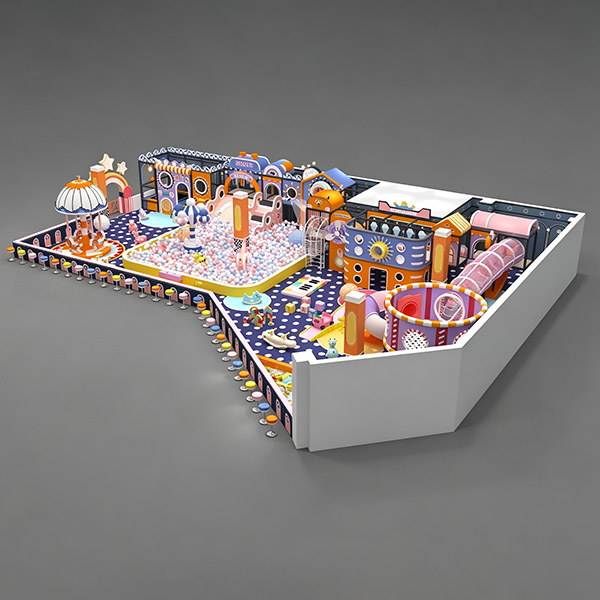
Digital marketing dominates contemporary business discussions. In contrast, physical assets remain a formidable driver of tangible return on investment in the hospitality sector. Dedicated play areas directly correlate with increased foot traffic. This is particularly noticeable during notoriously slow off-peak hours.
Weekend mid-afternoons typically see a lull in standard dining operations. These specific hours transform into peak revenue periods as families seek out-of-home entertainment. Data consistently suggests that locations equipped with family entertainment zones maintain significantly higher baseline sales volumes compared to those relying solely on food service.
Early restaurant playgrounds consisted of hard plastic and metal structures located outdoors. These setups presented operational nightmares related to weather dependency, constant maintenance, and safety liabilities. Forward-thinking brands mitigated these risks by pioneering the transition to climate-controlled indoor environments.
Modern establishments now utilize high-quality restaurant indoor playground equipment to ensure year-round usability. This evolution provides substantial operational benefits. It guarantees weather-proof entertainment. It facilitates effortless parental supervision from adjacent seating areas. Furthermore, it presents a highly hygienic aesthetic that aligns with strict modern health standards.
A primary concern for any restaurant operator is the optimization of commercial floor space. Every square foot dedicated to non-dining activities must justify its presence through indirect revenue generation. Franchises address this challenge by utilizing advanced commercial soft play structures.
These modular systems are specifically engineered to maximize vertical space. Operators can install comprehensive play environments in footprints as compact as 200 to 500 square feet by implementing multi-level grid designs utilizing 48mm galvanized steel pipes. This verticality ensures the establishment does not sacrifice profitable dining capacity. These structures are built to rigorous safety standards. They utilize impact-absorbing high-density EVA mats and secure fire-retardant netting to minimize liability.
Integrating play areas into a restaurant interior requires careful aesthetic consideration. Contemporary soft play structures draw inspiration from modern architectural trends. They are designed to be visually satisfying. Gone are the days of garish and visually disruptive primary colors that clash with upscale dining atmospheres.
Today’s equipment features clean lines, muted or brand-aligned color palettes, and transparent materials. These elements complement the overall interior design. This strategic aesthetic approach ensures the play area appeals to children without alienating adult diners. Adults expect a comfortable and visually cohesive environment.
Effective brand building relies heavily on storytelling. Physical spaces offer a unique canvas for immersive narratives. Historically, mega-brands leveraged proprietary characters to create a distinct and recognizable world. Character usage has evolved over time. However, the underlying principle remains incredibly potent.
Modern restaurants utilize custom themed kids play areas to tell a localized or brand-specific story. You might select a futuristic space exploration theme, a lush jungle adventure, or an environment modeled after your own mascots. Thematic consistency transforms a standard slide-and-tube setup into a memorable destination.
Installing generic play equipment represents a massive missed marketing opportunity for independent operators and growing franchises. Businesses should collaborate closely with specialized playground manufacturers to develop bespoke equipment. Customization allows operators to weave brand colors, logos, and specific thematic elements directly into the physical structure.
This approach differentiates the restaurant from local competitors. It also creates highly photogenic spaces. Parents frequently share photos of their children in these unique environments on social media. This generates authentic and localized word-of-mouth marketing that money simply cannot buy.
Recent industry analyses highlight a defining shift within the broader hospitality sector. Third-party delivery platforms continue to commoditize the standard takeout experience. Consequently, leading quick-service operators are pivoting aggressively toward experiential dining. Market analysts note that restaurants can no longer rely solely on menu innovation to drive foot traffic.
The current competitive edge lies in engineering physical spaces that offer interactive and tangible value. These are environments impossible to replicate in a cardboard delivery box. This macro-trend explains why forward-thinking brands are remodeling their physical footprints to include immersive and multi-generational entertainment zones. Bridging the gap between physical dining and digital engagement is crucial for maximizing customer lifetime value. App-exclusive deals and interactive digital games accessed via in-store QR codes create a seamless loop of entertainment.
Implementing a robust entertainment infrastructure requires a significant initial capital expenditure. Justifying this investment means moving beyond qualitative assumptions. Regional directors and independent restaurant operators must establish a rigorous and data-driven framework. The success of a family-centric strategy is rooted in meticulous tracking of how play translates into measurable financial returns.
Restaurant management systems and point-of-sale data should be configured to track several primary metrics to accurately assess the financial impact.
Average Transaction Value
The most immediate indicator of success is an increase in the Average Transaction Value. Families with children inherently represent larger party sizes. The presence of an engaging play area often shifts purchasing behavior. Parents are more likely to upgrade to premium combo meals and add side items when they perceive the visit as an outing rather than a quick stop for sustenance.
Customer Dwell Time and Secondary Purchases
Traditional quick-service models prioritize rapid table turnover. In contrast, an entertainment-driven strategy intentionally increases dwell time for the family demographic. A toddler safely navigates a soft climbing grid while parents enjoy an uninterrupted window of relaxation. This extended stay directly correlates with a higher probability of secondary purchases. The likelihood of ordering supplementary high-margin items like premium coffees or desserts increases significantly as parents relax.
Operational Metric | Traditional Dining Model | Integrated Play Strategy |
|---|---|---|
Average Dwell Time | 25 - 35 minutes | 55 - 75 minutes |
Secondary Purchase Rate | Low | High (Desserts, Premium Beverages) |
Off-Peak Foot Traffic | Minimal | Consistent (Driven by out-of-home play needs) |
Customer Retention Strategy | Discounting / Coupons | Pester Power / Child Advocacy |
Continuous auditing and upgrading of physical assets are mandatory to maintain market relevance. Restaurant operators must objectively evaluate their current family entertainment offerings. Are the existing play structures showing signs of wear? Do they look dated compared to modern aesthetic standards? A comprehensive brand refresh can revitalize a stagnant location. Upgrading outdated equipment signals a deep commitment to quality, safety, and the overall customer experience to the community.
Executing a successful upgrade requires partnering with a reliable direct manufacturer of commercial playground equipment. Operators must prioritize manufacturers that offer end-to-end solutions when selecting a vendor. Key engineering factors to evaluate include strict adherence to international safety certifications, the ability to provide bespoke 3D design services, and turnkey installation capabilities.
A reputable manufacturer acts as a strategic partner. They ensure the new play area maximizes the available footprint utilizing high-grade materials like PVC foam padding and fiberglass slides. They ensure the design aligns perfectly with your thematic vision and adheres to all local safety compliance regulations.
The ultimate entertainment strategy blends physical play with digital innovation perfectly. You do not need a massive multinational budget to achieve highly profitable results in your own venues. Strategic investments in immersive play areas transform your restaurant from a mere convenience into a beloved local favorite. High-quality setups consistently attract families, extend profitable dwell times, and increase your daily revenue. Evaluate your current floor plan today and consider how vertical, safe, and aesthetic play structures can redefine your customer experience.
The core strategy revolves around transforming a standard dining location into a holistic family destination. Rather than competing solely on menu pricing or food quality, the brand competes on the overall family experience. It combines physical entertainment with digital gamification to increase customer dwell time. This fosters early brand loyalty and drives higher average order values from family demographics.
Modern commercial modular systems are highly adaptable and engineered to maximize spatial efficiency. They utilize vertical engineering. Operators can install multi-level and high-capacity play areas in footprints as compact as 200 to 500 square feet. This vertical approach ensures restaurants offer robust physical entertainment without sacrificing revenue-generating dining room seating.
Yes, provided they are sourced from reputable commercial manufacturers. Industry-standard equipment is constructed using highly durable and non-toxic materials. They comply with strict international safety certifications like ASTM or CE. Modern designs specifically prioritize open sightlines for easier parental supervision. They incorporate antimicrobial surface coatings. This makes daily wipe-downs and routine deep cleaning highly efficient for restaurant staff.
The initial capital expenditure varies widely based on footprint, vertical levels, and the degree of thematic customization. Small modular grid setups can start as low as a few thousand dollars. Fully customized and multi-level immersive environments require a larger investment. However, operators typically see a rapid return on investment through increased average transaction values and boosted off-peak foot traffic.
Commercial play structures must adhere to rigorous structural and material standards. Equipment in the United States should comply with ASTM F1918 standards for soft contained play equipment. European markets require CE certification and EN 1176 compliance. Critical safety engineering includes using fire-retardant netting, impact-absorbing high-density EVA flooring, and ensuring all load-bearing pipes are galvanized steel with proper PVC padding.
Ready to elevate your hospitality venue? Browse custom play structures and modular designs to transform your commercial space. Visit Cheers Playground today to find the perfect brand-aligned equipment and contact an engineering specialist for a detailed quote tailored to your specific floor plan.


