
English


Views: 0 Author: Site Editor Publish Time: 2026-10-11 Origin: Site


Picture a bustling community park or a lively schoolyard filled with energetic children. Providing a safe, engaging environment for them to burn off energy is a top priority for any community leader or homeowner. High costs, however, often force buyers into a frustrating corner. The steep price tags of premium outdoor sets frequently push budget-conscious consumers toward flimsy, unreliable alternatives.
You should never have to choose between breaking the bank and compromising a child's safety. Securing affordable options that guarantee both long-lasting durability and structural integrity is entirely possible. It simply requires a strategic understanding of market dynamics and material science.
In this comprehensive guide, we will break down the most efficient sourcing channels. We will walk you through evaluating long-term material value from an engineering perspective and reveal exactly where to find cost-effective gear without sacrificing your peace of mind.
Direct-to-Consumer Efficiency: Bypassing traditional retail middlemen and purchasing directly from manufacturers secures high-quality, budget-friendly equipment for both residential and public spaces.
Uncompromised Safety Standards: A lower price tag must never equate to relaxed safety. Always demand active American Society for Testing and Materials and Consumer Product Safety Commission certifications before finalizing a purchase.
Strategic Modularity: Investing in multi-functional combination units or phased custom designs allows buyers to maximize play value per square foot while strictly adhering to financial limits.
Evaluating Hidden Costs: The sticker price is merely the starting point. Smart buyers calculate freight shipping fees, warranty terms, and the substantial cost difference between a community volunteer assembly and hiring professional installers.
When evaluating outdoor play sets, separating the concept of a low price from low quality is crucial. A cautious buyer understands that true affordability is measured by the structural lifespan of the product, not just the number seen at the initial checkout.
A common pitfall in budget-conscious purchasing is opting for the lowest absolute price without considering material degradation. To illustrate, a low-cost untreated wood set might save your organization a few hundred dollars today. It will, however, inevitably require annual staining, weather sealing, and eventual part replacement due to wood rot or dangerous splintering.
Spending slightly more upfront on durable materials drastically reduces long-term maintenance costs. When calculating the cost per year of use, a weather-resistant structure is mathematically cheaper over a decade than a flimsy alternative that must be hauled to the landfill after two harsh winters.
Pricing expectations must strictly align with the intended environment. Residential play sets are engineered for light, intermittent use by a small number of children. They utilize thinner gauge metals and lighter plastics, which naturally explains their lower retail price points.
Conversely, commercial playground equipment is engineered specifically for high-traffic environments like elementary schools, public parks, and bustling daycare centers. While the initial capital required is higher, budget-friendly commercial options provide a vastly superior return on investment. They feature heavy-duty hardware, tamper-resistant fasteners, and UV-stabilized components designed to withstand constant physical impact and extreme weather.
Recent market analysis indicates a major shift in municipal and school procurement strategies. Driven by unpredictable lumber prices and tighter maintenance budgets, buyers are rapidly moving away from traditional wooden builds. The industry standard has pivoted toward modular, factory-direct hybrid systems constructed from powder-coated steel and recycled plastics. This transition stabilizes initial capital output and drastically slashes lifetime upkeep, reflecting a broader demand for sustainable, low-maintenance outdoor infrastructure.
Finding an affordable structure requires knowing exactly which supply channels offer the best profit margins and which ones carry hidden liabilities. Here is an objective breakdown of the most popular sourcing avenues.
The single most effective way to reduce costs without sacrificing structural integrity is adopting a factory-direct purchasing model. Traditional retail supply chains involve a convoluted web of middlemen, including regional distributors, wholesalers, and storefront retailers. Each entity adds a markup ranging from 20% to 50%.
Engaging directly with an established manufacturer grants buyers access to business-to-business wholesale pricing. This approach allows you to acquire premium, heavy-duty structures at a fraction of the standard retail cost. Furthermore, manufacturers typically provide superior direct technical support, highly detailed installation manuals, and reliable warranty fulfillment.
Massive online platforms and big-box retailers are highly accessible and frequently run aggressive seasonal discounts. These platforms excel at providing lightweight equipment suitable for small, private backyards.
Consumers must approach these platforms with a critical engineering eye. Many low-cost options found on massive e-commerce sites are imported with minimal quality control oversight. Warranties are frequently capped at 30 to 90 days. Generic customer service can make sourcing a specific replacement bolt nearly impossible. If you choose this route, rigorously scan customer reviews for mentions of premature rust, plastic fading, or missing hardware upon delivery.
Local digital classifieds, neighborhood parenting groups, and community forums are popular hunting grounds for extreme bargains. Purchasing used equipment can yield significant upfront savings, yet it carries the highest level of inherent risk.
A thorough physical inspection is mandatory when evaluating second-hand structures. You must look for hidden structural fatigue, severe rust on load-bearing joints, dry rot hidden inside wooden beams, and UV degradation in plastics. UV damage makes slides brittle and prone to cracking under weight. Dismantling, transporting, and reassembling a weathered set often compromises its original structural integrity. Used gear rarely retains any manufacturer liability coverage.
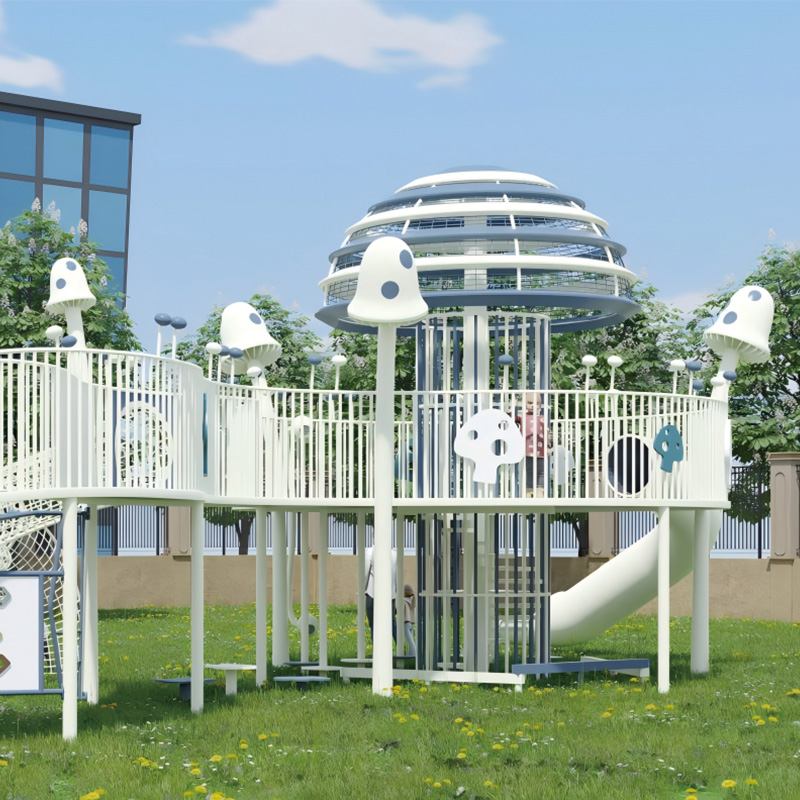
If your budget is rigid, the specific type of equipment you select is just as important as where you source it. Certain design configurations offer significantly more play value by consolidating activities and minimizing raw material waste.
Purchasing standalone components piece by piece quickly drains a limited budget. A smarter structural approach bundles diverse physical activities into a single, cost-effective footprint. Investing in combination playground slides integrates climbing walls, interactive panels, and sliding chutes onto one centralized frame.
These multi-functional units share a central support system, which drastically reduces the total amount of raw steel required for manufacturing. From an engineering standpoint, utilizing 114mm diameter galvanized steel pillars with a 2.2mm wall thickness alongside 6mm thick LLDPE plastic components provides immense structural integrity. This engineering efficiency translates directly to lower retail prices and reduced freight shipping weights. Combination units maximize engagement in compact spaces, keeping multiple children entertained simultaneously without requiring massive land preparation.
For those managing a strict, incremental budget, purchasing freestanding outdoor equipment allows for a highly practical, phased approach. Freestanding items encompass standalone swing bays, spring riders, independent monkey bars, or single climbing domes.
Because these individual items do not require complex, multi-level structural engineering, their manufacturing and shipping costs are inherently lower. Buyers can comfortably install a basic swing set this spring and add a freestanding geometric climber the following year. This effectively spreads the financial impact over several seasons while providing immediate recreational value.
Many consumers mistakenly assume that customization automatically implies a luxury price tag. In reality, working closely with a manufacturer to design custom play structures serves as a highly effective budget-control strategy.
A modular custom design allows you to specify exactly what you can afford today without closing the door on future expansion. You might start by purchasing a foundational core unit featuring a single deck, a stair, and a slide that includes built-in expansion ports. As new funding becomes available through school fundraisers or municipal budgets, you can seamlessly bolt on additional components like tube slides or sensory panels without ever needing to replace the original core structure.
The primary anxiety for most buyers searching for discounted outdoor gear is the fear of child injury. There is a persistent misconception that a lower price tag inherently means a higher risk. Affordability and safety can seamlessly coexist if you focus on objective engineering standards rather than relying solely on brand recognition.
Safety certifications act as your baseline for quality assurance whether you are outfitting a small backyard or a sprawling community park. Cheap equipment is only a sound investment if it has been rigorously tested against recognized global safety mandates.
Equipment must comply with Consumer Product Safety Commission guidelines and American Society for Testing and Materials standards. Specifically, ASTM F1487 governs public-use structures, while ASTM F1148 covers residential sets. Equipment meeting these standards has survived extreme structural load testing, head entrapment hazard evaluations, and chemical toxicity screenings. Securing factory-direct equipment holding these certifications ensures you receive a safe product without absorbing the premium markup associated with heavy retail marketing campaigns.
Material selection heavily dictates both the initial invoice and the long-term safety of your project. Selecting the appropriate materials helps you lock in highly durable structures at a fraction of the cost of premium-priced luxury alternatives.
Below is a comparative breakdown of common materials to aid your budget-conscious decision:
Material Type | Upfront Cost | Durability & Lifespan | Maintenance Requirements |
|---|---|---|---|
Treated Wood | Low to Medium | Moderate. Prone to rot, splintering, and insect damage over time. | High. Requires annual staining, sealing, and extensive sanding. |
Powder-Coated Galvanized Steel | Medium | Very High. Highly resistant to rust, vandalism, and extreme weather. | Low. Occasional touch-ups for deep scratches to prevent isolated rust. |
LLDPE Plastic | Low | High. UV-resistant, retains vibrant color, will never splinter or rust. | Very Low. Simple routine cleaning with mild soap and water. |
Opting for hybrid structures that combine powder-coated galvanized steel frames with Linear Low-Density Polyethylene plastic components typically yields the absolute best return on investment. This specific combination delivers commercial-grade resilience at a highly accessible price point, entirely eliminating the relentless maintenance costs tied to wooden sets.
The purchase price of the equipment represents only one piece of your total project budget. Installation labor and site preparation frequently introduce massive hidden costs that catch unprepared buyers off guard. Understanding the financial disparities between hiring professional contractors and organizing a community build is crucial.
Contracting a certified installer guarantees the equipment is anchored to exact manufacturer specifications, a step often required to validate commercial warranties. Specialized labor, however, is undeniably expensive. Professional installation can inflate your total project cost by 25% to 45%.
Contractors must bill for labor hours, travel distance, liability insurance, and heavy equipment rentals. As someone who has overseen countless site preparations, I can confirm that grading the land, installing French drains, and pouring engineered wood fiber or rubber surfacing are usually invoiced separately. Allocating thousands of dollars toward professional labor directly limits the size and quality of the actual play structure you can afford.
Modern manufacturers deliberately engineer their budget-friendly equipment for straightforward assembly to mitigate these staggering labor fees. This is particularly prevalent with residential sets and compact commercial units.
High-quality play sets now arrive on-site with pre-drilled alignment holes, standardized hardware, and highly visual instruction manuals. Organizing a weekend community build day utilizing parent volunteers or local maintenance staff saves schools and residential buyers thousands of dollars. When executing a self-installation, strictly following the manufacturer's torque specifications for all bolts and ensuring the ground is perfectly leveled prior to assembly is imperative. This diligence preserves both the structural stability and the safety integrity of the equipment.
Procuring equipment for public spaces, elementary schools, or Homeowner Associations requires strict adherence to commercial safety codes. Because these robust structures must withstand relentless daily use by dozens of children, they naturally cost more than backyard models. Organizations can still acquire premium gear without blowing their annual budgets by utilizing strategic procurement methods.
Securing external funding is one of the most impactful ways to offset the high costs of public play areas. Numerous national foundations, state programs, and local civic organizations offer grants specifically tailored to promote physical education and community wellness. Corporate sponsors and environmental groups frequently provide matching grants for community development.
Organizations should present a meticulously detailed budget, a compelling community impact statement, and a realistic long-term maintenance plan when applying for these financial lifelines. Securing even partial grant funding instantly frees up internal capital, allowing your community to upgrade from a basic swing set to a comprehensive, multi-level play environment.
Leveraging bulk purchasing power is another highly effective strategy for institutional buyers. Municipalities and school districts often need to outfit multiple locations simultaneously. Consolidating these separate needs into a single massive order and purchasing directly from a manufacturing supplier empowers organizations to negotiate deep wholesale discounts.
Adopting a phased purchasing strategy allows organizations to construct a massive playground over several fiscal years. Instead of attempting to fund a massive system all at once, you install a core structure today and gradually integrate freestanding modules as new budgets are approved each spring.
Navigating the complex outdoor equipment market requires carefully balancing upfront costs, long-term safety, and maximum engagement. Bypassing traditional retail markups and sourcing directly from established manufacturers remains the most logical financial decision for buyers seeking reliable, long-lasting solutions.
The traditional retail supply chain is bloated with middlemen. Each step from the factory to the showroom floor adds a markup, meaning a significant portion of your hard-earned budget goes toward logistics and retail overhead rather than the actual quality of the steel and plastic.
Utilizing a streamlined factory-direct model allows buyers to access affordable equipment that still boasts rigorous commercial-level durability. Manufacturers like Cheers Playground eliminate these intermediary costs. This direct-to-consumer approach ensures that every dollar you spend is strictly applied to superior raw materials, such as 2.2mm thick galvanized steel pipes and rotationally molded LLDPE plastics.
Every outdoor space and financial portfolio is unique. Rigid, pre-packaged sets from big-box stores often force buyers into uncomfortable compromises. Utilizing modular designs tailored to specific spatial and financial constraints is a much more pragmatic approach.
Working directly with a specialized manufacturer allows you to design custom environments that fit your exact requirements. Whether starting with a modest base unit for a small daycare or expanding an existing community park with massive combination slides, you can explore a wide variety of modular options. Build a customized environment that aligns perfectly with your current financial capacity.
Finding affordable play sets is entirely within your reach. You absolutely do not have to sacrifice fun or basic safety to stay within your budget. Smart shopping simply means evaluating durable materials with a critical engineering eye, considering the massive savings of community installation, and bypassing retail markups by buying direct from manufacturers.
Applying these strategic sourcing methods helps you build a breathtaking, durable dream playground that serves your community for years to come. Stop overpaying at traditional retail storefronts today. Take control of your project by browsing budget-friendly, factory-direct options at Cheers Playground and secure your free, customized quote to get started.
Yes, provided it is manufactured to meet rigorous industry safety standards. The primary indicators of reliable safety are certifications from the American Society for Testing and Materials and Consumer Product Safety Commission guidelines. Affordable equipment only becomes dangerous when produced by unverified sources using substandard materials like thin, untreated plastics or rust-prone metals. Purchasing from reputable, factory-direct manufacturers ensures you acquire equipment that is highly cost-effective while still passing strict structural and toxicity tests. Always demand to see safety documentation before finalizing a purchase.
The most financially sound method is bypassing traditional retail stores and regional distributors entirely. They often apply hidden markups ranging from 30% to 50%. Purchasing directly from an established, factory-direct manufacturer is the smartest approach. This business-to-business purchasing model allows schools, daycares, and municipalities to acquire commercial-grade materials at wholesale prices. Buying direct guarantees better access to replacement parts and superior technical support.
Freestanding items and modular combination units are your best options for maximizing play value on a strict budget. Freestanding equipment requires minimal site preparation and can be purchased incrementally. Combination units bundle multiple activities like a slide, a rock wall, and a play deck into one compact structure. This highly efficient design reduces the amount of safety surfacing required and lowers overall shipping and installation costs compared to buying separate, standalone pieces.
Absolutely. Customization does not inherently mean expensive. Many modern manufacturers utilize modular engineering, meaning their structures are built using interchangeable components. If you have a limited initial budget, design a base structure consisting of just a platform and a slide. In subsequent years, as more funds become available, easily attach modular add-ons such as monkey bars, bridge links, or interactive sensory panels. This strategic, phased approach makes custom building highly accessible for long-term community projects.
The cost of a commercial playground varies widely based on size, materials, and site preparation. A compact, basic modular structure designed for a small daycare or pocket park typically ranges from $15,000 to $25,000. Mid-sized school playgrounds usually fall between $30,000 and $50,000. It is crucial to remember that the equipment itself often represents only 50% to 60% of the total budget. The remaining funds must cover site grading, professional installation labor, and safety surfacing materials.
Engineered Wood Fiber is widely considered the most cost-effective, safety-compliant playground surfacing material available. Unlike standard landscaping mulch, EWF is specifically manufactured to knit together, providing a stable, shock-absorbing layer that meets ADA accessibility guidelines and ASTM fall-height standards. While poured-in-place rubber or synthetic turf offer lower long-term maintenance, EWF requires the lowest initial capital investment, making it the go-to choice for budget-conscious schools and municipalities.


