
English


Views: 0 Author: Site Editor Publish Time: 2026-10-12 Origin: Site


Transforming a bare lawn into an active play zone requires more than just picking a design out of a catalog. It demands a careful structural assessment. Choosing the right playset material often stops buyers in their tracks. This decision requires a significant investment of both your valuable time and capital. Should you go with metal or wood?
In this technical guide, we will dive deep into the overarching debate of metal versus wooden playsets. By evaluating load-bearing capacities, maintenance cycles, climate compatibility, and safety standards, you will learn exactly which structural option aligns with your long-term outdoor vision.
Aesthetics & Customization: Wooden structures offer a classic, natural aesthetic that blends seamlessly into outdoor landscapes. They are highly modular. This makes them ideal for elaborate custom builds, though they demand consistent annual maintenance.
Durability & Convenience: Metal structures provide incredible durability and are generally more budget-friendly upfront. They require almost zero maintenance. However, they offer far less flexibility for future customization once assembled.
Climate Matters: Your local weather conditions should act as a primary deciding factor in your purchasing decision. Extreme heat, heavy winter snow, or high coastal humidity will drastically affect material lifespan.
Safety First: Both materials are exceptionally safe when manufactured to modern industry standards. Each presents unique safety considerations. You must weigh the potential for splinters in aging wood against intense heat retention in dark metal.
Before making a significant financial commitment to your backyard infrastructure, it is crucial to understand exactly what the modern market offers. The outdoor recreation industry has evolved drastically over the last few decades. Manufacturers have moved far away from the simple, sometimes hazardous designs of the past. Today, the focus has shifted toward highly engineered structures built specifically for longevity, biomechanical safety, and imaginative play.
Wood has served as the traditional gold standard for backyard play areas across generations. Modern designs have evolved far beyond the simple, creaky A-frame swing sets of the past. Today, when you invest in high-quality wooden playground equipment, you are looking at multi-level architectural structures. Premium models often utilize robust 114mm diameter timber posts. These heavy-duty uprights provide immense shear strength. They effortlessly support rock climbing walls, spiral tube slides, and integrated upper-level clubhouses.
One of the primary reasons timber remains dominant in the residential market is its seamless aesthetic integration. Wood naturally complements outdoor landscaping, mature trees, and garden beds. It adds a touch of rustic elegance to a property rather than looking like an artificial, industrial intrusion. Furthermore, its inherent massive weight provides an incredibly stable foundation. This resists tipping even during vigorous, multi-child play sessions.
On the opposite side of the arena stands metal. If your memory of metal playsets involves flimsy, squeaky, and rust-prone aluminum pipes, it is time to drastically update that perception. Modern metallurgical engineering has transformed metal play structures into heavy-duty, highly reliable investments.
Today's steel frame playground equipment utilizes thick-gauge galvanized steel. Commercial-grade systems often feature 114mm diameter steel pipes with a 2.2mm wall thickness. These are coated with advanced electrostatic powder finishes. This rigorous coating process prevents ambient moisture from reaching the raw metal beneath, effectively eliminating rapid rusting. Because of this structural integrity and immense low-maintenance appeal, steel frames have become highly popular in both commercial parks and residential backyards.
Recent market analyses reveal a fascinating shift in outdoor recreation infrastructure. A few years ago, unprecedented lumber price volatility drove a massive surge in residential metal playset purchases. Families sought cost-effective, immediate solutions. Recently, however, a strong resurgence in sustainable materials has emerged. Eco-conscious homeowners now prioritize biodegradable, Forest Stewardship Council certified options.
Furthermore, we are seeing a rise in hybrid engineering. Manufacturers are increasingly combining heavy-duty steel joints with natural timber beams. This approach maximizes structural integrity while maintaining a natural aesthetic. Understanding these macro trends is vital. They directly impact long-term property value, replacement part availability, and community aesthetic standards.
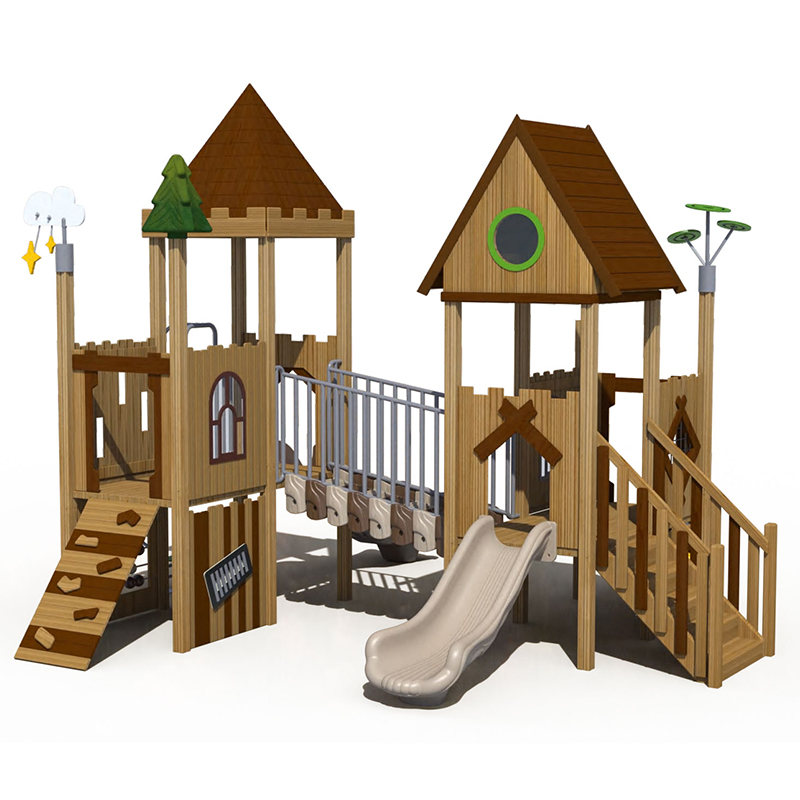
Wood is frequently considered the premium choice for outdoor play, but it is certainly not without its specific, ongoing demands. Understanding the comprehensive pros and cons will help you determine if you are truly ready for the commitment of owning timber.
Unmatched Customization: Wood is an incredibly modular medium. As your children grow from toddlers to pre-teens, it is relatively easy to drill new holes, add a longer slide, or attach a specialized swing beam. You can even convert a basic deck into elaborate treehouse playsets using standard carpentry tools.
Aesthetic Value: High-quality wood actively adds visual value to your home exterior. Unlike brightly colored plastics or shiny metals that might clash with a curated garden, wood matures naturally. It can be stained to perfectly match your existing deck or privacy fencing.
Structural Sturdiness: Timber is exceptionally heavy. Once properly leveled and anchored into the earth, a wooden structure is grounded. It becomes highly resistant to shifting, bending, or tipping, making it exceptionally safe for older, heavier children.
Strict Maintenance Requirements: This remains the biggest hurdle for most prospective buyers. Wood is an organic material that will inevitably decompose if left unprotected from the elements. It requires power washing using a low-PSI nozzle, sanding down rough spots, and applying high-quality stains and water-repellent sealers every one to two years.
Wear and Tear: Even with meticulous maintenance, wood is susceptible to natural weathering. It will expand and contract with seasonal temperature changes. This movement leads to warping, surface cracking known in the industry as checking, and the occasional splinter.
Complex Assembly: Building a wooden playset is rarely a quick afternoon project. It often involves hundreds of individual lumber pieces and highly complex hardware configurations. This requires either a dedicated weekend of exhausting manual labor or the additional cost of hiring professional installers.
Not all lumber is created equal. The ultimate lifespan of your playset depends heavily on the specific species of wood utilized by the manufacturer.
Wood Type | Durability | Natural Resistance | Price Point | Maintenance Needs |
|---|---|---|---|---|
Cedar / Yellow Peach Wood | High | Excellent resistance to rot, decay, and insects due to natural oils. | Moderate to High | Moderate. Requires bi-annual sealing to maintain rich color. |
Redwood / Rosewood | Very High | Superior resistance to weather and pests with a highly durable tight grain structure. | Premium | Low to Moderate. Ages beautifully, though sealing extends life. |
Treated Pine | Moderate | Relies heavily on chemical treatments to resist rot and bugs. Prone to warping. | Budget-Friendly | High. Requires frequent chemical sealing to prevent structural cracking. |
For families who desperately want a low-intervention solution, metal playsets offer a highly practical, efficient, and modern alternative to traditional timber.
Ultra-Low Maintenance: The primary selling point of metal is sheer convenience. There is absolutely no sanding, staining, or chemical sealing required. Routine maintenance generally consists of occasionally checking bolts for tightness and washing the structure down with a standard garden hose.
Cost-Effective Affordability: While commercial-grade stainless steel can be quite expensive, residential metal playsets are generally much more budget-friendly upfront compared to premium cedar structures of a similar footprint.
Ease of Assembly: Metal playsets often ship in larger, pre-welded tubular sections. With lighter individual parts and simpler, standardized hardware configurations, installation is significantly faster and far less intimidating for the average homeowner.
Temperature Sensitivity: Metal acts as a highly efficient conductor of heat. In direct, scorching summer sunlight, metal decks, handrails, and slides can become hot enough to cause extreme discomfort or minor contact burns to bare skin.
Rust Potential: While modern powder coating is excellent, it is not invincible. If a lawnmower kicks up a rock and chips the protective powder coating, the exposed raw steel underneath will immediately begin to oxidize and rust. This is especially true in humid or coastal environments.
Rigid Design Limitations: With metal, what you buy is exactly what you get. Unlike wood, you cannot simply saw off a section or drill a new hole to add a modular expansion later. Expanding a metal playset is usually impossible unless you purchase specific brand-compatible attachments.
To make an informed, confident purchasing decision, buyers must compare these materials directly across the most critical ownership factors. Here is how they stack up when placed under an engineer's microscope.
When evaluating maximum lifespan, wood generally takes the crown, but only conditionally. A high-quality solid timber playset can easily last 15 to 20 years, surviving multiple generations of growing children. However, this assumes the owner commits to strict, ongoing maintenance. If neglected, wood can rot and become structurally unsafe within just five to seven years. In contrast, a well-galvanized metal playset offers a solid 10 to 15-year lifespan with almost zero maintenance. It may only succumb to internal rust over a long period if the exterior coating is deeply compromised.
Both materials meet rigorous consumer safety standards, but they present entirely different hazard profiles. Wood carries the persistent risk of splinters, structural rot if unmaintained, and the loosening of structural bolts due to the natural expansion and contraction of the timber. Metal carries the risk of contact burns in extreme heat and the potential catastrophic weakening of welded joints if rust is allowed to penetrate the interior of the frame.
This is where metal claims a decisive, undeniable victory. The ongoing financial and labor cost of owning a metal playset is virtually zero. Wood, however, harbors a hidden lifetime cost. Purchasing high-quality waterproof sealants, specialized wood stains, sandpaper, and potentially renting a power washer every two years can easily add hundreds of dollars to the total cost of ownership over a decade.
Your geographical location and local weather patterns are not just minor details to gloss over. They are highly practical decision-making tools that should heavily influence your final material choice.
If you live in a region characterized by blistering UV rays and relentless high temperatures, such as Texas or Australia, both materials face severe challenges. Constant sun exposure will literally bake the natural moisture out of wood. This leads to accelerated color fading, severe surface cracking, and eventual structural brittleness. Metal absorbs and retains that heat. If you choose metal in a hot climate, it is absolutely imperative to place the equipment in a heavily shaded area to prevent it from becoming too hot to touch safely.
Conversely, in areas plagued by constant moisture, heavy seasonal rainfall, or deep winter snowbanks, wood is highly susceptible to rot, mildew, and fungal decay. The constant wet-to-dry cycle can quickly degrade untreated lumber. Meanwhile, metal faces the ever-present danger of accelerated oxidation. This is especially true in coastal areas where salty ocean air can eat through standard powder coatings in a matter of months. If buying metal in these brutal climates, ensure it utilizes 304 stainless steel or heavily galvanized pipes rather than standard painted steel.
For the rapidly growing segment of eco-conscious parents, the environmental footprint of a massive backyard playset is a valid concern. Both materials offer distinct ecological benefits and drawbacks.
Wood is a naturally renewable and fully biodegradable resource. When evaluating timber, actively look for Forest Stewardship Council certified lumber. This guarantees the wood was harvested from responsibly managed, sustainable forests. The primary environmental drawback of wood lies in its upkeep. The chemical stains, varnishes, and sealants required to keep wood viable often contain volatile organic compounds that can leach into your surrounding garden soil over time.
The manufacturing process of steel has a significantly higher initial carbon footprint due to the extreme energy required for smelting and shaping heavy metals. However, steel is one of the most recycled materials on the planet. At the end of its lifespan, a metal playset can be completely recycled rather than sent to rot in a landfill. Additionally, modern electrostatic powder coating processes are generally non-toxic and do not release harmful chemicals into your backyard ecosystem as they age.
Making the right purchasing decision requires more than just comparing the materials in a vacuum. You must deeply analyze your specific backyard environment, your family’s long-term needs, and your personal capacity for assembly.
The topography of your backyard will immediately dictate which type of structure you can safely install. Every outdoor play structure requires a designated use zone. This is an obstacle-free perimeter that extends a minimum of six feet in all directions from the equipment.
Beyond raw square footage, ground leveling is a critical determining factor. Wood requires a perfectly level foundation. Because timber is rigid and heavy, installing a wooden structure on uneven ground places uneven stress on the joints. This leads to premature warping, structural instability, and catastrophic hardware failure over time. If your yard has a noticeable slope, you will need to invest in professional grading. Metal structures can sometimes be slightly more forgiving. The individual legs of an A-frame metal set can often be anchored into concrete footings at varying depths to accommodate mild slopes.
Your children’s current age, along with exactly how long you expect them to use the equipment, should heavily influence your material choice. Residential metal sets are generally manufactured using lighter-gauge tubular steel. While highly durable for their class, these structures often feature strict weight limits, typically ranging from 100 to 150 pounds per swing. This makes them an exceptionally safe option for toddlers, but they will quickly be outgrown.
If you are looking for equipment that can support older teenagers, heavy-duty timber is usually the superior choice. Solid timber beams offer massive structural integrity and much higher weight capacities. Alternatively, if you prefer metal but need higher weight limits, you must upgrade to commercial-grade steel structures utilizing thicker steel pipes to safely accommodate adult weights.
The hidden cost of any backyard equipment is the sweat and labor required for assembly. You must honestly assess your handyman skills and available tools before purchasing.
Metal structures are widely celebrated for their ease of assembly. The components are lightweight, the hardware is standardized, and the pre-drilled holes generally align with minimal effort. Two adults with basic hand tools can typically assemble a standard metal set in a single afternoon. On the other hand, timber structures are notoriously labor-intensive. The wood components are heavy, the hardware is complex, and the assembly manuals can span dozens of pages. Many buyers ultimately choose to hire professional installation crews for massive wooden structures.
Objective engineering data shows that neither material is universally superior in every category. The best option is entirely dependent on your specific buyer profile, your climate, and your long-term expectations. We have synthesized the core differences into a straightforward comparison matrix below.
Feature | Wooden Structures | Metal Structures |
|---|---|---|
Initial Purchase Price | Moderate to High | Low to Moderate |
Lifetime Maintenance Cost | High (Annual stains/sealers) | Very Low (Occasional washing) |
Expected Lifespan | 15–20+ years (with strict upkeep) | 10–15+ years (rust dependent) |
Installation Difficulty | High (Heavy, time-consuming) | Low (Lightweight, straightforward) |
Modularity & Expansion | Excellent (Highly customizable) | Poor (Fixed factory design) |
Weight Capacity | Very High (Supports older kids/adults) | Moderate (Usually limited to younger kids) |
Aesthetic Appeal | Classic, natural, blends with landscaping | Modern, utilitarian, functional |
Ready to transform your backyard with commercial-grade durability and premium aesthetics? Explore the extensive catalog at Cheers Playground. Whether you need modular timber structures or heavy-duty steel frames, you will find the perfect engineered solution tailored to your family's exact needs.
When comparing maximum potential lifespans, premium wood generally lasts longer, often surviving 15 to 20 years or more. However, this longevity is strictly conditional upon meticulous, ongoing maintenance. If wood is neglected, ambient moisture and harsh UV rays will cause it to rot and splinter within a few short years. Conversely, a high-quality, powder-coated metal set offers a highly reliable 10 to 15-year lifespan with almost zero maintenance, assuming the protective coating is not deeply scratched by yard tools.
Vinyl swing sets represent a premium third category in the outdoor play market. These structures consist of solid wood beams that are completely encased in a thick, protective PVC plastic or vinyl sleeve. This hybrid approach beautifully combines the massive structural strength and high weight capacity of timber with the zero-maintenance, splinter-free benefits of metal. While objectively superior in terms of durability and upkeep, vinyl structures come at a significantly higher initial price point.
Yes, thermal conductivity is a legitimate, serious concern with steel frames. In regions with intense, direct summer sunlight, dark-colored metal can absorb and retain enough heat to cause contact burns on bare skin. To mitigate this risk, manufacturers now utilize lighter-colored powder coatings that reflect UV rays rather than absorbing them. If you live in a hot climate, it is highly recommended to position a metal structure in a shaded area of your yard.
To maintain structural integrity and visual appeal, timber structures typically require staining and water-repellent sealing every one to two years. The exact frequency depends heavily on your local climate. Sets exposed to harsh, direct sunlight will experience faster UV degradation, while sets in highly humid or rainy environments are more susceptible to fungal decay and rot. Conducting regular visual inspections for micro-cracks and fading color will accurately indicate when a fresh coat of sealant is required.
The ability of steel equipment to support adults depends entirely on the steel gauge or thickness used during manufacturing. Standard residential metal sets are built with thinner, lightweight steel designed specifically for children. Adults exceeding the 100 to 150-pound weight limit risk bending the frame or breaking the swing chains. However, heavy-duty commercial steel sets utilize thick-gauge galvanized steel and reinforced, welded joints that can easily and safely support the weight of multiple adults simultaneously.
The weight capacity of a wooden playset depends heavily on the beam thickness and structural design. Standard residential wooden sets can typically support 150 to 250 pounds per swing or deck section. Premium structures utilizing robust 114mm solid timber posts and heavy-duty galvanized hardware can often support over 500 pounds across the entire deck structure, making them incredibly safe for multiple older teenagers or adults to use at once.
While many homeowners install playsets directly on grass, it is not recommended from an engineering or safety standpoint. Grass retains moisture, which accelerates wood rot and metal rust at the base of the equipment. Furthermore, grass does not provide adequate impact attenuation if a child falls. It is highly advised to excavate the use zone and install a proper foundation of engineered wood fiber, rubber mulch, or poured-in-place rubber surfacing to meet modern safety standards.


